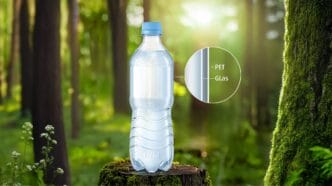
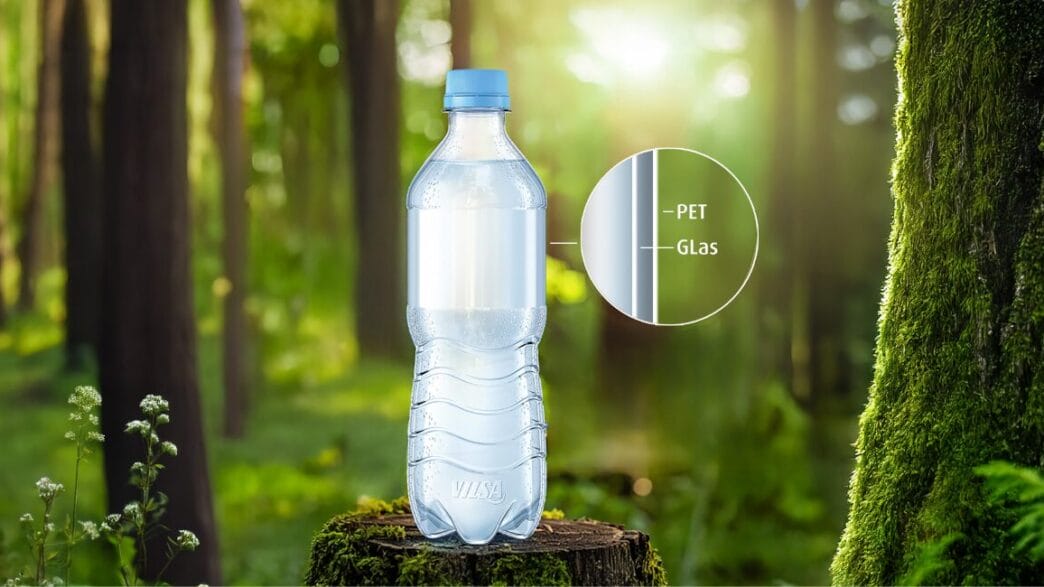
Mineralbrunnen Vilsa uses an innovative freshness protection technology for all non-returnable PET bottles in its range. The special feature: a wafer-thin, glass-like coating on the inside of the bottle ensures optimum product protection.
The freshness protection coating technology is a process in which the inside of PET bottles is coated with a wafer-thin layer of silicon oxide (SiOx), i.e. glass. This combines the protective properties of glass with the advantages of PET, such as low weight and break resistance.
Vilsa has announced that it will consistently use the technology for all products in its non-returnable PET portfolio, both for organic mineral water and soft drinks. According to the company, the coated PET bottle offers comparable protection for sensitive, natural products, while at the same time being lighter and more robust than glass. According to the company, the bottles are made from 100 per cent rPET and remain fully recyclable, as the coating can be removed again during the recycling process.

Barrier coating made of silicon oxide
Before an rPET preform is turned into a freshness protection bottle, it goes through several process steps: first, the preform is heated, stretched and blown into the typical bottle shape. The empty bottle is then turned upside down and transferred to a coating chamber in which a fine vacuum is maintained so that the glass coating is applied evenly. A special gas mixture is channelled into the bottle and converted into a high-energy plasma state using microwaves. This creates glass building blocks (silicon oxide), which are deposited as an ultra-thin layer on the inner wall. After a few seconds, the barrier of chemically pure glass is completely built up.
The thin protective layer of silicon oxide (SiOx) is completely dissolved in the recycling process during the first contact with the alkaline solution. The PET flakes subsequently obtained are comparable to those from standard PET bottles and are easily processed into rPET.
Focus on quality and sustainability
According to VILSA, the technology addresses both product quality and sustainability requirements. The mineral water company sees this as an approach to further develop disposable packaging and to organise the use of materials responsibly.
The freshness protection coating means that lighter PET bottles (monolayer instead of multilayer) can be used. Vilsa bottles are made from 100 per cent rPET. According to the company, the coating offers one hundred per cent safety with increasingly fluctuating qualities of recycled material.

To accompany the introduction of the technology, Vilsa is also placing the topic of freshness protection more at the centre of its brand communication. A national campaign will explain the packaging concept and make it visible to different target groups. Communication will focus on the combination of product protection and practical use in everyday life.
According to Vilsa, it is one of the few mineral water companies in Germany to use this type of freshness protection technology across the board in the non-returnable PET sector. The company sees this as a building block for safeguarding the quality of its products in the long term.
Source: Vilsa