Companies in the plastics value chain believe that Germany is at risk as an international location. Nevertheless, they continue to show a high level of willingness to make a strong local commitment: according to a recent survey, 91 per cent plan to continue investing in Germany in 2026.
Companies in the plastics value chain - plastics production, plastics processing and plastics machinery manufacturing - gave Germany an overall score of 4.1 (sufficient) in a survey conducted by the „Wir sind Kunststoff“ initiative. This means that the location rating has only improved slightly compared to the first edition of the survey in 2023. Germany received positive marks in particular for its proximity to customers and suppliers as well as for its good industrial network.

However, the survey also makes it clear that three key location factors determine the competitiveness of the plastics value chain in Germany: Energy prices, bureaucracy and the regulatory framework were all rated as „poor“ by the companies. In particular, the high cost of authorisations and reporting obligations is a burden on companies and inhibits innovation.

An accelerated reduction in bureaucracy and further sustainable relief for companies from high energy costs are crucial in order to secure innovation, value creation and jobs in the country, according to the report.
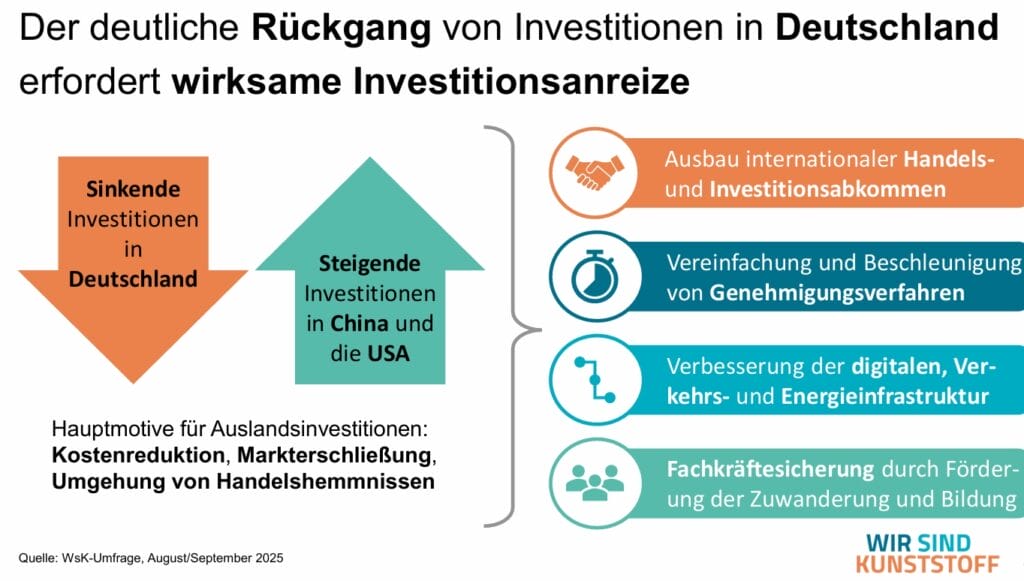
The company survey clearly shows that the willingness to invest is currently much higher outside of Germany. This is why the ball is now in the politicians' court: they have the levers in their hands to give the plastics industry the necessary boost, emphasise the initiators of the survey.
Strengthening international trade agreements and market surveillance
Against the backdrop of ongoing trade conflicts, the industry is calling for new, strong international trade agreements. They are a prerequisite for securing market access, establishing fair competitive conditions and protecting the high quality standards of German products internationally. Efficient and active market surveillance is essential.
The companies also formulated clear priorities in the survey - from the reduction of reporting obligations and a 1:1 implementation of EU regulations to securing skilled labour and promoting the immigration of qualified skilled workers.
Source: We are plastics„ initiative“