More sustainable with the right packaging solution

The plastic packaging manufacturer Weener Plastics has closure solutions in its portfolio that can be recycled together with the container in the same waste stream.

Many plastic bottles and tubes for cosmetics, personal care or food are already made of monomaterial. However, if the dispensing cap is made of a different material to the bottles and tubes, this has an impact on recyclability. Plastic packaging manufacturer Weener Plastics now has closure solutions in its portfolio that can be recycled together with the container in the same waste stream.

Originally founded in Weener in East Frisia, the The company is now headquartered in the Netherlands and designs, develops and manufactures Lids and closures, bottles, jars and roll-on solutions for the personal care, food, health and household care markets. One of the main activities is the development and production of dosing closures.

Sustainability is a key component of the corporate strategy, explains CEO Adrian Whitfield. "Innovative technologies, low-carbon materials and intelligent product designs are key factors in our approach to minimising our environmental impact." Recently, for example, the development team developed the first 100 per cent recyclable valve for dosing closures. "We were the first to launch a 100 per cent recyclable valve with outstanding performance and versatility," says Whitfield. All he reveals about the material formulation is that it is a specially developed material that can be recycled in the polyolefin waste streams - regardless of the bottle material.


"We want to reduce our greenhouse gas emissions by 70 per cent by 2030 and at the same time increase the proportion of renewable energies to 90 per cent."
Adrian Whitfield
CEO Weener Plastics

The new valve is intended to replace conventional, non-recyclable silicone valves. It is automatically installed in a dosing cap and is suitable for a wide range of applications from ketchup and mayonnaise to bath and shower gel. It even performs well when dosing oily or fatty formulations such as olive oil. The dispensing behaviour can be adjusted as required. The new valve fits into all existing MaxiDose closures from Weener Plastics and is also suitable for customised products.

Display

Tube and dosing cap can be recycled together

Weener Plastics is also one of the first companies to use polyethylene (PE) material for closure solutions for tubes. The new solution called CosmoTops PE was presented at the last Cosmetic Business in Munich and is currently being launched on the market. PE is an alternative to the polypropylene previously used as a closure material and, in combination with HDPE tubes, enables a fully recyclable mono-material packaging solution. In addition to the PE virgin material, customers can also choose closures made from chemically recycled and bio-based PE, both of which are ISCC-certified. All PE closures for tubes from Weener Plastics fulfil strict quality requirements, even the critical Environmental Stress Crack Resistance (ESCR) testand have been specially developed for the body care and cosmetics market, for example for body creams, shampoos, bath and shower gels.

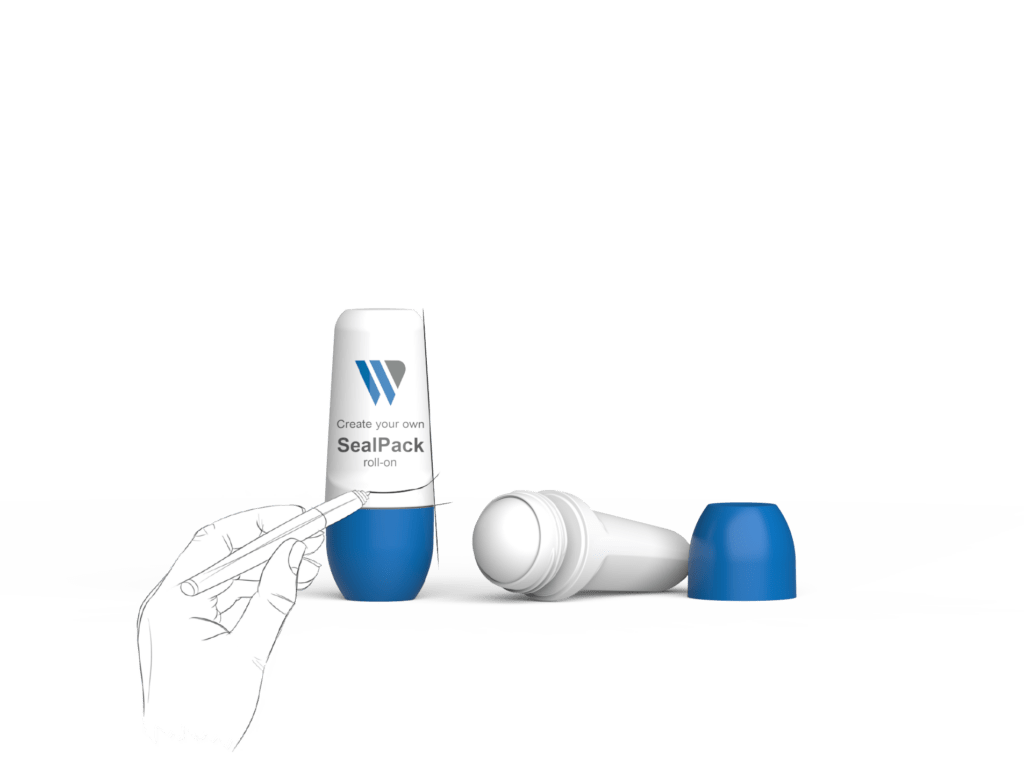
Another business area is deodorant roll-ons. Here, Weener Plastics has developed a concept with SealPack technology that leads to significant material savings. To achieve this, the WP developers designed a one-piece deodorant bottle with a patented sealing function that ensures optimum ball tightness. The only other components are the roll-on ball and a separate screw cap. This solution eliminates the need for a fourth part, the so-called fitment, which is normally used. The three-part packaging saves up to 40 per cent material by reducing the number of packaging parts and the weight of the remaining components. The SealPack bottle can also be manufactured with recycled material at the customer's request.

SealPack technology enables customised roll-on deodorant designs - while the ball area is fixed, the bottle section can be designed as desired. (Image: Weener Plastics)

The company has developed bio-based lids and spoons for packaging baby food. In countries that have recycling plants for polyethylene, they can be recycled in this stream. Properties and functionalities are similar to those of conventional plastics. A well-known food company introduced the bio-based lids and spoons worldwide for baby food products last year.

Today, Weener Plastics has around 4,700 employees at 27 locations mainly in Europe, but also in the USA, Mexico, Colombia, Brazil, Argentina and India, among others, and has joint ventures in Asia. Last year, the company published a sustainability report for the first time. "We are a signatory to and active participant in numerous initiatives to promote sustainability. We want to use these programmes to achieve our medium-term goal: reduce our greenhouse gas emissions by 70 per cent by 2030 and at the same time increase the share of renewable energies from the current 54 per cent to 90 per cent", says Adrian Whitfield.

http://www.wppg.de

More news on packaging and packaging materials