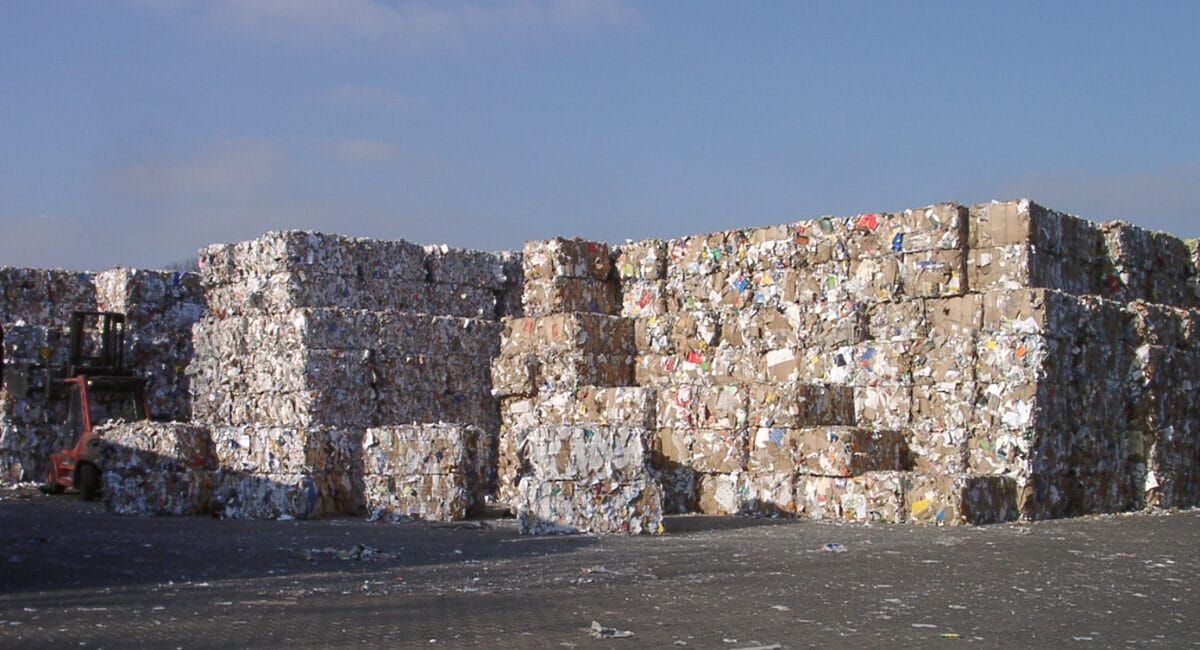
The European recovered paper market remains extremely volatile, summarised the BVSE Paper Recycling Association at the 27th International Recovered Paper Day in Bonn.
According to reports, 2024 got off to a subdued start for the sector, followed by a sudden price rally in the spring, which catapulted bulk varieties in particular to a high - despite weak economic indicators. But the price increase was only short-livedThis was followed by an abrupt decline in autumn. „This rollercoaster ride is likely to be repeated in 2025, but anyone who sees this as a sign of economic recovery will be disappointed,“ warned Mike Hayes, Chairman of the bvse Paper Recycling Association.
Lack of supply as the main driver
Hayes made it clear to the more than 500 participants in Bonn that it is not increasing demand but limited supply and the uncertainty of paper mills drove prices up in 2024. The fear of production cuts led to increased stockpiling and further exacerbated the market situation.

This trend could recur in 2025, especially as Plant closures and insolvencies have permanently changed the European production landscape. „The industry has to hold its own between high energy prices, weak demand and a tight supply of raw materials,“ says Hayes.
Despite the market turbulence, recovered paper remains an indispensable part of the circular economy. Germany achieved a recovered paper utilisation rate of 83 per cent in 2024 - an international record. Across Europe, the recycling rate varies from country to country, with an average of 70 per cent. Globally, it is only 50 per cent, which offers further potential for sustainable value creation. „Recovered paper is the blueprint for a sustainable circular economy in Europe,“ emphasised Hayes.
Germany remains a net importer and imported around 2.8 million tonnes more waste paper than it exported in 2023. The situation is different in the EU as a whole: With net exports of 7.6 million tonnes, Europe remains a significant supplier to third countries. „Paper mills are dependent on imports, as the internal market collection cannot meet the demand,“ explained Hayes.
New regulations: A challenge for international trade
European legislation is making international trade in waste paper increasingly difficult. The new EU Waste Shipment Regulation, which will apply from May 2027, will make it much more difficult to export non-hazardous waste to third countries - even though waste paper is a valuable secondary raw material. As the interpretation of the law remains unclear, the industry has had to do its own educational work. Thanks to the efforts of the European umbrella organisation EuRIC, however, central customer countries were able to carry out the necessary registrations in good time.
Waste properties and recycling quality
Another unresolved problem remains the legal categorisation of waste paper as waste. Despite many years of effort, there is no standardised recognition as a product. Inconsistent regulations in Germany and Europe complicate trade and create uncertainty. Negotiations on an EU-wide end-of-waste date for waste paper in March 2025 recently failed, but the industry continues to hope for progress at national level.
At the same time, the quality of waste paper is declining due to economic developments and new forms of packaging. Fibre-based composite packaging in particular makes recycling more difficult and impair the recycling of the blue bin. „The responsibility for improved recyclability should already anchored in product and packaging development be made,“ Mike Hayes concluded.
Source: BVSE