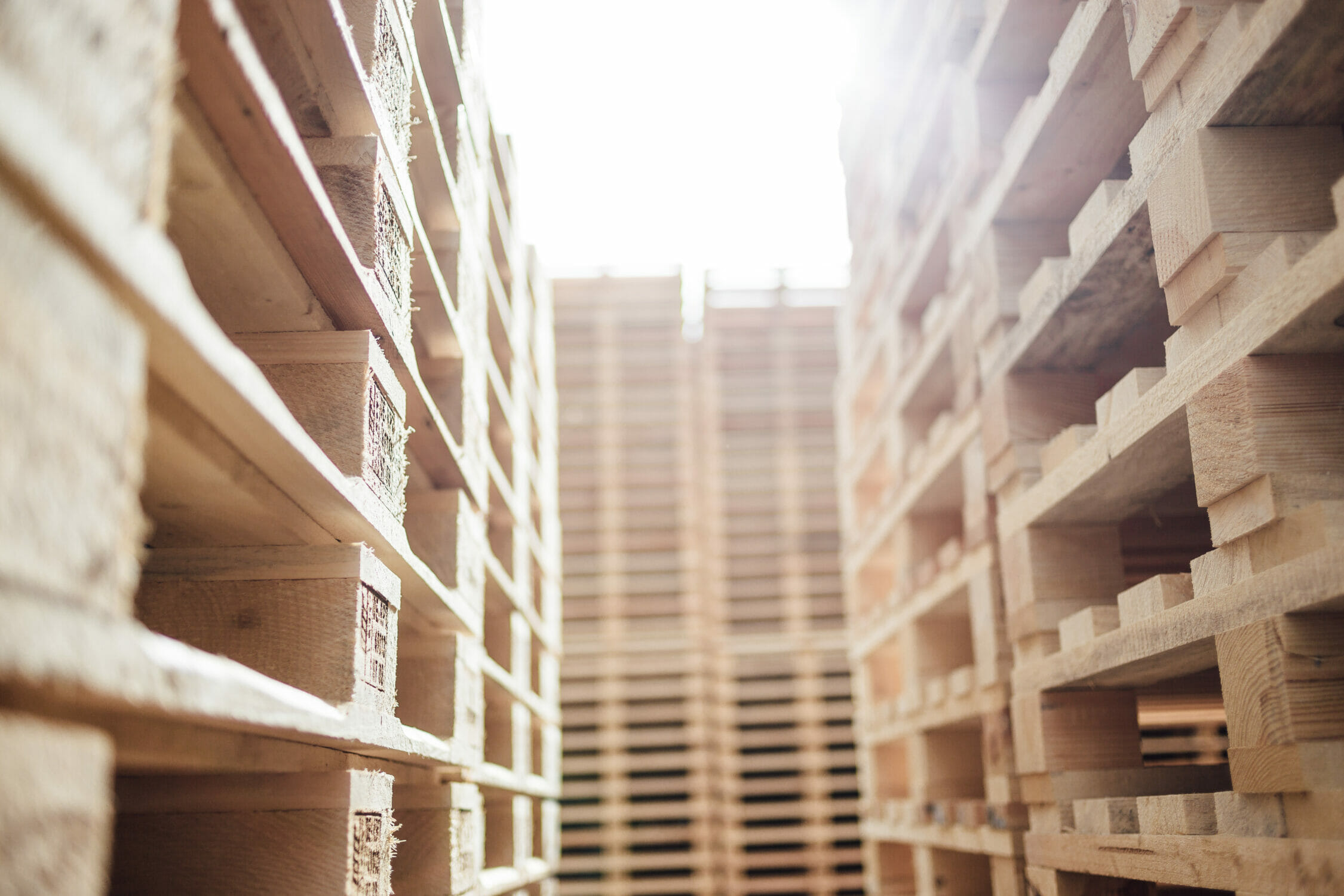
Using wood as a packaging material is the best way to avoid waste. This is because the renewable raw material from the forest can be used and recycled many times over, as the German Association of Wooden Packaging, Pallets and Export Packaging (HPE) explains on the occasion of Zero Waste Day on 30 March.
Zero Waste Day was proclaimed by the United Nations in 2022 during the coronavirus pandemic and the resulting dip in global trade. The overarching goal of Zero Waste Day: Much less waste to achieve the Sustainable Development Goals (SDGs), with which the global community aims to achieve significant progress in climate and environmental protection, sustainable production and sustainable consumption by 2030.
„The global exchange of goods has recovered - even if Germany's economy is weakening. High time to remember Zero Waste Day: In international trade, whether in the European Union or globally, safe packaging made of wood is always a decisive factor. After all, pallets and wooden export packaging are the load carriers that make reliable import and export possible in the first place.“
Marcus Kirschner, HPE Managing Director
The decisive advantage of wooden packaging: They come from biomass, which binds climate-damaging carbon dioxide as it grows. „Packaging made from wood is therefore integrated into natural cycles. They are mobile carbon stores that are travelling the world,” explains Marcus Kirschner. This is because a pallet made of wood binds around 30 kg of CO2 equivalents that the tree from which it originates has absorbed. Assuming a quantity of three to four billion pallets in constant circulation in the EU alone, this corresponds to around 100 million tonnes of CO2 eq. stored in wooden pallets.

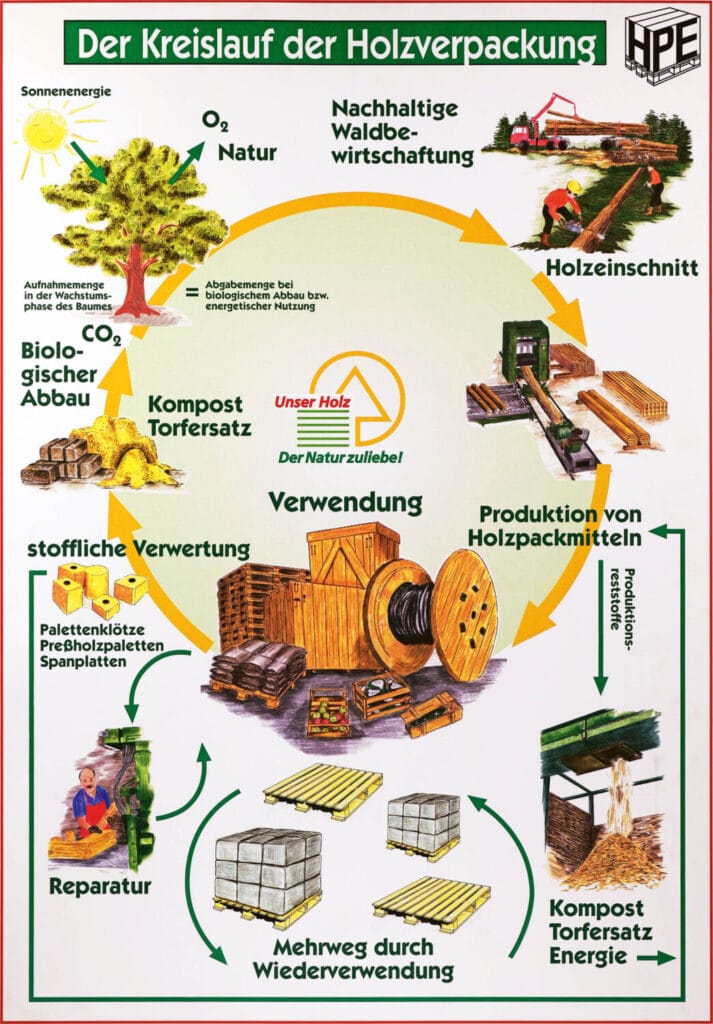
In addition to the storage effect, the good CO2 balance in the production of wooden packaging must also be taken into account. For example, pallets can be used many times depending on the intensity of use and area of application, be it in container transport by sea, lorry or rail. „Once produced, wood packaging can be recycled until the end of its useful life. At the end of the utilisation cascade, it is often used to generate green electricity and environmentally friendly heat. With these properties, wood offers unbeatable climate benefits as a packaging material,” emphasises Kirschner, also against the backdrop of current political debates in the EU.
Utilise resources efficiently
In recent months, the European Union institutions - the EU Parliament, the Council of Ministers and the Commission - have agreed on the regulation on packaging and packaging waste. (PPWR) has been hotly debated. The one currently under discussion Compromise takes the special advantages of wooden packaging a good deal into account. The wooden packaging industry was thus able to push through politically important points in terms of the sustainability benefits of pallets and export packaging.
On the other hand, the PPWR nevertheless poses a clear Increased documentation and therefore bureaucracy. „In times of a shortage of skilled labour, we should use valuable personnel in Germany productively, not for superfluous controls that damage our competitiveness,“ warns Kirschner. Because Zero Waste Day also wants to be Call for efficient utilisation of not only material but also human resources must be understood,“ appeals the HPE Managing Director in the interests of EU competitiveness and economic strength.
Source: HPE