Solutions for tamper-proof packaging: At the bdvi symposium, speakers and participants discussed the challenges that will arise when enforcing the EU Falsified Medicines Directive for the security labelling of pharmaceutical packaging with the aim of achieving traceability and increased protection against counterfeiting.
Cross-industry solutions for counterfeit-proof packaging: At the bdvi symposium, which took place at the Romaco Group in Karlsruhe in April, speakers and participants from various industries discussed the challenges that will arise when enforcing the EU Falsified Medicines Directive for the security labelling of pharmaceutical packaging with the aim of ensuring traceability and increased protection against counterfeiting. The EU directive, which comes into force at the end of the year, includes a feature to verify the authenticity of medicines and a tamper-evident seal on their packaging. In addition, all prescription medicines EU-wide serial number requirement. The implementation of these requirements is a concern for both pharmaceutical manufacturers and all downstream partners in the chain all the way to the consumer. In cooperation with the packaging network bdvi (Association of German Packaging Engineers), Romaco addressed the associated problems and organised a symposium on serialisation and counterfeit protection, which was attended by participants from the pharmaceutical, chemical, packaging, printing and mechanical engineering sectors as well as the automotive and cigarette industries. Presentations were given by Paulo Alexandre, CEO of the Romaco Group (Karlsruhe), Dr Torsten Schmidt-Bader, Managing Director of moveproTEC (Bad Homburg v.d.H.), Sebastian Fries, Head of Product Management at KBA-Metronic GmbH (Veitshoechheim), Wolfgang Bossert, Managing Director of PaperGate GmbH (Eberdingen) and Steve Paschky, Managing Director of Saralon GmbH (Chemnitz) under the moderation of Sonja Bähr, Managing Director of bdvi (Berlin).The global spread of counterfeit medicines and their main focus. Picture: WHO
The focus is on the product itself
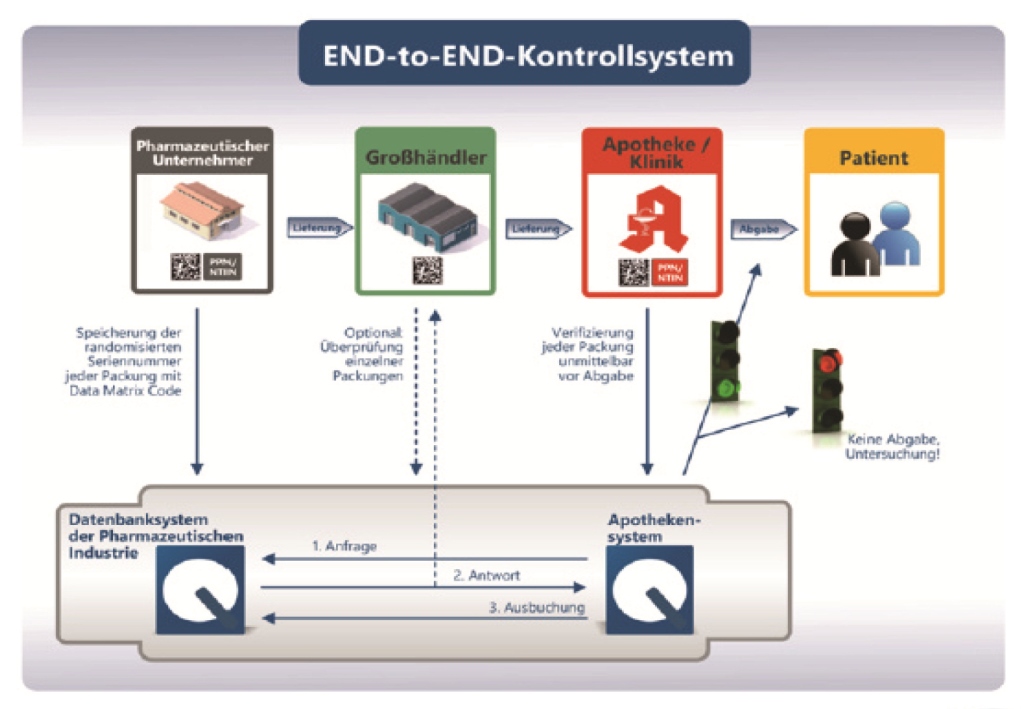
In the opening speech, the host of the bdvi symposium, Paulo Alexandre, explained that „...the focus should be on the counterfeit protection of the product itself. A solution should therefore be sought that serialises the originality of the product.“ The damage caused by counterfeit medicines, which can be estimated at around 75 billion US dollars a year, is not only financial but also ethical in nature. The barrier for counterfeiters should be as high as possible, but verifiability should be as simple as possible. Counterfeit-proof solutions must be optimised along the entire process chain. Romaco is working on this, for example, with the Noack 960 blister solution, in which the packs are labelled with various visible and invisible identification features. The Romaco Group, with four European sites and headquarters in Karlsruhe, is one of the world's leading specialist suppliers of process and packaging technology for the pharmaceutical industry and is one of the 50 most innovative medium-sized companies in Germany.The secuPharm pilot project aims to achieve secure distribution channels throughout the EU from 2018 by networking partners.
Importance of packaging safety
Schmidt-Bader explained the topic „Counterfeit or original? Current status of counterfeit medicines and the importance of packaging safety“ Firstly, the term „counterfeit medicines“. According to the WHO, this refers to false information on the name, composition, potency (falsified identity) or false information on the manufacturer, country of origin, owner of the distribution rights on the product, its container or other information on the packaging or package leaflet (falsified origin). In Germany, this is a criminal offence. While the figures for counterfeit narcotics are declining, the number of counterfeit medicines is increasing alarmingly according to the 2014 annual statistics from the customs administration, explained the speaker. Not only lifestyle medicines and dietary supplements are affected, but also preparations for cancer, HIV, diabetes and malaria. He cited the following reasons for the spread of counterfeits: 1. insufficient regulatory and legal supervision,
2. lack of or inadequate supply of basic medicines,
3 uncontrolled distribution chains
4. price differences between original products and counterfeit medicines
5. insufficient property rights and copyrights,
6. insufficient awareness of quality assurance,
7 Corruption in the healthcare sector. According to WHO surveys in 2010, the effects of counterfeiting have so far caused around 1 million deaths per year, 200,000 of them in China. INTERPOL, together with the World Customs Organisation, Europol, the pharmaceutical industry, international payment and delivery service providers, customs and the Federal Criminal Police Office, has seized 9.6 million counterfeit medicines ($ 32 million). In Germany alone, 816 letters and parcels with dubious, supposedly „medicinal“ contents were confiscated in one week of action. On the initiative of the Council of Europe, the Medicrime Convention was founded, to which 19 EU countries as well as Morocco, Guinea and Israel already belong, and which has taken over the training of employees. In the USA, the „Drug Quality and Security Act“ was passed in 2013, which includes the documentation of the complete sales history from 2015 and the obligation for manufacturers to serialise from 2017. For Europe, it is important to orientate QM systems towards dealing with counterfeits in the future in order to implement the GDP Directive 2013/C 343/01. The secuPharm pilot project aims to achieve secure distribution channels throughout the EU from 2018 by networking partners. Counterfeit-proof packaging should represent a high barrier for potential counterfeiters, but remain easy for patients to verify. Schmidt-Bader described patient apps (Check my MedsTM - EMD Serono in the US market), edible sensors in tablets (sensor size 1 mm³, activated by gastric juices) that send a signal via Bluetooth after ingestion or edible RFID chips in capsules (chip is 40 times smaller than IEM, also sends a signal, can be read from the outside, costs < 1 cent/unit) as future-proof variants.KBAMetronic's solution starts at the point of „single pack“ and/or „case“ serialisation.
Labelling solutions
Sebastian Fries presented KBA-Metronic as a specialist for labelling solutions with the product „udaFORMAXX“ for the offline coding of packaging. The track-and-trace solutions in conjunction with the udaFORMAXX start at the point of „single pack“ and/or „case“ serialisation and thus enable efficient coding for small batch sizes, special products, etc., whereby the coding can be applied to the pack with almost all coding devices. However, the fact that the standards are not stringent remains a particular challenge, which is why KBA-Metronic attaches great importance to Customised project planning lay.
Security technology
Wolfgang Bossert pursued a future-oriented approach by combining the megatrends currently favoured by consumers, such as personal responsibility, an intact environment, health knowledge and care, into a security technology. Printed electronics, the Internet of Things and Industry 4.0 enable a high-security technology that can prevent counterfeiting through the „electronic fingerprint“. With the patented I-Paper technology and the APP-SURE software for mobile product verification, hidden security features in the billions of sensors in smartphones can be detected and interactively checked through the unopened packaging. The contents are read via the embedded Intelligence in serialised packaging gThe printed electronics are secured, cost-effectively equipped with covert and overt security features and made authenticatable throughout the entire logistics chain. The printed electronics are replaced by existing RFID or NFC technologies. APP-SURE thus offers the brand owner an optimisation module and can be used as an additional marketing tool by both retailers and end consumers.
Integrated counterfeit protection in packaging
Saralon sees itself as a specialist for integrated printed electronics in the Brand Management. Steve Paschky showed that the company has developed solutions for integrated anti-counterfeiting protection in packaging in order to make the integrity of the original closure verifiable for the end consumer. The packaging is equipped with a fully printed electronic application consisting of a battery, sensors, circuitry and a display. When the consumer presses a dot on the pack, an image appears on the display. If the original cap has already been opened, the circuit will no longer function. The „printed electronics“ can be printed on different materials and in different mechanisms and generate several additional benefits for consumers at the PoS. After this workshop, Sonja Bähr concluded that the implementation of the pharmaceutical directive remains very challenging, especially for small and medium-sized companies, and that other sensitive sectors such as the chemical and cosmetics industries, as well as the automotive and aerospace industries and manufacturers of high-end luxury brands, must also endeavour to increase safety and that further rounds of experts will be required.