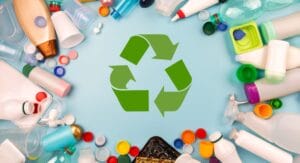
On the occasion of today's World Recycling Day (18 March), the focus is on current developments in packaging recycling. While increasing recycling rates show a positive trend, correct waste separation remains a decisive factor for a functioning circular economy. New figures from the Federal Environment Agency and a recent consumer survey by Pro Carton illustrate progress and challenges.
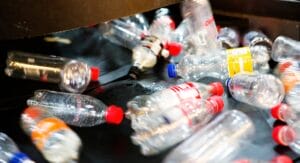
According to the Federal Environment Agency (UBA), a total of 5.5 million tonnes of packaging waste from private households was recycled in 2023. The mechanical recycling of plastic packaging in particular has improved: it rose from 42.1 1TP3 tonnes in 2018 to 68.9 1TP3 tonnes in 2023. Nevertheless, the actual recycling rate for plastic packaging remains below the target at 48.4 1TP3 tonnes.
„We must not only continue to increase recycling rates, but also ensure that recycled materials are used again in high-quality applications. This is the only way a true circular economy can work“, emphasised the Federal Environment Agency at the end of January. Incorrect waste separation, which makes recycling more difficult, continues to be particularly problematic.

Cardboard packaging as a pioneer of the circular economy
While the recycling rates for plastic packaging fall short of expectations, paper and cardboard packaging has a significantly higher recyclability. According to the Federal Environment Agency, the recycling rate for paper, cardboard and paperboard in Germany is 85.1 %. A recent survey by Pro Carton also confirms this trend across Europe: with a recycling rate of 83.2 %, fibre-based packaging plays a leading role.
„Cardboard packaging is not waste, but a valuable resource for the production of new packaging materials“, explains Winfried Mühling, Director of Marketing and Communication at Pro Carton. „By collecting and recycling cardboard packaging, we can further strengthen the circular economy and reduce our dependence on new raw materials.“
The survey also shows that consumer confidence in the recyclability of cardboard is higher than ever before at 85 % - surpassing even glass. Increased environmental awareness is particularly evident in Southern Europe: 70 % of the Spanish and 65 % of the Italians surveyed stated that they had increased their recycling rate in the last year.
The challenge remains separating waste correctly
Despite the positive developments, proper waste separation remains a key challenge. The Federal Environment Agency warns that too many foreign materials still end up in the recycling bins and make recycling more difficult. Biowaste or residual waste in the yellow bin not only impair the quality of the recycled material, but also make the sorting process considerably more difficult.
„Clean separation is the only way to effectively recycle recyclable materials and protect the environment“, emphasises the UBA. Well-organised, separate collection is therefore essential to enable high-quality recycling streams.
On World Recycling Day 2025, it becomes clear: progress is visible, but the challenges remain. While cardboard packaging achieves high recycling rates, plastic recycling must be further improved. The key to this lies in technological innovations, optimised infrastructure and consumer commitment to correct waste separation.
The Federal Environment Agency and Pro Carton are therefore calling on politicians, businesses and consumers alike to further intensify their efforts towards a functioning recycling system.
More news on the topic of recycling


UBA and ZSVR: packaging recycling works

Waste disposal associations support plastic levy

BDE calls for „Made-in-Europe“ regulation for recycled plastics

Singapore introduces deposit system for drinks containers