




Researchers at the University of Cambridge have developed a sustainable material based on plant proteins. It is marketed by the start-up Xampla, could replace single-use plastics in consumer goods and is similar to spider silk. The first applications are currently being trialled and are due to come onto the market next year.
The spider's silk thread is a unique natural fibre, Extremely tear-resistant and elastic at the same time. Researchers at the University of Cambridge have now succeeded in replicating the structures of spider silk using soya proteins and developing a polymer film that mimics the properties of the spider's thread.
„Since all proteins consist of polypeptide chains, under the right conditions we can ensure that plant proteins assemble themselves just like spider silk.“ Professor Tuomas Knowles, Head of Research, University of Cambridge
The scientist from the Yusuf Hamied Department of Chemistry in Cambridge has been working on this topic for many years. with the behaviour of proteins. His research focuses primarily on the question of what happens when proteins misfold or „misbehave“ and how this relates to health and human disease. „Normally we study how functional protein interactions keep us healthy and how irregular interactions are involved in Alzheimer's disease,“ says Knowles. „It was therefore a surprise to work with of our research is also a major sustainability problem to be able to tackle it.“

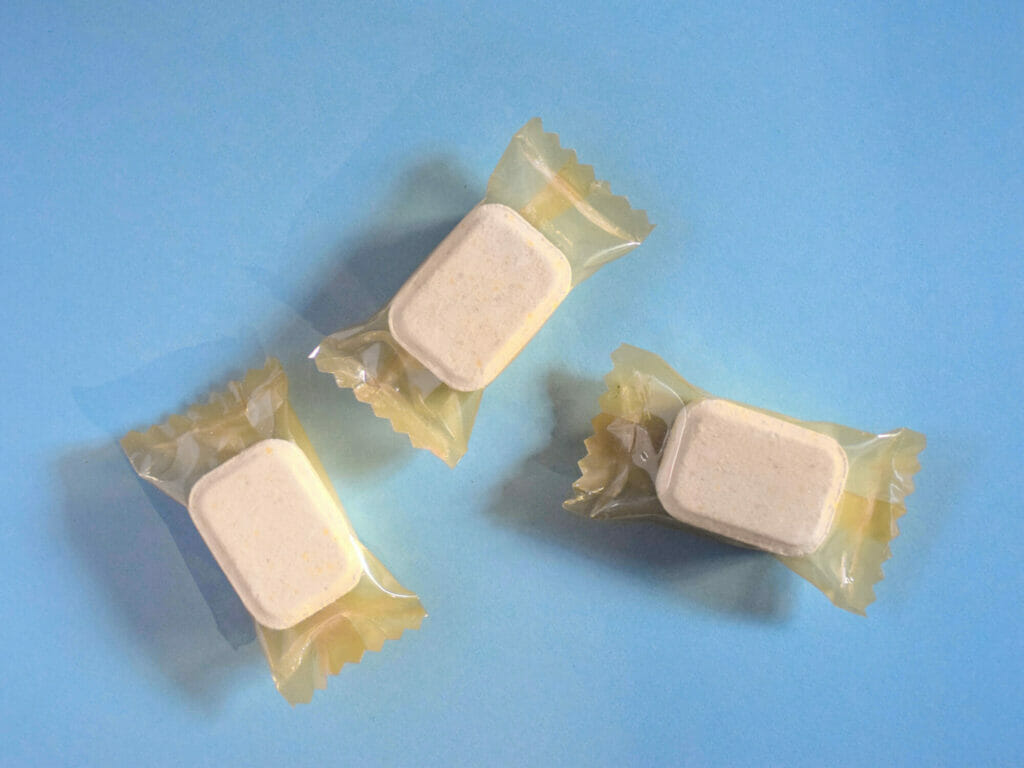 The first film packaging for dishwasher tabs is currently being trialled. (Image: Xampla)
Xampla brings plastic alternatives to market maturity
The new material is just as durable as many plastics in use today and could replace plastic in many common household products. For the further development and commercialisation of the new material Xampla was founded as a spin-off from the University of Cambridge. The young company aims to Bringing alternatives to single-use plastic and microplastics to market maturity and is currently testing the first sustainable film packaging for dishwasher tabs.
„We are currently in the trial phase with a view to launching it on the market next year. The material is being developed as a drop-in solution for existing film casting systems.“ Simon Hombersley, CEO of Xampla
Spider silk without spider
Dr Marc Rodriguez Garcia, formerly a postdoctoral researcher in Knowles’ group and now Head of Research and Development at Xampla, explains the path from research to marketable product. „As part of our protein research, we were also interested in why materials such as spider silk are so strong, even though they have such weak molecular bonds.“ Plant proteins are also abundant and can be sustainably obtained as by-products of the food industry become.
„Other researchers have worked directly with silk materials as a plastic substitute, but it is still an animal product. In a way, we have developed a ‚vegan spider silk‘, because we have created the same material without the spider.“ Dr Marc Rodriguez Garcia, Head of Research and Development Xampla
The ‚vegan spider silk‘ therefore mimics the properties of silk at the molecular level. The result: a plastic-like, stable film that can be produced on an industrial scale. According to the scientists, it is similar to high-performance engineering plastics such as low-density polyethylene (LDPE). The material also has excellent oxygen and fat barrier properties, and the barrier against moisture corresponds to that of conventional bioplastics.
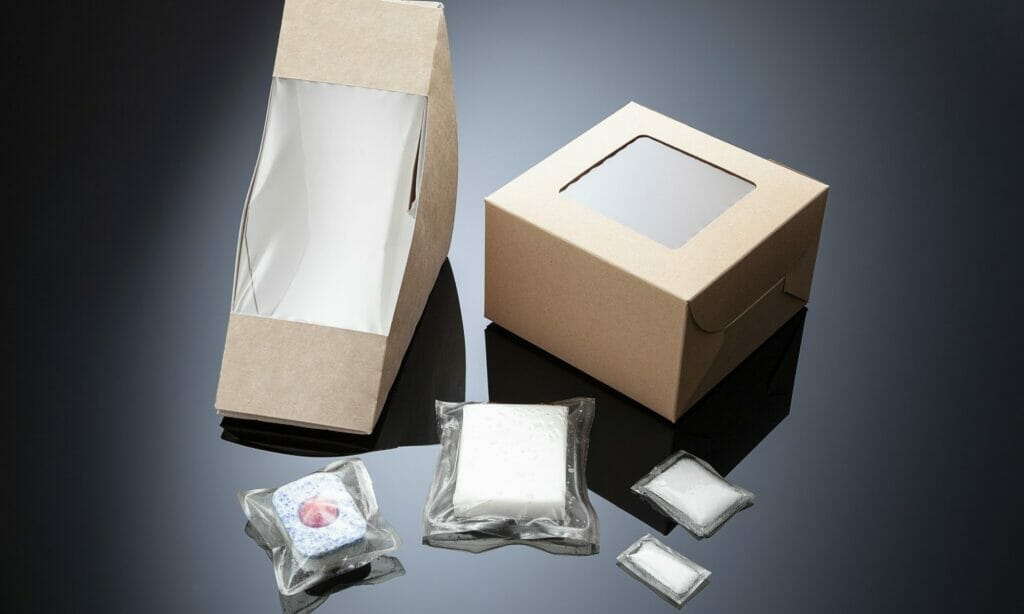 The new polymer film made from plant proteins mimics the properties of a spider's thread. (Image: Xampla)
 The new material is home-compostable and can be coloured. The researchers are also testing its Suitability for the production of waterproof coatings.
Xampla CEO Simon Hombersley: „Over the next few years, it will crystallise who will be the most important player in the A nose ahead in the field of plastic alternatives has. We want to be one of these winners with Xampla and serve customers in all packaging applications.“
