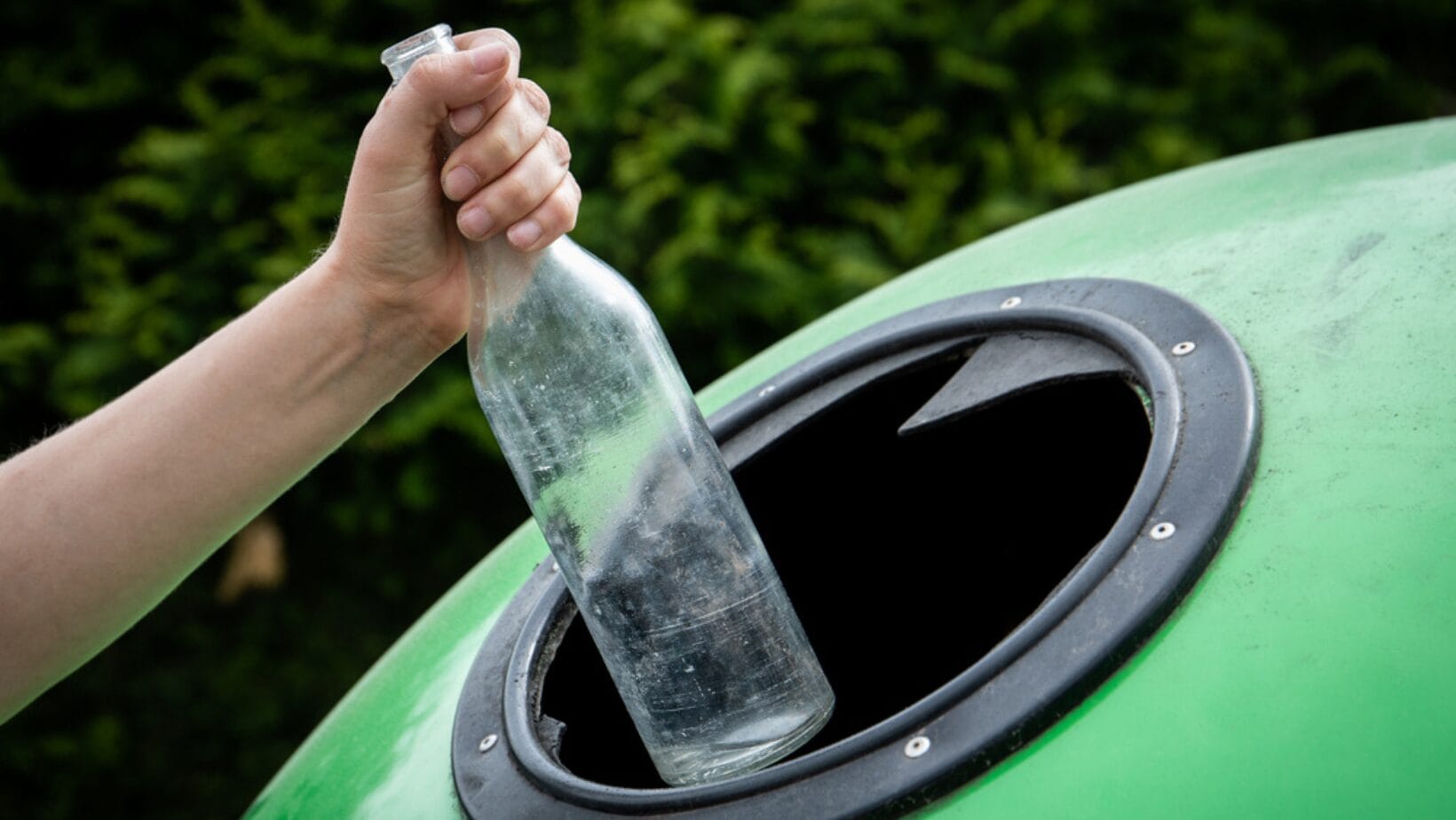
Although glass is a material with which real cycles are possible, Germany has fallen short of the recycling rate. The ZSVR Advisory Board has now identified key levers for more glass recycling.
Germany missed the recycling quota for glass in 2022. It will remain challenging in the years to come. Citizens are still disposing of too much glass in residual waste. Each of them would have to collect 2.5 kilograms more used glass per year, to fulfil the recycling quota of 90 per cent. Municipalities, systems and retailers have it in their hands. Better containers in more locations are an important key to higher collection volumes.
The Advisory Board of the Central Agency Packaging Register (ZSVR) has intensively deals with the reasons for the quota shortfall and recommends, among other things, at least one glass collection point per 1,000 inhabitants as well as investments in noise protection and cleanliness for greater acceptance.

Because the ecological benefits of recycled used glass are enormous. Building on a new study by the Institute for Waste, Wastewater and Infrastructure Management GmbH (INFA) the Council has identified the key levers for optimising glass recycling and makes specific recommendations for action.
"Together, we can achieve a circular economy for used glass in Germany. The accessibility of collection centres is a key factor in increasing the quantities and thus the recycling rates. In addition, the climate and resource benefits of glass are particularly high."
Gunda Rachut, Board of the ZSVR
Study uncovers problems with glass collection
The INFA study shows which framework conditions influence collection volumes. It also provides answers to the questions of which location factors are important for containers and which are not. how Germany can increase the volume of glass collected. One thing is clear: collection must be made as easy as possible for citizens. According to the study, collection volumes are clearly dependent on the settlement and development structure of a region. In urban structures, a higher container density has a positive effect on collection volumes. The ZSVR advisory board therefore recommends at least one glass collection point per 1,000 inhabitants.
This is why local authorities also have a responsibility. They must fight for their parking spaces instead of reducing them further. In particular Germany's cities need more parking spaces. To ensure this in future, local authorities must include locations for collection containers in urban planning at an early stage.
Cities and municipalities are not solely responsible. The systems should make it as easy as possible for the municipalities and work together to eliminate the various problems. In particular the Improved cleanliness of containers and parking spaces as well as noise-reduced collection containers play a major role. In addition, systems and municipalities can enhance the collection systems and increase acceptance with underground containers. This in turn has a positive effect on the frequency of use and collection volumes.
Retail fulfils all requirements for optimal collection locations
The study also concludes that retailers have the perfect locations for collection containers. Citizens already hand in their returnable bottles and empties there. Additional collection containers for used glass would make disposal much easier for them. Supermarkets, shopping centres, petrol stations and beverage stores already meet the key requirements for the ideal container location, such as good accessibility, direct parking facilities and a clean appearance. All the results point in one direction: retailers can also make a contribution to the environment and enable the installation of used glass containers in their car parks.
Important: An optimised collection infrastructure from local authorities, systems and retailers alone is not enough to fulfil the statutory recycling quotas. How much used glass actually ends up in the containers depends on the citizens. They have to organise the collection. It is up to each individual to remove any residual residue from glass - if necessary - and dispose of used glass in the appropriate containers.
Source: ZSVR