The year 2026 will be very special for Junghans Kunststoffwaren-Fabrik from Hessisch-Lichtenau. The family-run company can look back on 150 successful years: founded in 1876 as a small regional trading company, the Junghans name today stands for individually manufactured, high-quality plastic packaging, closures, lids, and containers.
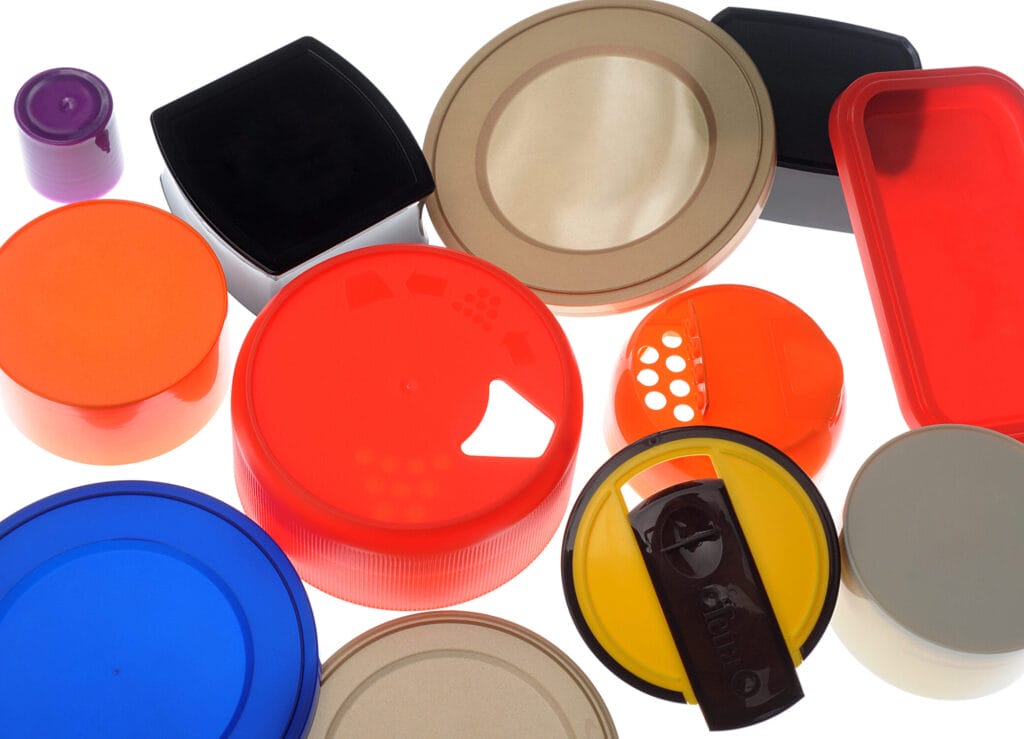
The company manufactures packaging for world-renowned products such as TetraMin, Südzucker, Natreen or Wiberg spices. With an annual turnover of 14 million euros, Junghans supplies 95 percent of its lids to international corporations in Germany, so many lids begin their journey around the world.
For more efficient production, Junghans invested nine million euros in state-of-the-art automation and digitalisation, including driverless transport systems, palletising robots, fully automatic case erectors and sealers, and a high-bay warehouse. The comprehensive digitalisation of manufacturing processes at all stages also enables the seamless traceability of each of the over one million products manufactured daily.

The 65 employees receive continuous training in all hygiene and quality-relevant topics, with internal auditor teams monitoring the processes. As a result of this optimised quality assurance, Junghans achieved the rarely awarded top rating AA+ in an unannounced BRC hygiene audit.
Great-great-grandfather Christoph Junghans laid the foundation in Vockerode, Werra-Meißner district, with a trade in ointment jars, tailor's chalk, and school chalk. Shortly afterwards, the company was already characterised by its own production of ointment jars made from porcelain and clay. In 1952, the company relocated to Hessisch Lichtenau. Here, the first can was pressed from the thermosetting plastic Bakelite. This made Junghans one of the first manufacturers of plastic packaging. Lids could also be printed in multiple colours. From 1960 onwards, thermosetting plastics were replaced by thermoplastics, and production by injection moulding became possible.
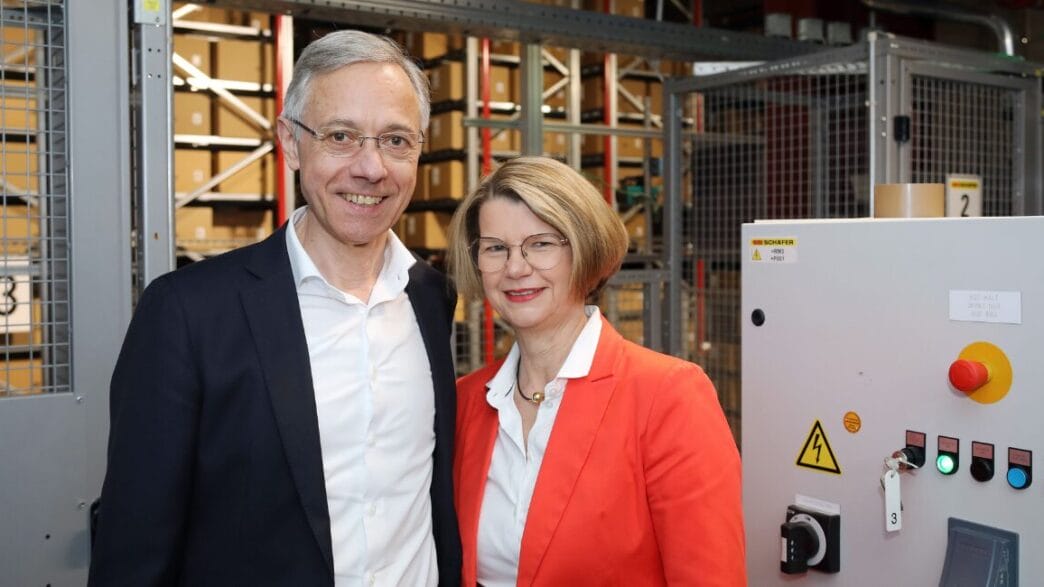
In 1997, graduate engineer Klaus Junghans took over the company with 15 employees. Together with his wife Martina, he manages the company's business. The trained chemical engineer is responsible for the company's human resources and quality management divisions.
Sustainability as a core strategy
Klaus Junghans has since developed a great many individual closure and packaging solutions for the food, animal feed, and pharmaceutical industries, with sustainability having long been a core principle. „In the future, a key focus will be on developing monomaterial packaging and reducing packaging weight. We already recycle our production waste ourselves and also use it to produce new packaging upon customer request,“ emphasises Klaus Junghans. The company is therefore well-equipped to meet the requirements of the PPWR regarding packaging design, material usage, supply chain structures, and documentation.
Source: Junghans plastic goods factory