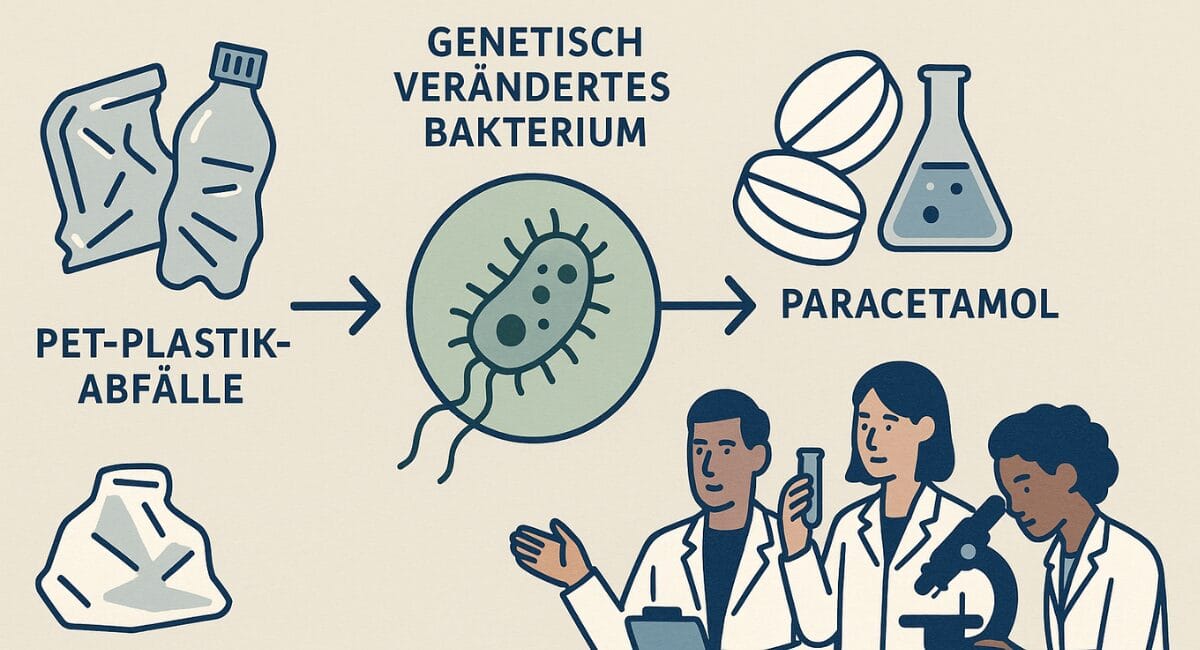
A research team at the University of Edinburgh has developed a method to convert PET plastic waste into the active ingredient of paracetamol using genetically modified bacteria. The technology could revolutionise the production of the painkiller - in a climate-neutral and sustainable way.
A research team from the Wallace Lab at the University of Edinburgh has presented a process that can be used to produce the painkiller paracetamol from plastic waste. Genetically modified Escherichia coli was used, which can convert terephthalic acid - a degradation product of the plastic polyethylene terephthalate (PET) - into paracetamol within 24 hours. The process produces hardly any CO₂ emissions and could replace the current fossil-based production of the active ingredient in the long term, according to reports from Scotland.
Plastic waste as a source of raw materials
To date, paracetamol has been produced industrially on the basis of fossil raw materials such as crude oil. This produces thousands of tonnes of CO₂ every year, as experts point out. In view of dwindling resources and the increasing demand for medicines, there is growing interest in more climate-friendly alternatives.

At the same time, the recycling of PET plastics poses a major challenge. According to research, more than 350 million tonnes of PET waste are produced worldwide every year, which often ends up in landfill sites or in the oceans. Although recycling processes exist, these often produce products that are difficult to break down and contribute to ongoing environmental pollution.
Fermentation replaces fossil chemistry
In the laboratory, the research team succeeded in using a fermentation process - comparable to the brewing process - to convert the starting material terephthalic acid into paracetamol at room temperature with almost zero emissions. According to the team, the success rate was around 90 per cent.
Professor Stephen Wallace, head of the project and UKRI Future Leaders Fellow, explained that the results show that PET does not necessarily have to be converted into other plastics. Instead, the plastic can be transformed by microorganisms into valuable chemical products - with potential applications in medicine.
Cooperation with industry partners
The study, published in Nature Chemistry, was funded by an EPSRC CASE grant and the pharmaceutical company AstraZeneca. The project was also supported by Edinburgh Innovations, the university's commercialisation unit.
According to the University of Edinburgh, it is one of the leading institutions in the field of engineering biology in the UK. The research combines engineering principles with biological processes to develop new products and materials.
Ian Hatch, Head of Consulting at Edinburgh Innovations, emphasised that engineering biology could make a decisive contribution to reducing fossil dependencies. Companies such as AstraZeneca should help to transfer innovative biotechnological processes into marketable applications.
Source: University of Edinburgh