It protects its contents over a long period of time and preserves the special enjoyment experience of convenience classics and gourmet highlights. But the tin can can do much more: it inspires artists, attracts attention and offers plenty of potential for innovation.
For more than 200 years, the food can has stood for quality and safety. Today, it is also known as a flavouring reservoir, a nutrient protector and a model of sustainability. The metal packaging surprises time and again and serves up superlatives. The most bizarre gifts in tins are probably „Fine mouse goulash“, „Roasted toad legs“ or „Tender grizzly fillet“. Anyone who opens these tins with a queasy feeling will be relieved when they see the delicacies: delicious wine gums and sweet foam mice that are sure to go down well.
A gift from the Luxury class is embodied by the most expensive tin. It is filled with special contents: the exclusive Almas caviar. This fine caviar is obtained exclusively from sturgeons from the Caspian Sea that are at least 80 years old - and therefore rare. Only 20 to 30 kilograms of this delicacy are produced each year. Of course, this is also reflected in the price: a kilo costs 30,000 euros or more.

Whether caviar or classic dishes, the metal packaging keeps the food for many years fresh. This can be increased even further with freeze-dried tinned food. This process removes the water from the food, extending its shelf life even further. This means that even treats such as ice cream or yoghurt, which normally have to be refrigerated, can be stored at room temperature - for a whole 25 years.
Added value for society
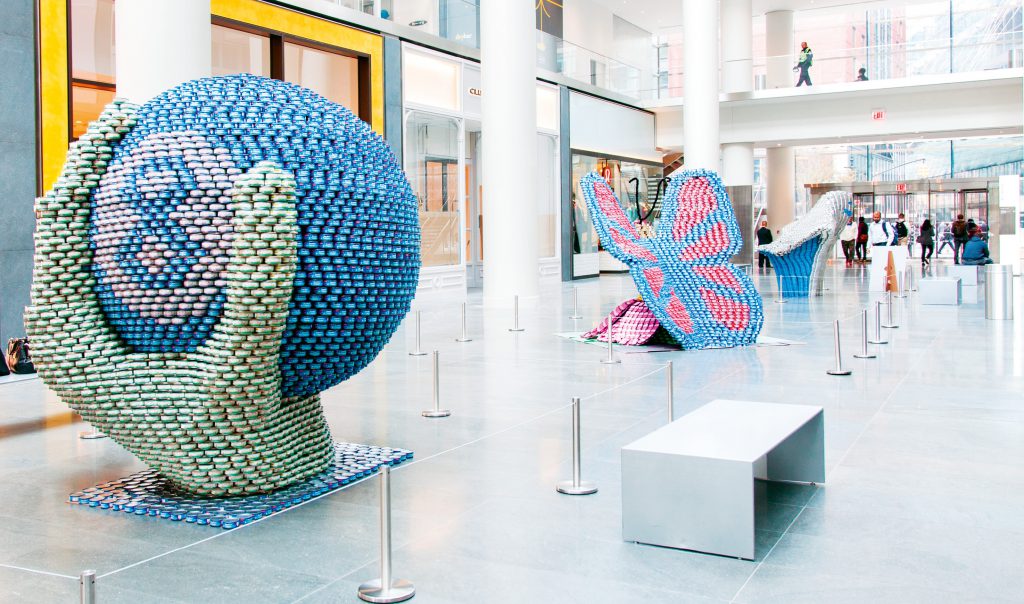
The food can also combines enjoyment and social commitment. This is demonstrated by numerous projects. Many members of the „Food can initiative“ support, for example, the organisation Save Food, which fights against food waste. At the New York art project Canstruction The first step is to create sculptures from a wide variety of food cans, which are then distributed to those in need.
The premium brand NOAN is committed to helping those in need: Ten per cent of the company's turnover is donated to aid projects every year. The company sells fine olive oils, for example. The tinplate packaging not only serves as protection, but also as a Differentiation from the competition. This is because many olive oils are bottled in glass bottles. To stand out from the crowd, the entrepreneurial couple Margit and Richard Schweger wanted to design a clean, cool and urban look for their brand. That's why they opted for the tinplate can, which also has another major advantage: as tinplate opaque it provides optimum protection for the sensitive oils. Quite apart from this, the tin scores highly in terms of sustainability and is therefore also in line with the brand's concept. This is because the raw materials come exclusively from organic cultivation and are based on fair cooperation with regional farmers. They are also produced using environmentally friendly and healthy processing methods.
The organisers of the Festival de Cannes showed their social commitment with the help of the can in 2016: at the awards ceremony, the winners could choose between the Cannes Golden Lion and a gold-coloured can of beans - the „Can Gold“ - choose. Both trophies had the proud price of 1,500 euros, but the money raised for the Can Gold was donated in favour of starving children.

Food for the brain
Other examples show that the tin can has many different facets. It pampers the taste buds with its contents and even provides food for the brain - in the literal sense. „Food for Thought“ is what US designer Maria Mordvintseva-Keeler calls her creative concept, with which she puts literature in a new light. The artist has three classic novels, which, appropriately enough, have to do with food, in the Iconic tomato soup can from Heinz (see above) and re-labelled. The works „Breakfast at Tiffany's“, „Naked Lunch“ and „Dinner at the Homesick Restaurant“ appear in a tinplate sleeve decorated with small literary tidbits and loving graphics. Accordingly, Truman Capote's „Breakfast at Tiffany's“ contains lost dreams, is an excellent source of irony, offers 85 per cent of the necessary daily dose and a pinch of sadness.

The can of the future
One „Talking“ biscuit tin, that offers virtual recipes, or a bean tin that reveals all the details about the cultivation and delivery routes of the vegetables - pure utopia? Not at all, this science fiction idea could soon become part of everyday supermarket life. The reason for this is the triumphant advance of the „Internet of Things“ (IoT), which refers to the networking of objects with the internet. An approach that the packaging manufacturer Crown has developed together with EVRYTHNG, a specialist in IoT solutions, now wants to extend this to food and beverage cans. The best prospects for a perfect win-win situation: while brand manufacturers and retailers can achieve higher sales through interaction with customers, the Product loyalty generate and Supply chain insights the consumer benefits from the Inspiration and Traceability and Transparency.
[infotext icon]In 2000, well-known German manufacturers from the food and packaging industry joined forces to form the „Food can initiative“ together. Its aim is to provide consumers and nutrition experts with comprehensive information about canned food. It also shows how cans can help to reduce food waste[/infotext].Unbeatable as a stock
But even without modern technology, the food can stands for the future. Reliable packaging for supplies. For example, the German government recommends that all citizens stockpile a small amount of food for emergencies. To this end, it has even „Stock calculator“ which shows in detail which and how much food a family can make ends meet for 28 days. The list repeatedly includes tinned food. The online shop conserva.de has even specialised in emergency supplies, long-term food and outdoor catering. You can choose from bread, butter, cheese, sausage and much more - safely packed in tin cans. The DosenBistro even offers home-cooked meals in cans, from breakfast and lunch to dessert. As it turns out, the future of tins has already begun.