The food industry and the packaging industry are still waiting for German and European guidelines on how to deal with the contamination of food with mineral oil residues. Despite 30 years of discussion, there are still gaps in the information available. This became clear once again at a conference in Düsseldorf.
The packaging industry is still waiting for reliable information on how to deal with residues of potentially harmful aromatic mineral oils (MOAH) and saturated mineral oils (MOSH) in food. The debate is almost 30 years old. Packaging has become an issue because it is considered certain that the use of previously printed packaging can lead to food safety risks, recycled paper remaining Traces of mineral oil from the printing inks into the Food can penetrate. However, it is now also clear that there are other entry factors such as production with contaminated machinery, exhaust gases and emissions, additives such as certain waxes or even Transport bags made from jute or sisal that has been processed with mineral oils. Contaminants even migrate into food from outer or transport packaging.
A binding legal regulation has been awaited for many years. This is to be implemented with the German „Consumer Goods Ordinance“. It is better known as the Mineral Oil Ordinance. It is currently only available as a draft and has been widely criticised. One of the reasons: There is still no clarity about the definition of hazardous substances and the associated determination of limit values. This is because mineral oils are highly complex structures made up of a wide variety of Hydrocarbons and difficult to determine.

A standardised regulatory framework is also lacking at European level. Although the European Commission published a Monitoring process for mineral oil residues started in food. However, the first results are not expected to be available before 2019. „The lack of clarity in regulation is leading to uncertainty in the industry. They want planning certainty,“ Dr Monika Tönnießen, Manager Product Safety & Regulatory Affairs at Henkel, told packaging journal back in January 2017.
Narrowing the discussion to recycled cardboard is no longer in keeping with the times
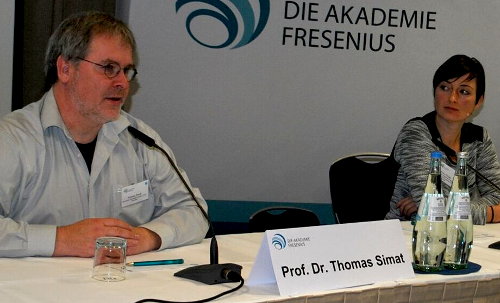
Actors as diverse as Rüdiger Helling from the Saxon State Ministry for Social Affairs and Consumer Protection and Matthias Wolfschmidt from the consumer protection organisation „foodwatch“ agree in their criticism of the German draft law. Both were invited as speakers to a conference organised by the Fresenius Academy on 7 and 8 November 2017 in Düsseldorf. 17 experts discussed the status quo in the debate on mineral oil residues in food with business leaders.
It is no longer up to date to limit German regulations to the contact of foodstuffs with food. Recycled cardboard Rüdiger Helling noted. He was supported by Konrad Grob from the cantonal laboratory in Zurich. It was there that the contamination of hazelnuts with mineral oil residues first came to light in 1989. The discussion about recycling cartons triggered by the public scandalisation was leading in the wrong direction. The discussion about contamination with mineral oil is too one-sided. However, a comprehensive analysis of all substances transferred from recycled cardboard to food is required. Rüdiger Helling said that it was virtually impossible to completely eliminate individual substances. A minimisation strategy would be more promising.

Criticism of planned „functional barriers“ in the Mineral Oil Ordinance
The Fresenius conference criticised the „functional barriers“. The plan is that Food packaging made from waste paper must be covered with a thin barrier film. However, this should only prevent more than 0.5 milligrams of MOAH per kilogramme from penetrating the film. This value is criticised by Foodwatch, among others, as being far too high. The organisation demands that all food packaged in paper must be protected with effective functional barriers, with no exceptions.
This requirement does not appear to be impossible. Effective coatings for almost all types of packaging can be identified for almost any foodstuff. Representatives from BASF reported this back in 2011 at a BfR workshop in Berlin. The chemical company had analysed the migration of mineral oil residues into food and the effectiveness of various barrier solutions in a large-scale study. Other large companies are also working intensively on this topic. Henkel, for example, operates its own information portal on its website on the topic of Food safety and for the safe packaging of food. The Food Chemistry Institute (LCI) of the Federal Association of the German Confectionery Industry in Cologne offers association members a „toolbox“ with data and information on Sources of contamination and starting points for optimising the process chain [infotext].
Mineral oil residues burden the body for a lifetime
The contamination of food with the mineral oil residues MOSH and MOAH is considered problematic because the substances are deposited in body fat and organs such as the liver and spleen. In 2012, the European Food Safety Authority (EFSA) determined that people ingest between 0.03 and 0.3 milligrams of MOSH per kilogramme of body weight every day through food consumption. In the case of MOAH, between 0.006 and 0.06 milligrams per kilogramme of body weight are ingested. In total, up to 13 grams of mineral oil accumulate in the body during a human lifetime. Even if the consequences for human health have not been conclusively clarified - there are too many influencing factors - the German Federal Institute for Risk Assessment (BfR) advises completely preventing the contamination of food with MOAH[/infotext].
Fraunhofer Institute works on forecasting models
Further helpful data is currently being generated at the Fraunhofer Institute for Process Engineering and Packaging (IVV) in Freising. A project is running there until 2018 in cooperation with the Technical University of Munich, at the end of which guidelines for minimising MOSH/MOAH migration are to be developed. The aim is to develop a model to minimise the Mineral oil migration reliably. For this purpose, different types of food were simulated, exposed to various mineral oil components under changing environmental conditions and subjected to barrier measurements. Specific contamination effects were identified depending on the fat content, structure and complexity of the ingredients.
Romy Fengler from the Fraunhofer IVV explained at the conference in Düsseldorf that not just one factor is responsible for contamination with MOSH and MOAH, but a whole bundle of influencing factors. She mentioned the type of packaging solution, the storage conditions and the food properties themselves. Basically, MOAH gets into the food faster than MOSH. The Fraunhofer researchers discovered this when they took a closer look at the migration of harmful substances in various chocolate products and pasta.