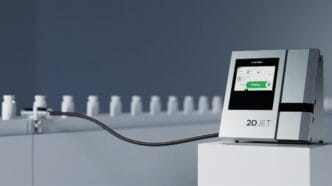
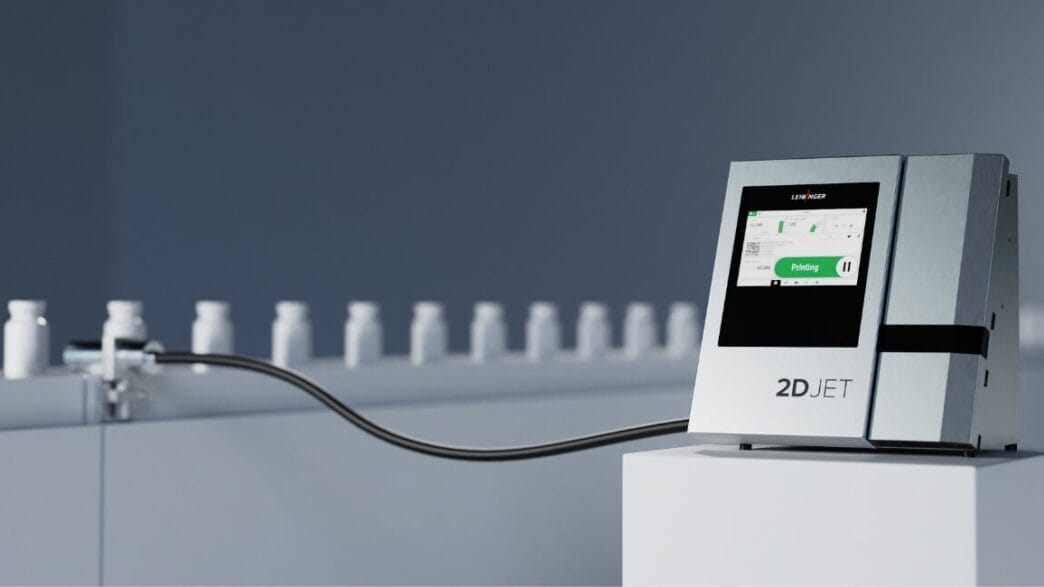
At Interpack, Leibinger is introducing a new class of marking and a fundamentally new approach to industrial marking with 2DJET. The 2DJET system prints GS1-compliant 2D codes with a resolution of up to 300 dpi, achieving print speeds of up to 120 metres per minute.
At the same time, the solution is designed for a wide variety of packaging materials and formats – without compromising productivity or flexibility. 2DJET integrates seamlessly into existing production lines, is particularly easy to install and operate, and supports manufacturers in significantly simplifying both implementation and daily GS1-compliant production.
New standard in the packaging industry
The direction in the packaging industry is clear: in sectors such as food, beverage, and FMCG, 2D codes are rapidly becoming the new standard. Their benefits are compelling: more data on a smaller surface area, better traceability, more flexibility in information management, stronger consumer interaction, and better control along the entire value chain. Added to this is their relevance for future requirements such as the EU Digital Product Passport. With the globally increasing importance of GS1 standards, the strategic relevance of 2D codes is beyond question.

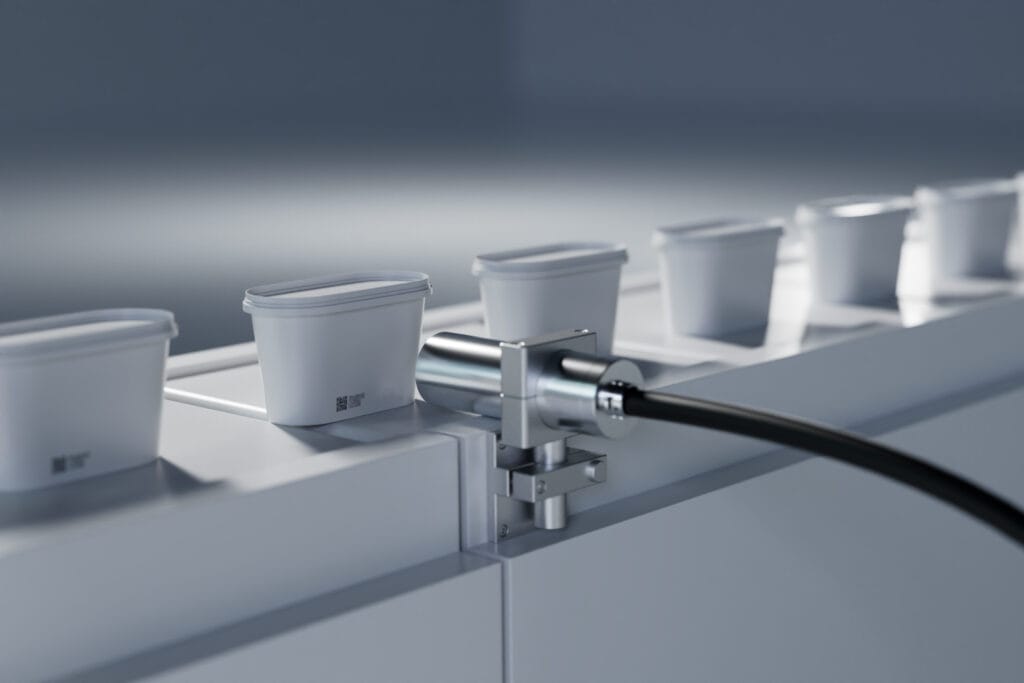
The new system features a continuous ink supply designed for uninterrupted production. It prints razor-sharp codes at up to 300 dpi and at print speeds of up to 120 m/min. It can also generate QR codes up to 33 x 33 modules. Developed from Leibinger’s deep understanding of industrial marking in real production environments, this approach sets new standards for what manufacturers can expect from 2D printing.
Developed for a wide range of packaging
Particularly relevant for packaging manufacturers is that this new coding class has been designed not only for higher print quality but also for the specific requirements of industrial practice. As a non-contact printing technology, 2DJET brings central advantages that have made CIJ so successful in industrial environments. The system can be used on a wide variety of packaging materials and is suitable for different product shapes and surface textures – from flat to curved, from smooth to demanding.
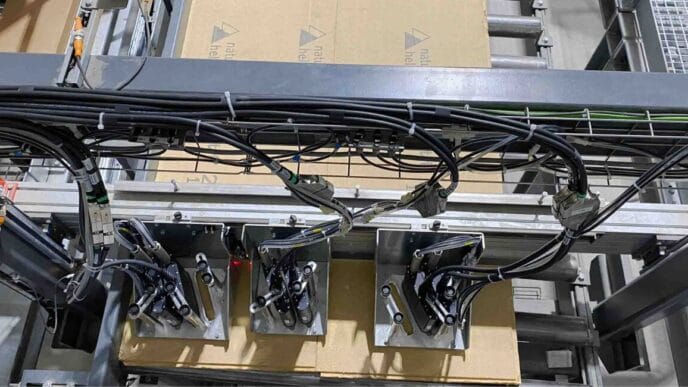
With a print gap of 8 mm, the compact print head can be integrated particularly flexibly into production lines. This simplifies installation even where space is limited or packaging geometries vary.
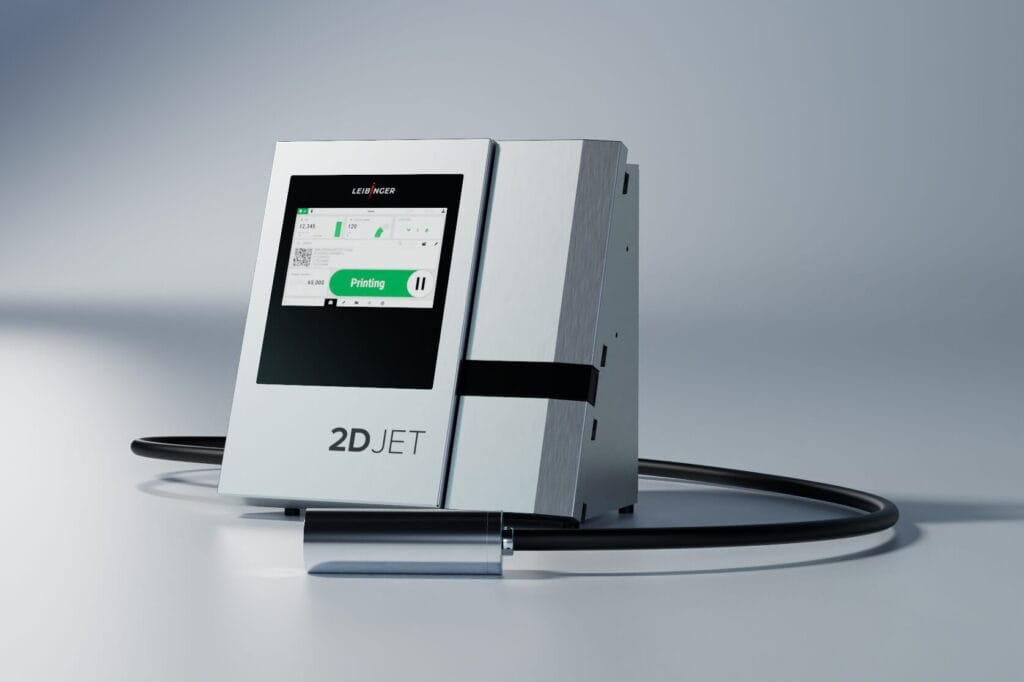
The ink system has been developed for maximum availability. A smart architecture with precision pumps and sensors ensures a consistently stable ink supply. The cartridge-based supply concept supports uninterrupted production: High-yield XL cartridges can be changed quickly and easily during operation without stopping the line.
Simultaneously, specially developed, fast-drying inks ensure excellent drying properties on a wide range of substrates. This allows for direct further processing even at high production speeds. The result is reliable and cost-effective performance in demanding, high-volume production environments.
Source: Leibinger
Hall 8B, Stand D26