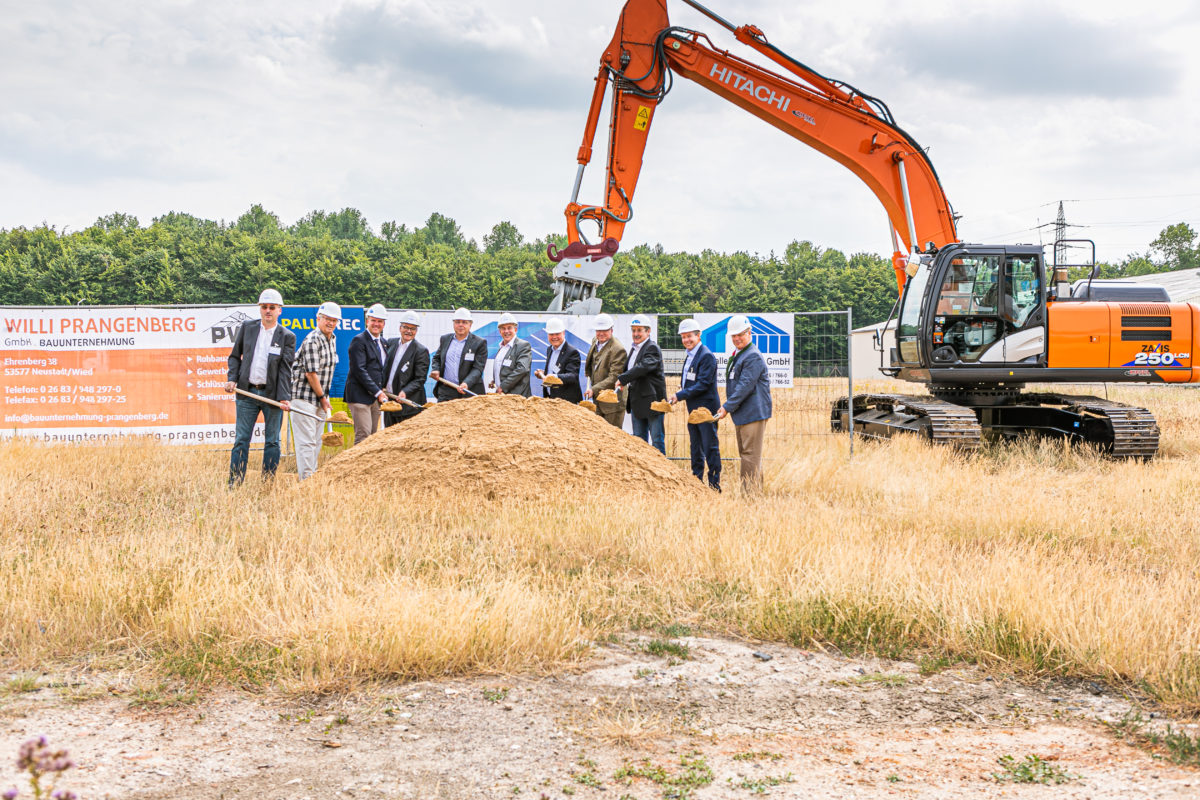
This will close the raw material cycle for all beverage carton materials. The manufacturers Elopak, SIG Combibloc and Tetra Pak will invest around 8 million euros in the plant. The annual processing capacity is around 18,000 tonnes.#
Michael Brandl, Managing Director of Palurec, explained the background to the commitment to guests from politics, administration and business: „There have already been several attempts to utilise these composite waste materials. However, these have not been successful in the long term. That's why we are now taking care of it ourselves and assuming responsibility.“ The raw material for the new Palurec plant comes from paper mills that process beverage cartons from the yellow bags and bins into new paper products.
It consists mainly of a film mixture of polyethylene (PE) and aluminium as well as the HDPE plastic closures with which the packs are often equipped. However, it also contains impurities and foreign substances. These pose particular challenges for the technology.
Brandl„That's why we opted for an innovative system concept that relies on separation units that have already proven their efficiency in many years of practical use and are capable of mechanically/physically separating such inhomogeneous material mixtures.“
The Chemical Park Knapsack is looking forward to the new addition.

[infotext icon]„With another recycling company at the site, the Chemical Park Knapsack is further expanding the topics of recycling management and environmental protection,“ says Dr Clemens Mittelviefhaus, The new recycling plant, which will be in operation around the clock, will also create up to 25 new jobs.„
Palurec GmbH was founded in December 2017. The sole shareholder is the Berlin-based Fachverband Kartonverpackungen für flüssige Nahrungsmittel e.V. (FKN). The association includes the companies Elopak GmbH (Speyer), SIG Combibloc GmbH (Linnich) and Tetra Pak GmbH & Co. KG (Hochheim am Main) belong to the association. These companies produce around 95% of all beverage cartons sold in Germany and have played a key role in setting up and developing the recycling infrastructure for used beverage cartons since the launch of the Dual System.