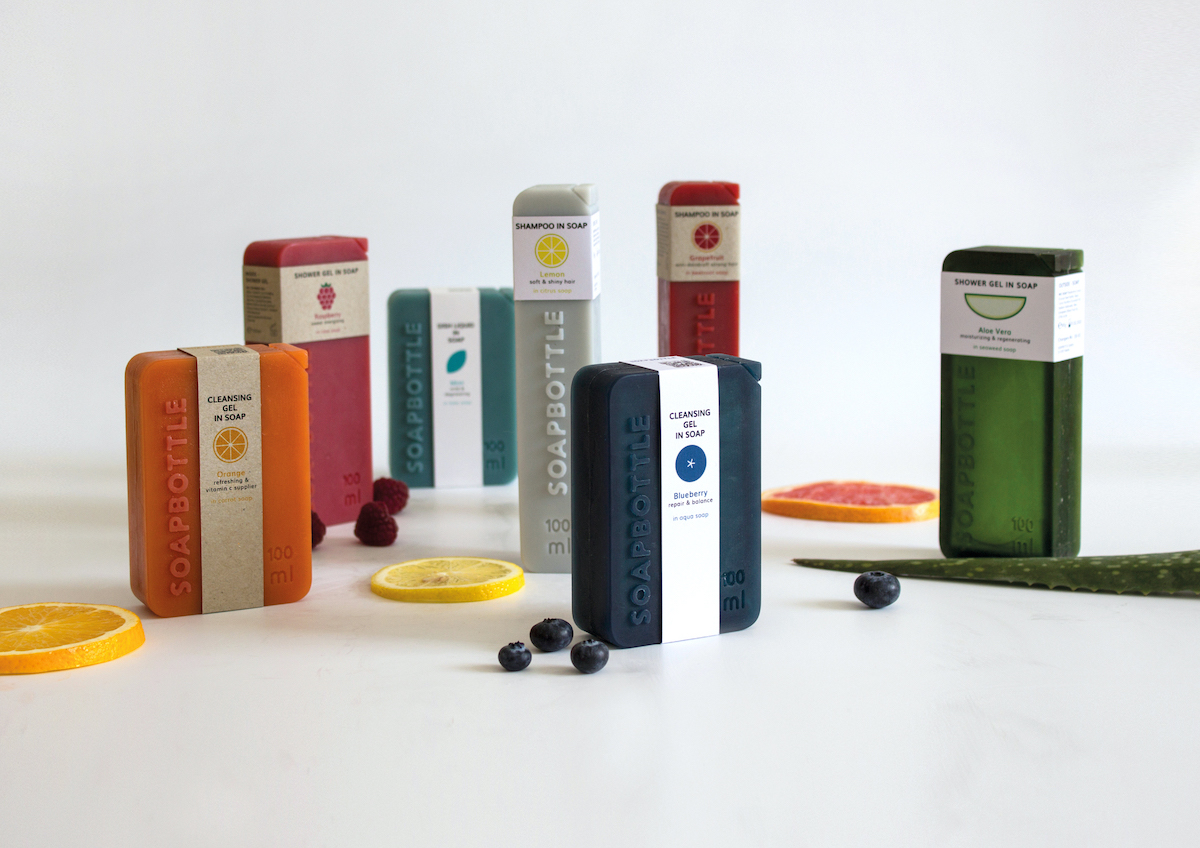
Plastic should be completely avoided and there should be no waste at the end of the day: But any packaging must at least enable the product to be transported and guarantee its shelf life and protection. A task that Jonna Breitenhuber has solved cleverly and elegantly with her Soapbottle.
At FachPack, Nürnberg Messe and bayern design presented the Special show "Environmentally friendly packaging in the premium sector". The presentation showed how new ways and possibilities of design in conception and realisation allow different approaches to sustainable packaging design. We pick up on one example here:
Soap packaging
Shower gel or shampoo bottles end up in the bin after a few weeks. The aim of this project was to create packaging for liquid hygiene products or washing substances such as shampoo, conditioner, shower gel, washing-up liquid, scrubs or bath additives with a low environmental impact.

Jonna Breitenhuber takes the concept of packaging-free cosmetics by turning the product itself into packaging. Soap is made from natural raw materials and is biodegradable. While the contents of the soap bottle are used up, the packaging itself slowly dissolves. The leftovers can be reused as (hand washing) soap or processed with soda and baking soda to make detergents or cleaning agents.
Of course, "soap packaging" lacks some of the properties that consumers are used to from plastic packaging. It is not unbreakable, it is water-soluble and the surface becomes slippery in contact with water during use.
These supposed disadvantages are used as design elements for the Soapbottle: The concept plays with the process of dissolving, with the Transformation of the object and the individuality arising from these aspects.
Opening - Closing - Labelling
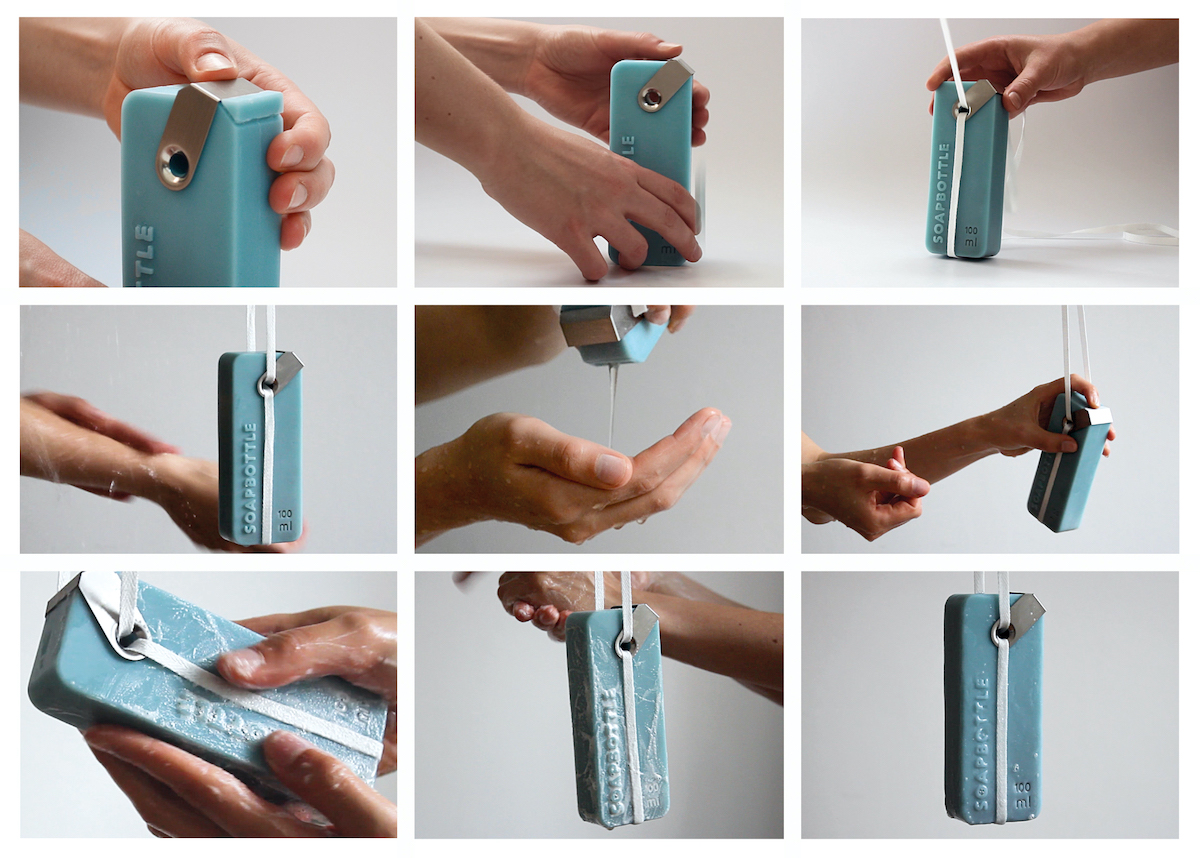
The soapbottle can be opened by cutting off the corner marked with a groove to create a spout. The bottle can be cut open with a knife, but is then unsealed for the duration of use.
Alternatively, a cap can be used, which is clipped onto the hole of the soap bottle. When the cap is pressed down for the first time, the bottle is also cut open but can be closed again. This The reusable closure is made from a 0.5 millimetre thick stainless steel sheet. punched, pressed into shape and bent. As the closure is only made of mono-material, subsequent recycling is unproblematic.
According to the EU Cosmetics Directive, certain information on packaging must be indelible, easily legible and clearly visible. If this is not possible directly on the container, they must be listed on a slip of paper, label, paper strip, tag or card attached to it. For this reason, the soap bottle is labelled with a Narrow paper sleeve made from recycled paper with all the information attached.
For us, the solution of Jonna Breitenhuber at the special show "Environmentally friendly packaging in the premium sector", and she immediately won us over. We asked the packaging designer about further details of her concept:
pj: Mrs Breitenhuber, why did you focus on this topic in particular?
Jonna Breitenhuber: During my Master's degree, I started working as a packaging designer for cosmetic products. This made me realise that there are hardly any Alternative plastic-free packaging for liquid personal care products exists. So I decided to focus my Master's thesis on this problem.
pj: Where did the idea come from?
Jonna Breitenhuber: There are already a few examples in the food industry where the product itself becomes the packaging or the wrapper can even be used completely, such as the ice-cream cone. I asked myself whether the basic idea could also be applied to hygiene products. That was the impetus for me to experiment with soap.

pj: How does the material cycle work?
Jonna Breitenhuber: With the Soapbottle concept, the soap packaging can be used in its entirety and "washed away" over time. Solid soap is a Alkali saltwhich is relatively easy to produce from oil (or fat) and caustic soda. It is readily biodegradable and can already be treated in sewage treatment plants. 99 per cent degraded after three days.
pj: What is the current situation regarding the "Market maturity"?
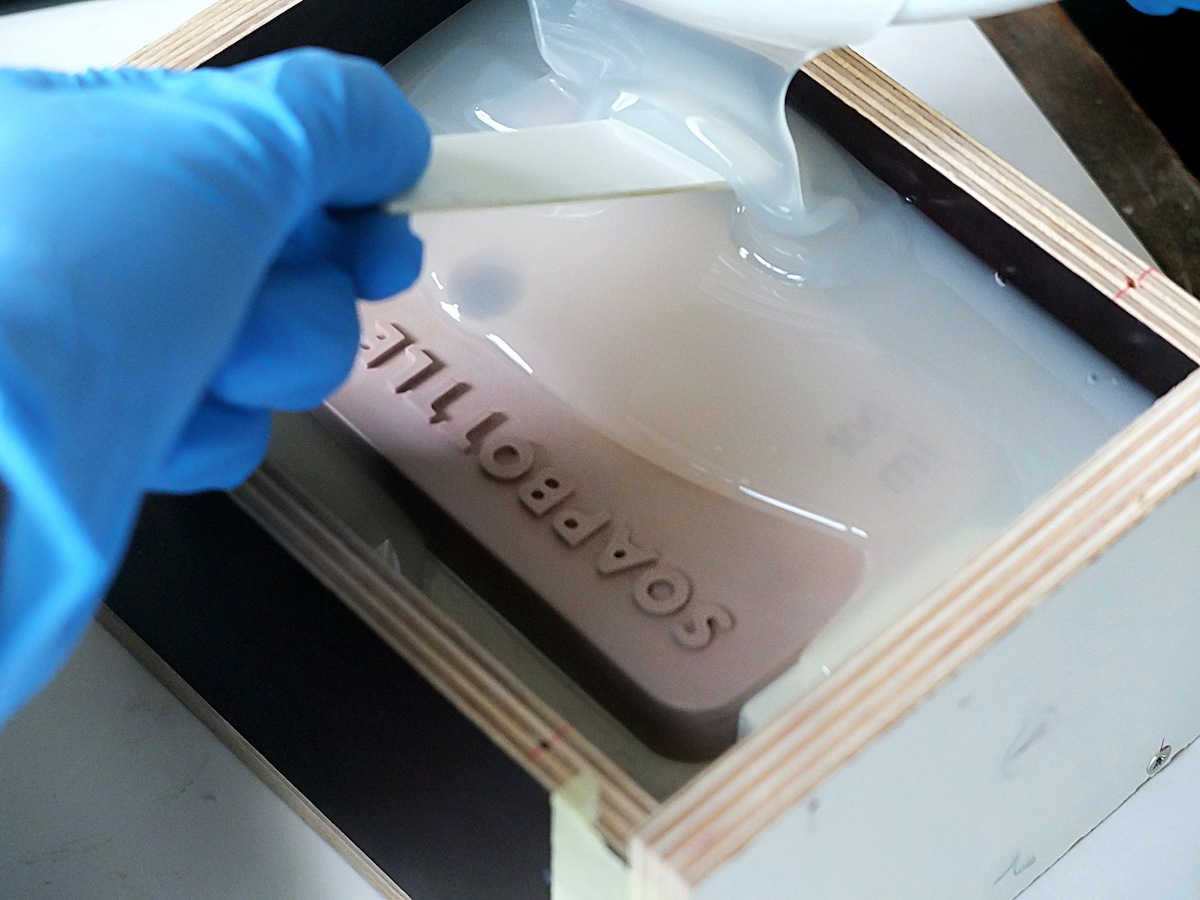
Jonna Breitenhuber: So far, Soapbottle is still a concept. I have visualised what soap packaging could look like and how it could be used. To actually bring it to market, there are still some chemical and technical issues to be resolved regarding the material composition and serial production.
pj: Which partners are on board?
Jonna Breitenhuber: At the moment I am still in search of a soap manufacturerthat dares to undertake this "experiment". I've already had a few conversations with potential manufacturers and various companies that are interested in a co-operation. However, I have not yet made a decision.
pj: Are there any interested parties from application practice or are there already concrete projects?
Jonna Breitenhuber: I actually get a lot of enquiries from private individuals who would like to buy or try out Soapbottle. I've also had a few retailers get in touch who would be interested in including them in their product range.
pj: We wish you every success with the realisation!
[infotext icon]Jonna Breitenhuber was born in 1992, comes from Neuburg an der Donau and was a student at Europe's largest art academy, the Berlin University of the Arts, from 2016 to 2018. She completed her Master of Arts degree a year ago. Jonna has been committed to the environment since the very beginning of her product design studies. As part of her master's thesis, she developed a Packaging for liquid hygiene products, which itself consists entirely of soap, i.e. completely dispenses with (plastic) packaging[/infotext].