Der Grüne Punkt, Werner & Mertz and the Federal Association of the German Waste, Water and Raw Materials Management Industry are calling for financial incentives and a political commitment to the circular economy.
A stronger focus on Sustainability in public procurement, a fund system and a supplementary plastic tax on new goods and clearly defined Minimum quotas for the use of recyclate in combination with financial incentives - these are the instruments that will save plastics recycling from its final demise and ensure a stable and sustainable circular economy as an important contribution to climate protection after the crisis, according to a joint statement.
Plastic waste in private households has increased by around ten per cent in recent months due to the widespread use of home offices and more frequent online ordering, and the At the same time, demand for recyclate - i.e. recycled plastic from packaging waste - has fallen dramatically. What seems paradoxical at first glance has one main reason:

The price of oil has fallen sharply as a result of the coronavirus pandemic. The Cheap crude oil makes the production of new plastic even cheaper and thus reinforces the already existing legal privileges for new plastic in Germany due to the exemption from mineral oil tax and the EEG levy. In comparison, the mechanical recycling of used plastic packaging will become even less economically attractive. Many manufacturers who have previously used recyclate for products and packaging are now even switching back to virgin material.
This not only means massive Losses for the recycling industry, but is above all a huge A step backwards for climate and environmental protection and a serious blow to the circular economy.
Consumers have long recognised this danger: Surveys confirm this, that consumers see plastic as the biggest (environmental) problem (Top of Mind topic 2019 in relation to the environment and ecology, source: GfK Business Talk 2020). They expect solutions in favour of a sustainable economy - this has not changed due to coronavirus (source: GfK webinar In the eye of the storm, 2020).
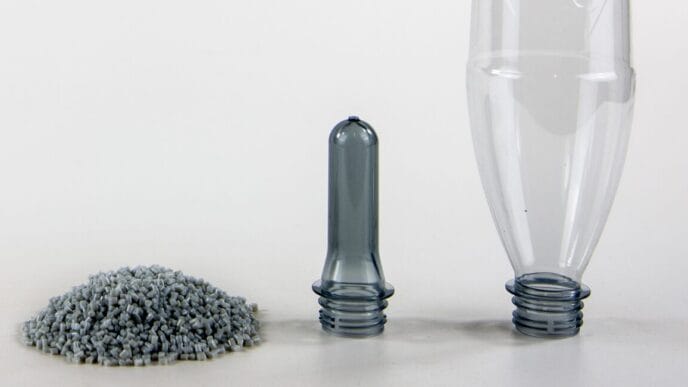
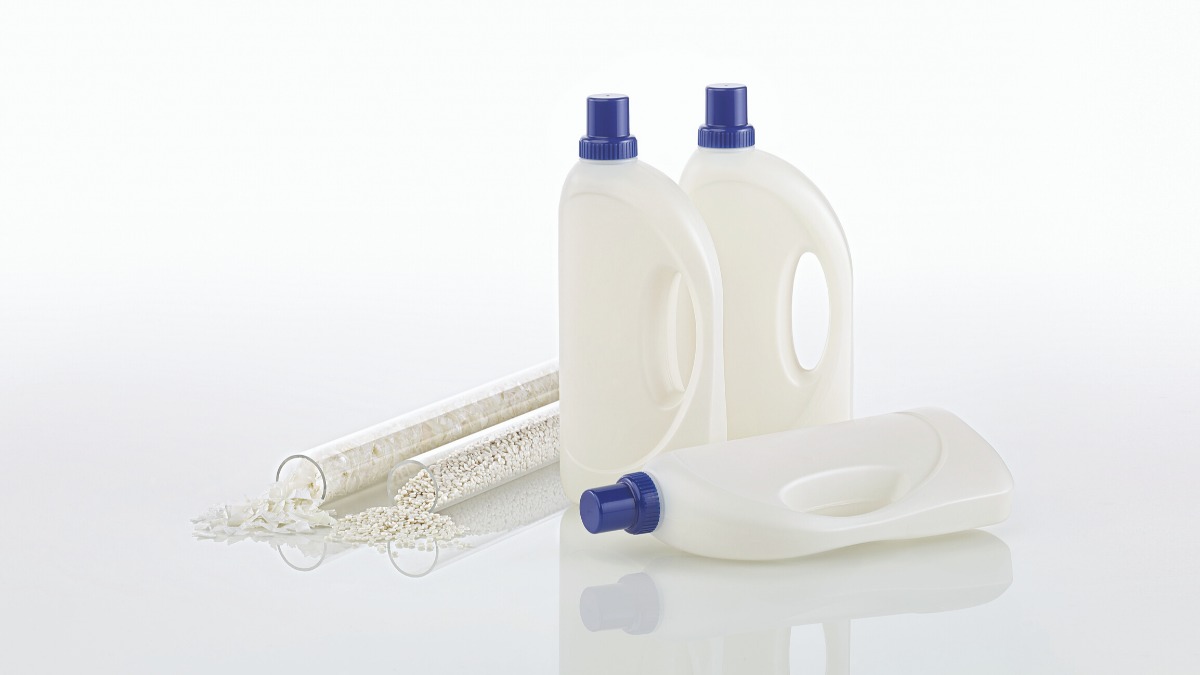
The solution to plastic waste in our environment has been around for a long time: Used plastic from end user collections such as the Yellow Bag can now be processed to such a high quality that it can be even fulfils the strict requirements for cosmetics packaging. This keeps the plastic in the cycle and turns it into a valuable raw material instead of environmentally harmful waste. However, the technology of mechanical recycling still has a „shadowy existence“ - the use of new plastic is too cheap in comparison.
Establishing a sustainable circular economy
That is why three representatives along the value chain are now calling on politicians to do so in a joint declaration, utilise the upcoming transformation of the economy, to sustainably establish the circular economy in general and the reuse of recyclates from used plastics in particular in Germany:
Peter Kurth, President of the BDE Federal Association of the German Waste, Water and Raw Materials Management Industry, appeals to public procurement to act as a role model for sustainable business practices: „The fall in oil prices has exacerbated the already tense situation for many plastics recyclers. Elaborately produced recyclates are not finding buyers, investments in better recycling are being postponed or cancelled because there seems to be no chance of refinancing. Plastics recycling is at risk of being severely damaged due to political inaction. If you want a sustainably successful economy, you need to use the right instruments now, which have been known for a long time. A changed procurement system that takes ecological aspects seriously is right at the top of the agenda.“
Reinhard Schneider, owner of the cleaning products company Werner & Mertz and winner of the German Environmental Award 2019, provides concrete solutions for compensating for the existing financial disadvantage in the reuse of post-consumer recyclates (PCR) compared to virgin material in Germany: „The ecological spread of purchase prices could be inserted into the existing Packaging Act in § 21, namely in the form of a fund into which everyone must pay. Only those who use recyclates should receive a refund. In addition, there could also be a plastic tax that is only applied to new goods, as is planned in Italy. This corresponds to the cancellation of subsidies for the production of new goods by eliminating the exemption from mineral oil tax and the EEG levy. The minimum deployment quota under discussion only makes sense in combination with incentivisation for exceeding the minimum quota.“
Michael Wiener, CEO of Der Grüne Punkt, goes into more detail about this minimum utilisation rate: „The potential of the circular economy for climate protection, especially for plastics, is far from exhausted. We are also missing out on the economic opportunities offered by the circular economy. A circular economy worthy of the name creates jobs and brings added value to the European Union, that we urgently need. Instead, we are experiencing a comprehensive market failure. Recycled plastic saves up to 50 per cent of the greenhouse gas emissions generated by new plastic - but this is not reflected in the price. Only the Determination of defined recyclate utilisation targets for certain product groups enables the creation of sustainable recycling markets and provides the necessary investment security. From July 2020, the German government will take over the EU Council Presidency - a good opportunity to push ahead with appropriate measures.“
Source: Werner & Mertz