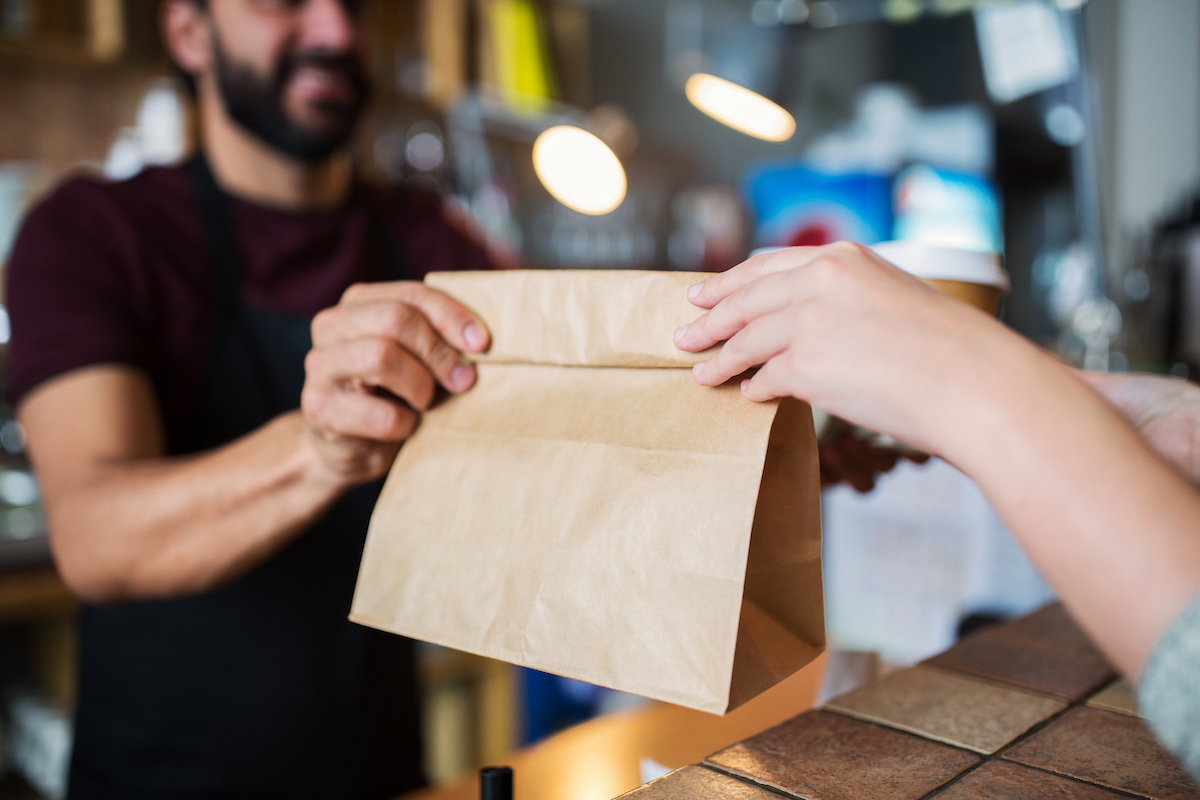
According to a survey by dvi and WWF, a majority of Germans want a drinks deposit and sustainable solutions for take-away and delivery services.
While restaurants and cafés remain closed to customers during the lockdown, take-away and delivery services are booming in times of coronavirus. A good 83 per cent of Germans pick up their drinks and food or have them delivered, according to a current, representative survey by the WWF and the German Packaging Institute (dvi).
Take-away to become more sustainable
More than three quarters of respondents want sustainable packaging (78.5 %). Recyclable disposable containers for disposal via the Dual System lead the list of favourites with a good 50 percent (51.5 %). In second and third place are Private containers (31.6 %) and deposit containers from restaurants (24 %). Private doses are particularly popular with women (35.4 % vs. 27.9 %). In contrast, men use disposable jars more often than women (21.2 % vs. 13.5%).

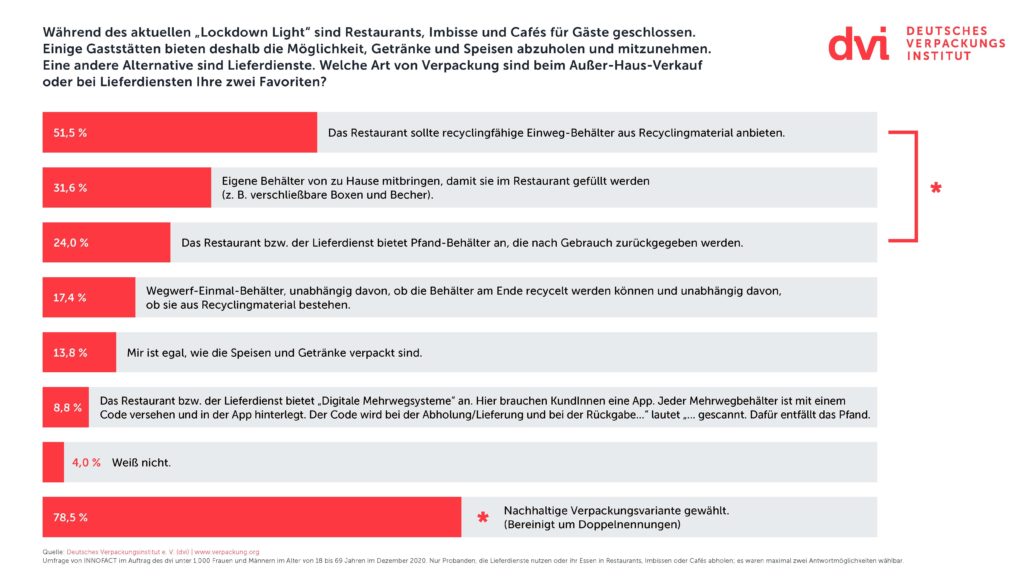
Overall, 17.4 per cent of respondents prefer disposable containers, regardless of their material and recyclability. A further 13.8 per cent do not care how the food and drinks are packaged. The figures show that the clear majority is concerned and favours more ecological options.
In addition, during the coronavirus pandemic, the increased the general willingness of the population to pledge. Compared to a survey conducted in February 2020, the proportion of people who would also return other packaging in return for a deposit rose by a further five per cent - to an impressive 85 per cent.
The most likely option for those willing to do so is an additional deposit system for all disposable drinks bottles and cans (regardless of content) (72.6 %). This means that a corresponding draft bill from the Federal Ministry for the Environment to extend the deposit obligation to precisely this product group has met with broad approval.
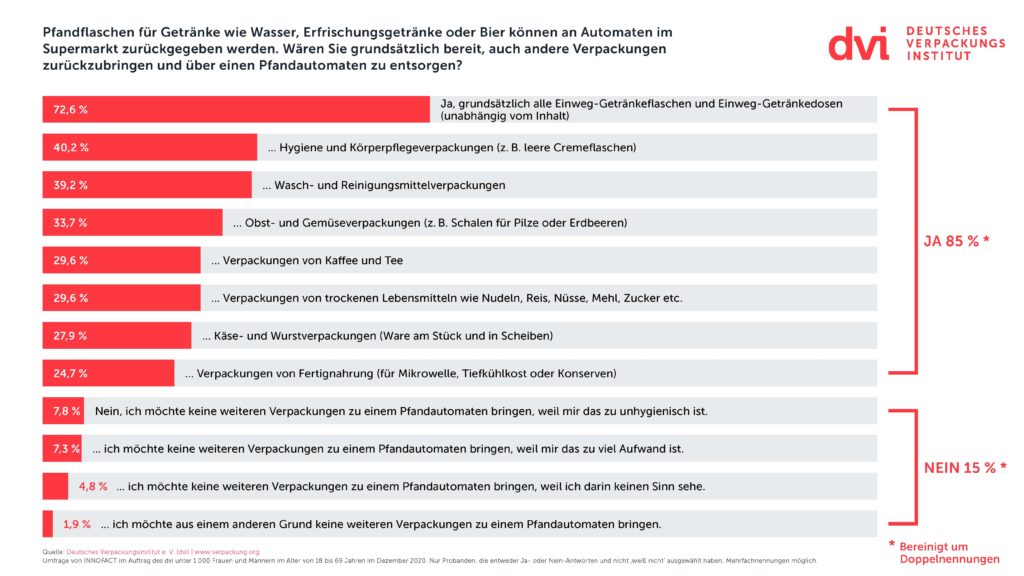
Around 40 per cent could also imagine a deposit system for hygiene and personal care products (40.2 %) and detergents and cleaning products (39.2 %). In total Women are more open to the topic and are more likely to accept almost all variants than men. Only around eight per cent of the total respondents reject an extension because it is either too unhygienic (7.8 %) or too costly (7.3 %).
„The survey by WWF and dvi shows a positive trend among consumers. They are concerned about packaging and favour more sustainable options. Of course, we would like to see even more reusable containers being used for delivery instead of recyclable disposable containers. And, of course, that these are also returned and reused frequently. Because only then are they really more sustainable. It is up to restaurants and cafés to expand their offerings in this area or to accept private containers more generously. Politicians must set the framework: It should promote a switch to resource-saving containers with appropriate initiatives.“ Dr Martin Bethke, Executive Director Markets & Business at WWF Germany
Kim Cheng, Managing Director of the dvi is delighted „that neither the pandemic nor the lockdown can stop the drive for greater sustainability. People are willing to actively support more sustainable solutions and do their bit for the circular economy by taking packaging to the deposit machine after use or sending it for recycling via the yellow bag. Many factors play a role in deciding which packaging is the most environmentally friendly: from the choice of material to the use of energy, water and chemicals for cleaning to transport routes, volume and weight. It is therefore not always easy to define an ecological pioneer and depends on the respective circumstances. However, one thing is certain: Recyclable packaging, returnable or reusable solutions all have their place and should completely replace non-recyclable packaging. Companies in the packaging industry are developing more and more innovative solutions for this.“
Source: German Packaging Institute e.V.