Cosmetics for refilling

Refill solutions have been established on the Japanese market for years. At consumer goods manufacturer Kao, 80 per cent of the washing, cleaning and personal care products sold are already refill pouches made from thin film material.

Refill solutions have been established on the Japanese market for years. At consumer goods manufacturer Kao, 80 per cent of the washing, cleaning and personal care products sold are already refill pouches made from thin film material. What is well received by consumers in Japan could also work in Germany and Europe.

For Japanese consumers, it is part of everyday life: they buy Liquid soap, shampoo and household cleaners have been in foil pouches for years. Simply transfer the contents into dispenser containers at home or use the refill pack with a special holder directly as primary packaging. All bags can be completely emptied. Since the early 1990s Kao offers its products in refill packaging. However, it took almost 30 years and countless improved packaging concepts to make the market a refill market, making it easy to use and changing consumer behaviour.

Today there are already 80 per cent of the company's laundry, cleaning and personal care products sold are refill pouches made of thin film material - As a result, plastic consumption in these categories has been reduced by 70 per cent compared to a do-nothing scenario. A development that still needs to be made up for in Europe. Dave Muenz, Senior Vice President ESG at Kao, is certain that the Japanese success factors can also bring about change in this country.

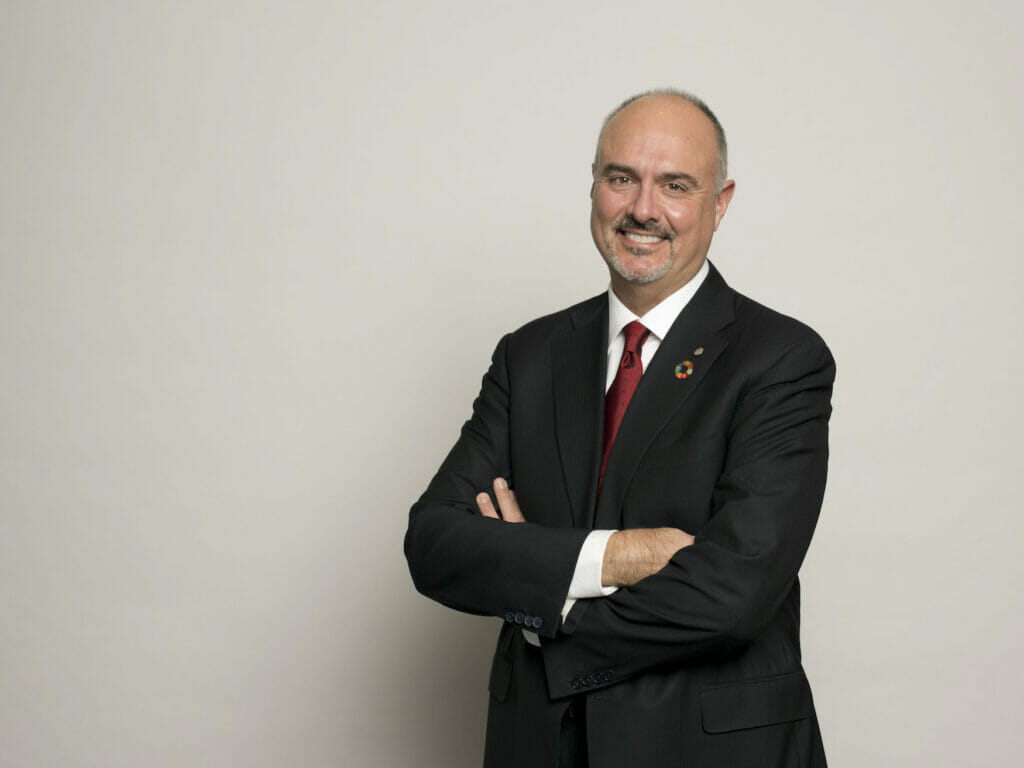
„What we can learn from the refill market in Japan is that we can everyone - manufacturers, retailers and consumers - must work together to create real change, and that we need to address the needs of consumers in the right way. Whether it's to reduce, replace, reuse or recycle plastic: When we develop new packaging solutions, we need to focus on making them simple, practical and attractive for consumers and communicating this added value.“

Display

Dave Muenz, Senior Vice President ESG at Kao

Refill packaging increasingly also in the European portfolio

„Sustainable, long-term and consistent innovation in the design of refillable packaging and consumer benefits has been instrumental in driving the refillable market in Japan. Together with the support of partnerships and the Clear communication of customer added value this has created a successful model in Japan that can also work in other regions, such as Germany and Europe.“

Dave Muenz

Dave Muenz, Senior Vice President ESG at Kao.
Dave Muenz, Senior Vice President ESG at Kao. (Image: Kao)

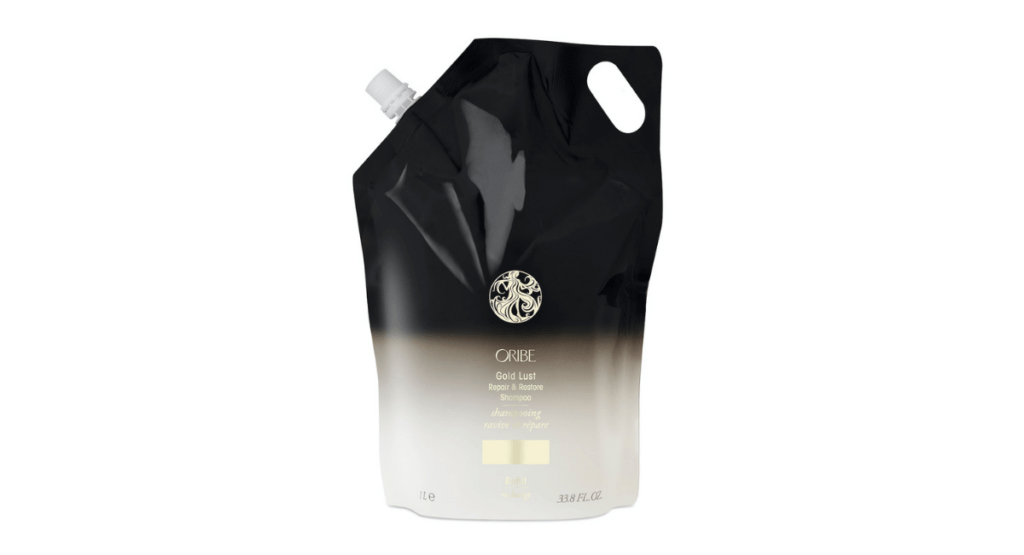
The Experiences from Japan Kao is therefore also increasingly utilising its expertise for packaging development in Western markets. In Europe, the Japanese consumer goods manufacturer's portfolio includes beauty brands such as Goldwell, John Frieda, Guhl and the British luxury brand Molton Brown. The reduction of plastic is being driven forward in all three business areas - the Kao Salon Division, the Consumer Care Business and Molton Brown. For example, flexible packaging solutions have been developed for the Goldwell and Oribe salon brands. According to the company, the stand-up pouches for Goldwell LightDimensions SilkLift are manufactured using 80 per cent less plastic is needed, they generate 85 per cent less waste and produce 65 per cent less CO2 emissions compared to the previously used packaging.

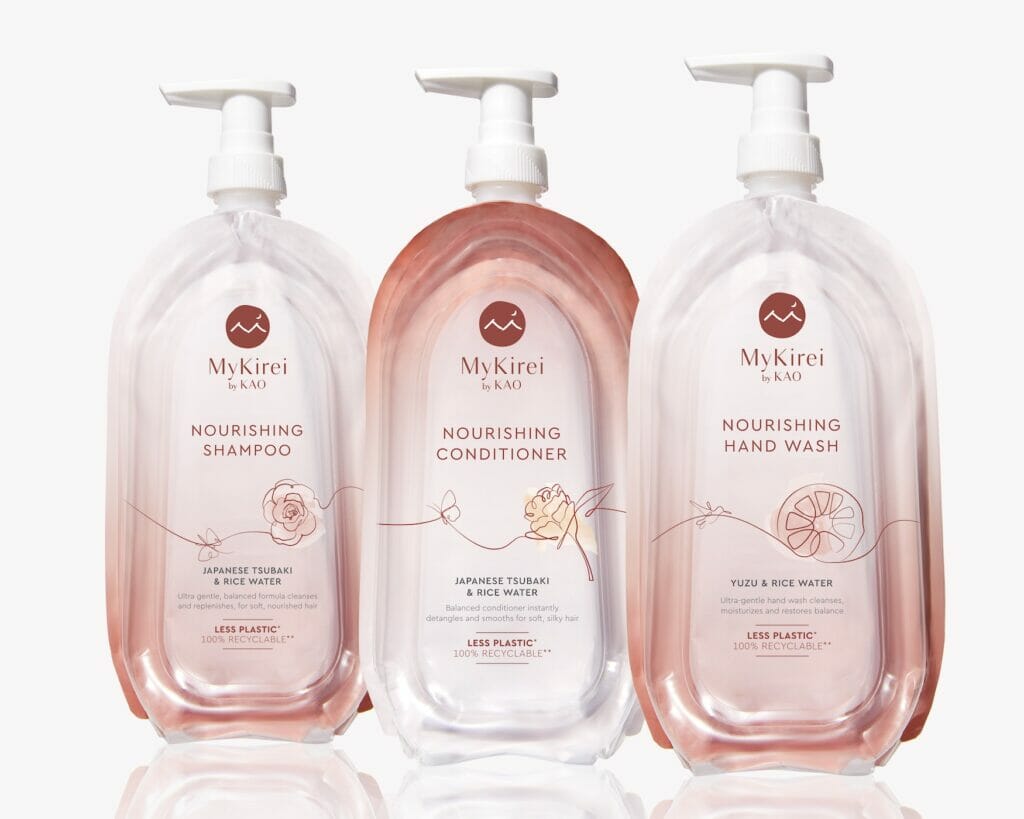
With the Air Bottle, air chambers stabilise the refill bag, making it the primary packaging.
With the Air Bottle, air chambers stabilise the refill pouch, making it the primary packaging. (Image: Kao)

The Consumer Care Business, Kao's end consumer business, is also increasingly focussing on reducing plastic. One of the latest developments is the patented Air Bottle, a flexible packaging system that stabilising air chambers ensure that thinner-walled films can be used - This means that the refill pouch even becomes the primary packaging. It is used, for example, for the Japanese-inspired lifestyle brand My Kirei by Kao, which has already been launched in the USA.  

As part of Kao's zero waste commitment, in addition to the Reduction of plastic in all business areas The use of PCR material, recyclability and the reuse of packaging also play a major role. This is also the case for the British luxury brand Molton Brown.

Perfume refill service

Last year, Molton Brown sold all 300-millilitre bottles converted to 50 per cent recycled PET and was thus able to drastically reduce the use of new granulate. The brand has also launched a refill programme that includes refill packs for hand soap and refillable glass bottles. In the UK, Molton Brown also offers a Refill service for its original perfume bottles and the new Signature Dispenser. And the new Signature Dispenser for body and hair care collections in the hotel sector also works as a refill pack - the latest addition to the brand's refill programme. Where plastic bottles are still used, British consumers can return them as part of the „Return. Recycle. Reward.“ programme and receive a 10 percent discount on their next purchase.

„We are taking responsibility for the journey our products take to reach consumers and are proud to be one of the first luxury beauty brands to commit to ensuring that luxury and sustainability go hand in hand.“

Mark Johnson, Global President of Molton Brown

Mark Johnson, Global President, Molton Brown, emphasises the importance of taking responsibility for the companies goods.
Mark Johnson, Global President of Milton Brown. (Image: Kao)

The Japanese path to greater sustainability

In Europe, Kao has set itself the goal, to produce half of all plastic packaging from recycled or bio-based materials by 2025. The packaging should then be designed in such a way that it can be recycled or reused. In addition, all unnecessary secondary packaging should be abolished and all necessary secondary packaging should be made from 100 per cent recycled paper.

It took almost 30 years and countless improved packaging concepts for the Japanese market to become a refill market. (Image: Kao)

The targeted measures are part of Kao's global ESG strategy (Environmental, Social and Governance), known as the Kirei Lifestyle Plan. The Japanese word „Kirei“ describes something that is clean, orderly and beautiful. As an integral part of corporate management, the strategy is not only intended to Accelerate growth, The focus is not only on the consumer, but also on offering more products and services that represent added value for consumers and society.

Kao was founded in 1887 by Tomiro Nagase. His first product was Kao Sekken (Japanese for „facial soap“), the first affordable facial soap, which gave the company its name. Today, the Group employs over 33,000 people, operates in more than 100 countries and has an annual turnover of around eleven billion euros (2020). In Europe, around 136 million products are manufactured annually in two carbon-neutral production facilities (UK and Germany).

http://www.kao.com

More news from the magazine

One hundred years blue tin

Since 1925, the Nivea cream can has borne its deep blue colour, white lettering and round shape - a design that has remained stable over generations, markets and crises and is now celebrating its 100th birthday.
Read more "