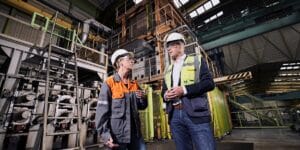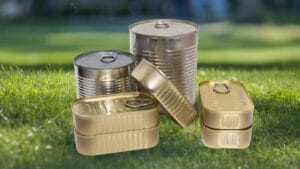
The German tinplate manufacturer Thyssenkrupp Rasselstein, together with the Swiss companies Hoffmann Neopac and Ricola, is launching the world's first food can made from CO2-reduced Bluemint Steel in March.
The three companies have joined forces to bring the first food can made from CO2-reduced packaging steel onto the market, thus making the Making packaging even more sustainable. So far, the food can made of packaging steel has already scored with a recyclability of almost 100 per cent and closed recycling loops. through an innovative manufacturing process a considerable amount of CO2 is saved.
In the joint project Thyssenkrupp Rasselstein the CO2-reduced packaging steel, Hoffmann Neopac produces and prints the cans. using solar power and Ricola relies on the best ingredients for the production and filling of herbal sweets. Energy from renewable sources.
„By using our new Bluemint Steel, we can significantly reduce CO2 emissions during the production of the can. This makes our product even more sustainable.“ Dr Peter Biele, CEO of Thyssenkrupp Rasselstein
Display
The German tinplate manufacturer produced tinplate from bluemint steel for the first time. So-called HBI was used in the steel production process, i.e. already reduced sponge iron. This reduces the use of coal for the reduction process in the blast furnace. The result is a real and globally effective reduction in CO2 emissions.
„This project is an important step towards achieving our climate targets,“ says Biele. Thyssenkrupp Steel Europe has committed to being completely climate-neutral by 2045.
„Sustainability is at the centre of everything we do. We produce our cans in Switzerland using 100% renewable electricity while working on our own decarbonisation programme.“
Mark AeglerCEO of Hoffmann Neopac
This means that during the production of the cans CO2 also saved.
„It was important for us to make the packaging of our herbal sweets more sustainable. That's why we are the first company in our market to use CO2-reduced food cans.“
Dr Martin Messerli, Chief Operating Officer of Ricola
The Swiss herbal candy manufacturer has been using hydroelectric power since 2016. From the Ricola Group's perspective, the next logical step was to optimise the supply chain and packaging of the herbal sweets. „By switching to a CO2-reduced tin for our herbal sweet specialities Ricola is also responding to the increased demand from consumers for, who are paying more attention to their carbon footprint when shopping,“ says Messerli.
The first herbal sweets in a CO2-reduced tin leave the Laufen plant at the beginning of March and will be available in stores from April/May.
Source: Thyssenkrupp Rasselstein
Thyssenkrupp Rasselstein - More news


Chromium-free into the future

Change in the Executive Board at thyssenkrupp Rasselstein

Hiking with tinplate

Survey: Food in tin cans is becoming more popular