The fully recyclable vacuum bag

Sister companies allfo and allvac will be showcasing their new solutions for vacuum bags and thermoforming films for the entire food industry at IFFA. The focus is on the star in terms of sustainability

At IFFA, sister companies allfo and allvac will be showcasing their new solutions for vacuum bags and thermoforming films for the entire food industry. These include the fully recyclable Vac 95+ vacuum bag.

The fully recyclable Vac 95+ vacuum bag from allfo consists of over 95 per cent polypropylene film with a thin high-barrier layer manufactured by allvac. This recyclability has been officially confirmed by the cyclos-HTP institute and the vacuum bag has been awarded EU-wide certification as a class AAA recyclable product.

Certified recyclability

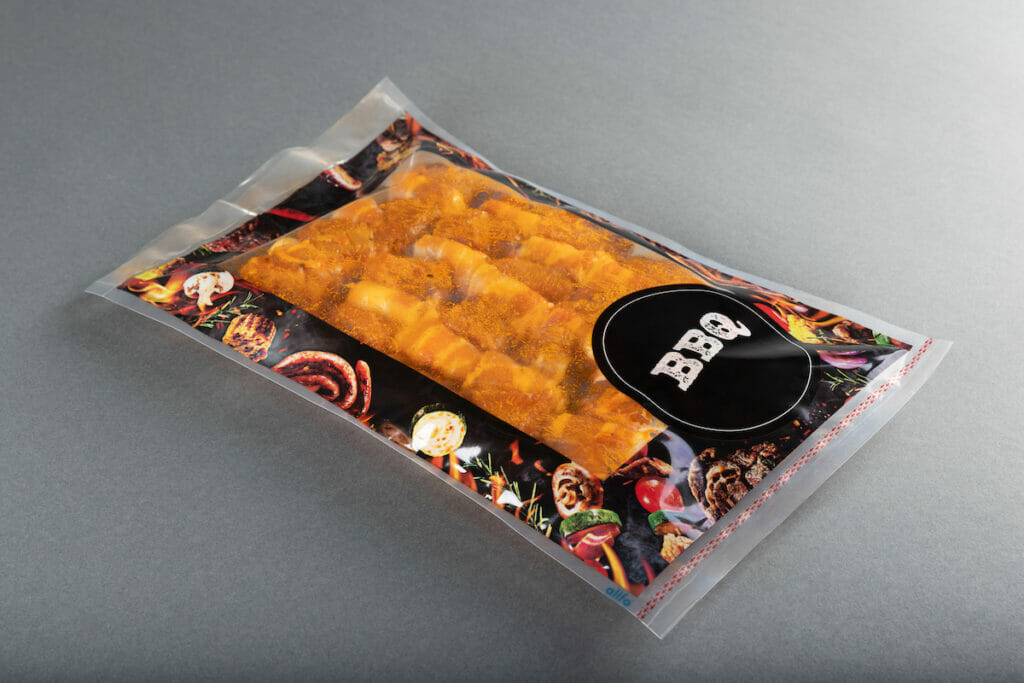
Other vacuum packaging solutions such as tubular, shrink, sealed edge and cook-in bags will also be presented. The rustic design of the Wood-Look side seal bag with its transparent top and wood-look underside sets the scene for ham, bacon, sausage and cheese. The BBQ bag (pictured) for marinated grilled meat or kebabs attracts attention at the barbecue counter.

Allvac's PA/PE films were also recently certified as recyclable. This is made possible by adapted and optimised formulation components. The high-temperature composite film allflex UHT tolerates temperatures of up to +121 °C for up to one hour. This makes it suitable for the hygienic sterilisation of corn, beetroot and other foods. Also included is allflex S, a PA/PE film with a medium barrier consisting of eleven layers.

Display


allfo and allvac 
IFFA 2022:
Hall 11.0, Stand D29

Further news from the food sector

Photo: Yangi

Dry forming goes industrial: Yangi starts fibre tray production

With its Cellera technology, Swedish company Yangi is launching production-ready, dry-formed fibre trays for meat, fish and ready meals onto the market for the first time. The dry-forming process enables precise high-volume production with short cycle times of 4-6 seconds and is designed to overcome the limitations of wet-formed fibre packaging.
Read more "