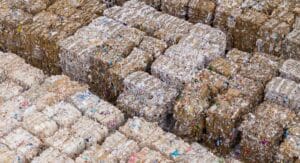
A recent study by IW Consult emphasises the important role of the paper industry as a driver of environmental, social and societal sustainability. It is therefore particularly in the interests of the economy that the industry successfully masters structural change.
The importance of the German paper industry extends far beyond its own contributions to value creation and employment. With its upstream and downstream stages, it stands for 522,000 employees, a value added of 35 billion euros and a turnover of 93 billion euros. Little works in business and society without paper. These are the key findings of a recent study by IW Consult, a subsidiary of the German Economic Institute (IW).
In its study, IW Consult analysed the role of the paper industry as a industry, which is deeply embedded in national and international value-added chains. is. The spectrum ranges from forestry and the waste disposal industry in the upstream stage to publishing, the packaging industry, medicine and a variety of specialised applications in the downstream stage.

Paper industry as an employer
In addition to its economic importance as a key industry, the study emphasises the role of paper companies as employers. They are characterised by the high qualification structure of their employees, which is dominated by skilled workers. Almost 77 per cent of employees have vocational training - this rate is only just under 61 per cent across Germany.
The paper industry stabilises rural areas to an above-average extent. Around 82 per cent of their employees work there. By comparison, this figure is only 56 per cent across all sectors. In addition, the companies often made significant contributions on a voluntary basis as part of their corporate social responsibility
Challenges in the industry
IW Consult identifies four major challenges for the further development of the German paper industry. Decarbonisation, digitalisation, coping with demographic change and renationalisation of value chains. The paper industry is well equipped for this.
The Reduction of CO2 to achieve the climate targets remains the main challenge. A climate policy with a sense of proportion and foresight is necessary for the international competitiveness of the paper industry. The state must actively promote the development of renewable energy generation and the development of resource-saving production processes. For the energy-intensive sectors, temporary transitional aid is still necessary to compensate for the additional costs.
The Decreasing number of skilled workers will particularly affect the paper industry with its highly skilled labour force. The main problem will not be in filling typical paper professions, but in the availability of employees with interdisciplinary skills in the areas of digitalisation and GreenTech.
"The paper industry is more globalised than average. However, following the experiences of the coronavirus crisis and the consequences of the war in Ukraine, there are tendencies towards a renationalisation of value chains. This means new opportunities for Germany as a production location. However, this would require a closer alliance between the paper manufacturing industry and the users of paper products. The closely interwoven supply chains can only develop resilient value chains close to the region if they work together."
Winfried SchaurPresident of the Association of the Paper Industry
Source: Die Papierindustrie e.V.
More news about paper


Cold seal solution for barrier-coated paper

Adapa presents sustainable solutions for PPWR implementation

Automation to combat staff shortages in dispatch

One.five supplies high-barrier paper for vegan cheese