A look behind the scenes of a sorting plant for LVP

Light packaging waste travels on around 300 conveyor belts through the sorting plant of the new interzero group of companies in Marl.

Up to 700 tonnes of packaging waste from the yellow bin and the yellow bag pass through interzero's sorting plant in Marl on around 300 conveyor belts every day. CEO Dr Axel Schweitzer also announced the founding of the new group of companies, interzero, during a tour of the plant for members of the press.

Let's start with a few facts and information: It is the Europe's most modern sorting plant and it is particularly characterised by its high flexibility. With near-infrared technology and subsequent separation by air flow interzero in Marl fulfils the requirements of the packaging law with regard to the sorting rate. Each packaging is scanned at least twice.

Picture of mechanical manual pickers in a sorting plant
(Image: packaging journal)

„The flexibility of the system is reflected in various aspects. Firstly, in the capacity of the storage areas and flow rate - in order to be able to absorb or buffer any larger quantities that may arrive. There are also several process lines, which creates a kind of redundancy that reduces downtime in the event of maintenance or malfunctions by partially stopping the system. The flow can be diverted as required. The high-performance sensors and documentation also mean that we can adapt the system to changing waste flows. This means that foreign material can also be sorted in Marl in addition to the LVP material collected by the dual systems in Germany.“

Stephan Schwarz, Chief Executive Officer (CEO) Interzero Plastics Recycling GmbH

Display

A total of 16 different fabric groups are sorted here and there is room for more. According to Stefan Leubner, Operations Manager in Marl, they also think about current trends and innovations and have therefore Space reserved for further material flows.

Turning chaos into order

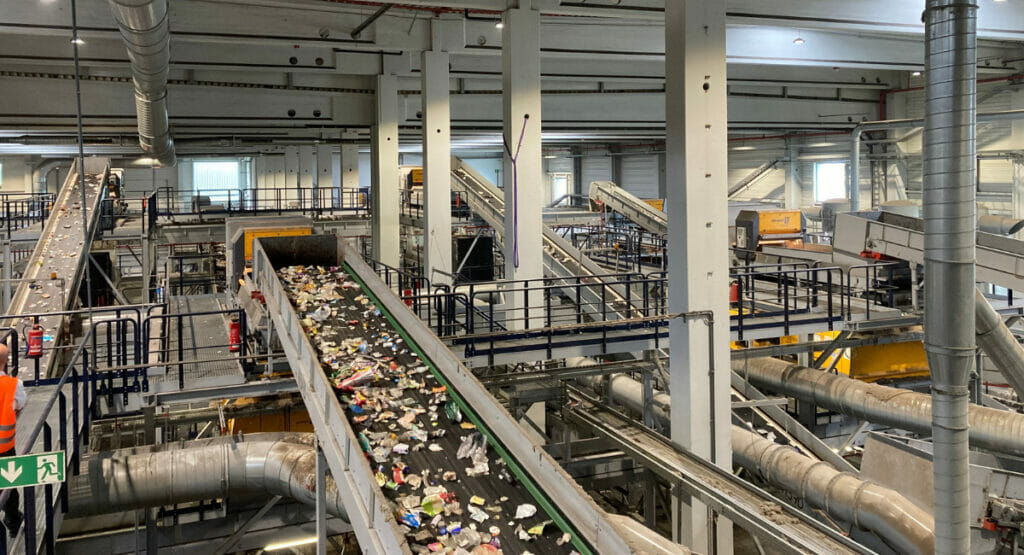
Looking around the 55,000 square metre hall, it is hard to imagine that more conveyor belts could be added here. To the untrained eye, it is a jumble of criss-crossing conveyor belts. The The total length is 10 kilometres and the further you go into the hall, the better you can see the sorted groups of materials.

Picture of sorting belts in a sorting system from interzero
(Image: packaging journal)

Even though around 100 employees work here around the clock in shifts, the Packaging separated exclusively from machines. The final manual pickers have also been replaced by robots that sort out the wrong materials.

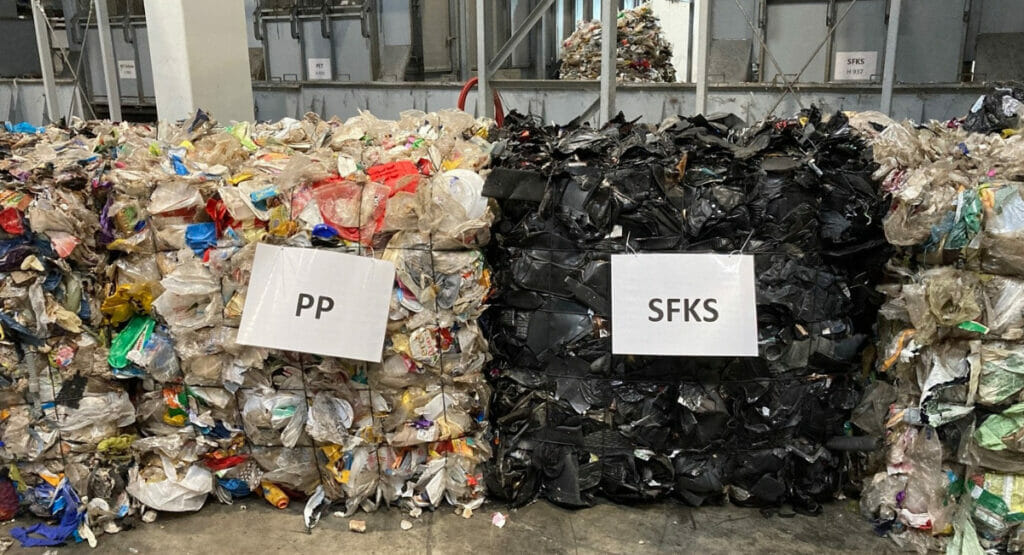
Image of fully sorted material groups from the yellow bin and the yellow bag
(Image: packaging journal)

This produces unmixed bales of PP, PE, composite cardboard or even black plastic. With this group of materials, however, it is noticeable that the The best sorting plant reaches its limits when waste separation in private households does not work. An old video cassette was accidentally disposed of in the yellow bin or the yellow bag and the tapes got tangled up in the system.

Time and again, interzero has to contend with misdirected waste, which can become a real problem. Every year, batteries disposed of via this waste stream cause false alarms and malfunctions. This shows how it is important to educate consumers about correct waste separation and compliance with basic rules. Interzero works together with the “Waste separation works” initiative and the industry association, BDE, among others.

http://www.interzero.de

More news from the magazine

One hundred years blue tin

Since 1925, the Nivea cream can has borne its deep blue colour, white lettering and round shape - a design that has remained stable over generations, markets and crises and is now celebrating its 100th birthday.
Read more "