Adaptive solutions for the packaging sector

B&R offers end-to-end automation solutions for many areas of the packaging sector and supports its customers with adaptive solutions. Where do the experts see the current challenges today, and what developments are the current and future focus?

The spectrum is very broad. B&R offers end-to-end automation solutions for many areas of the packaging sector: from primary packaging to secondary packaging to final packaging. Where do the experts see the current challenges, and which developments are the current and future focus?

Thanks to flexible product transport systems that combined with robotics, machine vision and digital twins and controlled via a central automation platform, B&R enables adaptive manufacturing. Through seamless interaction, the company supports machine builders in terms of performance and quality. Users can benefit from these new possibilities and convert production to batch size 1 during operation.

We have Nikolai Feurer, Industry Segment Manager Packaging at B&R, The company's position on the current challenges in the market, the potential of its own innovations and overarching development trends:

Mr Feurer, in your opinion, what challenges are currently facing the automation of machines in the packaging sector, to which the manufacturers of packaging machines and their users must respond?

Display

Nikolai Feurer Today's consumers expect to receive the products they want, when they want them: personalised to their individual tastes. In addition, we clearly see the trend towards more sustainability in production and in the product, in terms of the conscious use of energy and raw materials. Other important issues are the reduction of production areas and the shortage on the labour market.

Which components are available at B&R to provide optimum solutions in each case?

Nikolai Feurer In order to be successful in today's markets, B&R believes that a fundamental systemic rethink is required. We are convinced that the processes in the machine should adapt automatically to the products to be packaged. This is only possible with an end-to-end integrated automation landscape that ranges from control, operation and monitoring, input and output modules, motion control, mechatronic transport systems and robotics through to machine vision. We offer a complete portfolio for the automation of a production plant that adapts to the changing conditions in the product portfolio: adaptive manufacturing.

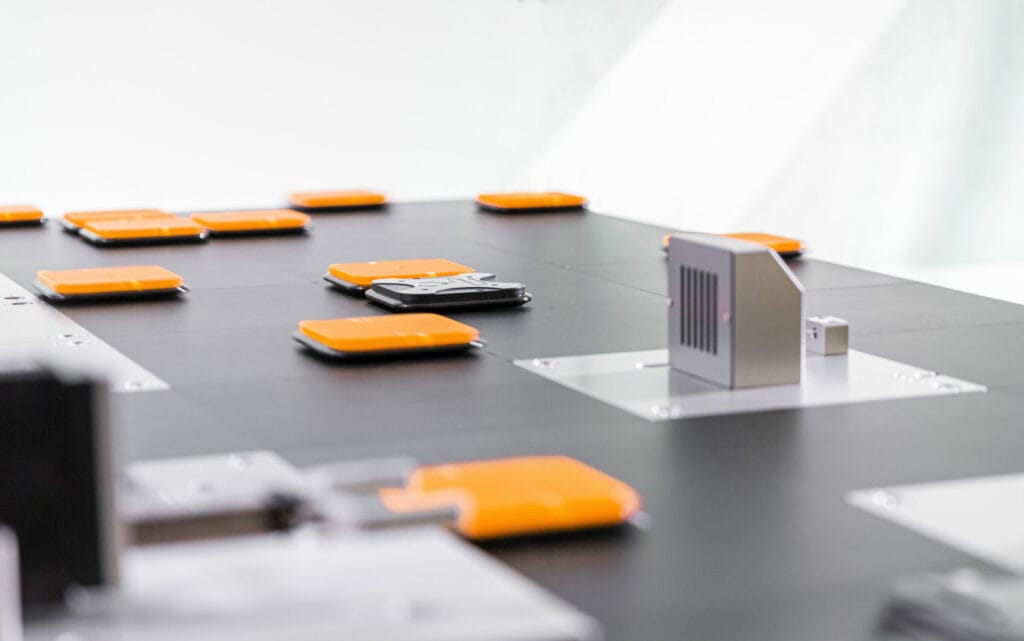
With Acopos 6D, the shuttles with integrated permanent magnets move contact-free on a surface of motor segments. (Image: B&R)

How do your automation solutions differ from alternative offerings on the market?

Nikolai Feurer Our mechatronic systems, such as AcoposTrak, SuperTrak, Acopos 6D and Robotik, provide users in the packaging industry with a very broad and flexible portfolio. All automation components are interconnected in real time, This enables us to achieve synchronisation of all movements in the machine with microsecond precision. What is special about this automation landscape is the depth of integration and the consistency across the entire automation solution: a common engineering tool, a real-time operating system and a real-time network for the entire machine.

What particular advantages can the mechatronic portfolio offer the user?

Nikolai Feurer With our mechatronic solutions, the user can utilise his machine to the maximum and increase his productivity. In an automatic filling line for liquid cosmetics, the container is clamped between two individually controllable AcoposTrak shuttles for transport. This enables Immediate adjustment to the respective product width, which reduces or completely eliminates the format changeover time.

For conventional transport by conveyor belt from one station to the next, the manufacturer must adapt the product to the technical conditions of the production system. The filling height must be dimensioned in such a way that no liquid spills out when the containers start up and slow down. With our mechatronic drive system each bottle is controlled with an individual movement profile. This enables process-optimised braking and acceleration. As a result, the filling height of the container can be increased.

Why should users in the packaging sector rely on adaptive machines in the future?

Nikolai Feurer From an economic point of view, we believe that machines that work with frequent product changes and fluctuating batch sizes is to be expected, nothing else makes sense these days. Even though we are automation experts at heart and we love the technical challenges, we focus on the economic benefits of our solutions right from the start. And adaptive manufacturing delivers in this respect.

The ability, Personalised products up to batch size 1 and thus react quickly to dynamic market fluctuations, as well as the increased output per area increase the return on investment (ROI). And last but not least, an adaptive production line is the key to being faster on the market with new products than the competition.

Your company's aim is to create a customised automation solution together with the customer. How does this work in practice?

Nikolai Feurer To this end, we offer a co-creation process in which we contribute our knowledge of the automation solution and the respective packaging application to the joint development process with the customer. We take a look at the technology used and then develop the new machine together with the customer based on their requirements. Tests and proofs of concept in our global laboratories as well as simulations with the digital twin are an integral part of this. This reduces development risks and accelerates project development.

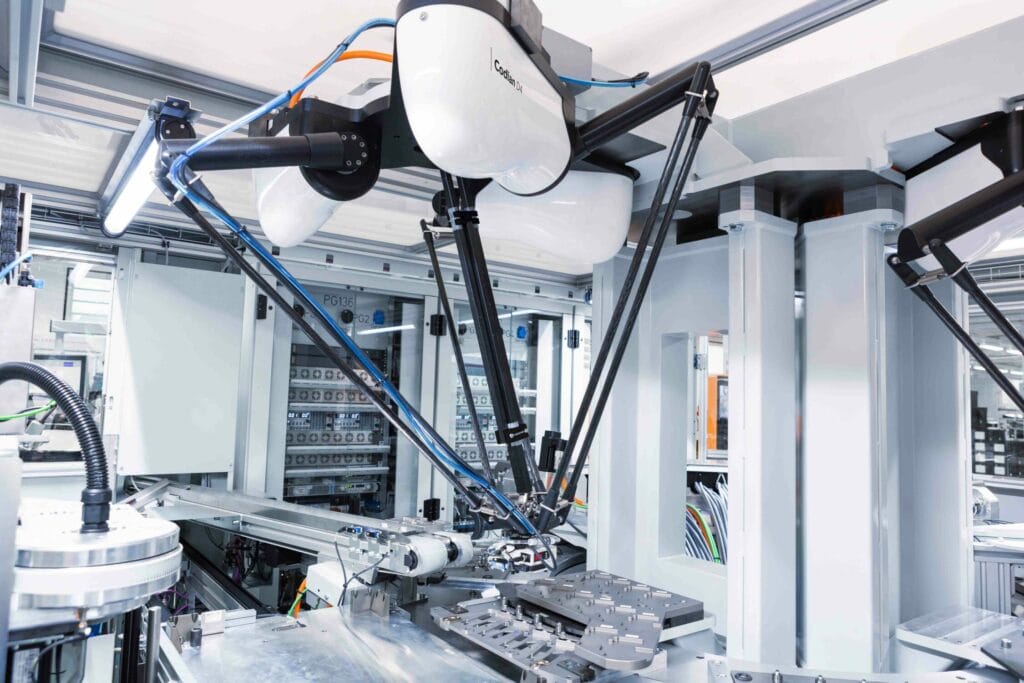
The open Codian robot mechanisms can be combined with any controller and are used for precise pick-and-place tasks in final packaging in the cosmetics industry. (Image: B&R)

How important is the sustainability aspect in the decision-making process?

Nikolai Feurer Sustainability is a high priority in our company. Our own economic activities are focussed on saving energy and resources. In the packaging industry, our automation technologies contribute to this, that the „footprint“ of the systems decreases. This refers to both the footprint of the systems and the carbon footprint in the manufacture of a product.

We are seeing a trend in drive systems, for example, Replace pneumatic or hydraulic systems with electric drives. This significantly reduces the energy consumption of the systems.

However, we also start much earlier and take sustainability into account during the initial design of a production machine and process optimisation. This is illustrated very clearly by the example of one of our customers, of plastic bottles produced from sustainable materials. Together with the customer, we have succeeded in further reducing the wall thickness of the bottles in the co-creation process mentioned above, so that they can now be produced faster and with reduced material usage.

Processes with recycled materials often also require the use of new materials due to changed material properties. more careful product transport. Technologies in transport systems, such as our anti-sloshing, i.e. the controlled deceleration and acceleration of liquid containers, save raw materials by reducing losses and optimising the utilisation of packaging.

What impetus did interpack provide for future steps?

Nikolai Feurer The last interpack showed that our flexible technologies, such as the AcoposTrak and Acopos 6D transport systems in combination with robotics, have arrived on the market. Twenty machines equipped with our mechatronic solutions were exhibited to customers and partners.

At the B&R stand, a well-known cosmetics manufacturer presented a solution based on the Acopos 6D, to produce individualised powder compacts in quantities of one under economic conditions. The first applications of the Acopos 6D planar transport system were also on show, giving a foretaste of the possibilities that manufacturers will be able to utilise on their shopfloor in future, as well as at the PoS.

Where will B&R be heading in the next few years?

Nikolai Feurer I am convinced that the ability to adapt to new requirements and products is increasingly becoming a basic requirement when investing in machines. No one will be able to avoid the topic of digitalisation in their business models. We are strengthening the competitiveness of OEMs, i.e. machine manufacturers, by turning them into enablers for their customers' new business models with adaptive machines. And in the future, we will see machines that reconfigure themselves for new products without human intervention.

http://www.br-automation.com

More news from the magazine

The electronic high-speed switch in AcoposTrak makes it possible to manufacture products individually with a completely flexible layout for customised production in batch size 1. (Pictures: B&R Industrial Automation)

Adaptive solutions for the packaging sector

B&R offers end-to-end automation solutions for many areas of the packaging sector and supports its customers with adaptive solutions. Where do the experts see the current challenges today, and what developments are the current and future focus?
Read more "
Dunkermotoren drive solutions for food packaging

Fresh food on the shelf

In order to get fresh food onto the shelves as quickly as possible, it must be processed and packaged quickly. Innovative drive solutions in hygienic design enable packaging machines to offer maximum flexibility for all applications.
Read more "