The Falsified Medicines Directive (FMD) in practice
Christian Taylor, Business Consultant for Serialisation Solutions at Zetes, on the challenges for wholesalers, distributors and logistics service providers when implementing FMD.
Wholesalers, distributors and logistics service providers are at the centre of the supply chain. To implement the FMD, they must implement a „risk-based“ approach to checking and decommissioning products that pass through their processes. In order to comply with the directive, all those responsible must make changes to their supply chain processes in equal measure.
At the beginning of a supply chain is the Holder of the pharmaceutical licence. This is responsible for serialising the medicine boxes, sealing the product and then uploading the unique identifiers to the European hub, the European Medicines Verification System (EMVS). In the end, the healthcare facility that dispenses medicines must verify the authenticity of the product in question and decommission the product against a national hub. This hub is referred to as National Medicines Verification System (NMVS).
[infotext icon]The Falsified Medicines Directive (FMD) 2011/62/EU comes into force on 9 February 2019. The legislation aims to prevent falsified or unauthorised prescribed medicines from entering the legitimate supply chain. The aim is to better protect patients[/infotext].
Despite the approaching deadline, the market is not yet sufficiently prepared. There are still questions regarding the practical application of FMD in many areas. Companies can no longer afford to let these areas stand in the way of implementing robust FMD solutions. According to Christian Taylor, Business Consultant for Serialisation Solutions at Zetes, the main issues for wholesalers, distributors and logistics partners are export, Article 23 implementation, sample handling, quarantine and destruction.
Display
Christian Taylor, Zetes Industries S.A./N.V. (Image: Zetes)
„The legal details certainly need further clarification. However, it is important that companies put a robust solution in place to ensure compliance and eliminate the likelihood of human error as far as possible,“ emphasises Christian Taylor, Business Consultant for Serialisation Solutions at Zetes Industries S.A./N.V. (Brussels).
Export
The biggest challenge in exporting is that companies need to be aware of this, when to decommission a product are to take place. It is still unclear whether this should be done at goods receipt or goods issue. It is therefore particularly important for companies to implement a solution that allows medicines to be consolidated into a single reference or repackaging when recording data as part of regular processes. This enables the Automatic decommissioning of a product at a suitable point, for example when the customer order is fulfilled.
Consolidation allows companies to allocate individual items to the respective outer packaging. Warehouse staff can then scan the barcode on a package and record the identity of the entire contents without hesitation. Ultimately, a company's investment in an FMD solution that enables consolidation leads to Simplification of the process. Unnecessary complexities in decommissioning for export are thus eliminated. Compliance with FMD can be guaranteed while maximising process efficiency, regardless of when decommissioning has to take place.
Implementation of Article 23
According to Article 23, Member States may require wholesalers and distributors to verify and decommission medicinal products before supplying them to a facility that neither hospital nor pharmacy is not authorised. This affects universities, veterinarians and public institutions, among others, as they may not be authorised to log in to the national hub and decommission products.
Therefore, the responsibility for determining which customers are covered by Article 23 lies with the Wholesalers and distributors. To ensure compliance, companies must be able to review their customer base, recognise relevant customers as part of their regular processes and Automatic triggers for decommissioning.
Wholesalers, distributors and logistics service providers should invest in an FMD solution that can be integrated into their warehouse management system (WMS). This will enable staff to be made aware of what special measures need to be carried out each time a pick is made. Companies should prevent decisions that could affect the company's legal position from being made at warehouse worker level.
In the pharmaceutical industry, the dispatch of samples to health authorities or doctors is a common process. In principle, companies obtain their medicinal products via the usual logistics chain. But The FMD also applies here. Companies therefore need full transparency about the time at which the medicines in question leave the supply chain and to check whether decommissioning has taken place. Currently, many companies still carry out such checks manually using the manufacturers' various systems.
According to the FMD, companies will soon have to ensure that they invest in a system that enables automated processes and is suitable for the right Sample dispatch process is designed for the respective company. When sending samples, the system should be capable of checking and/or decommissioning the product in question, regardless of which business department it comes from.
Quarantine and destruction
The regulations for destruction are still relatively lax compared to the FMD. As things stand at present, a product is not destroyed immediately if it is kept in quarantine. This can lead to mix-ups. However, contrary to popular fears, current business practice does not necessarily have to be completely overhauled.
Companies must be able to comply with FMD, track which products have been quarantined and report which of these products have been decommissioned and destroyed. For organisations that already have a consolidation-capable solution, destruction can be carried out via a software function. The processes for physical destruction can then be retained unchanged.
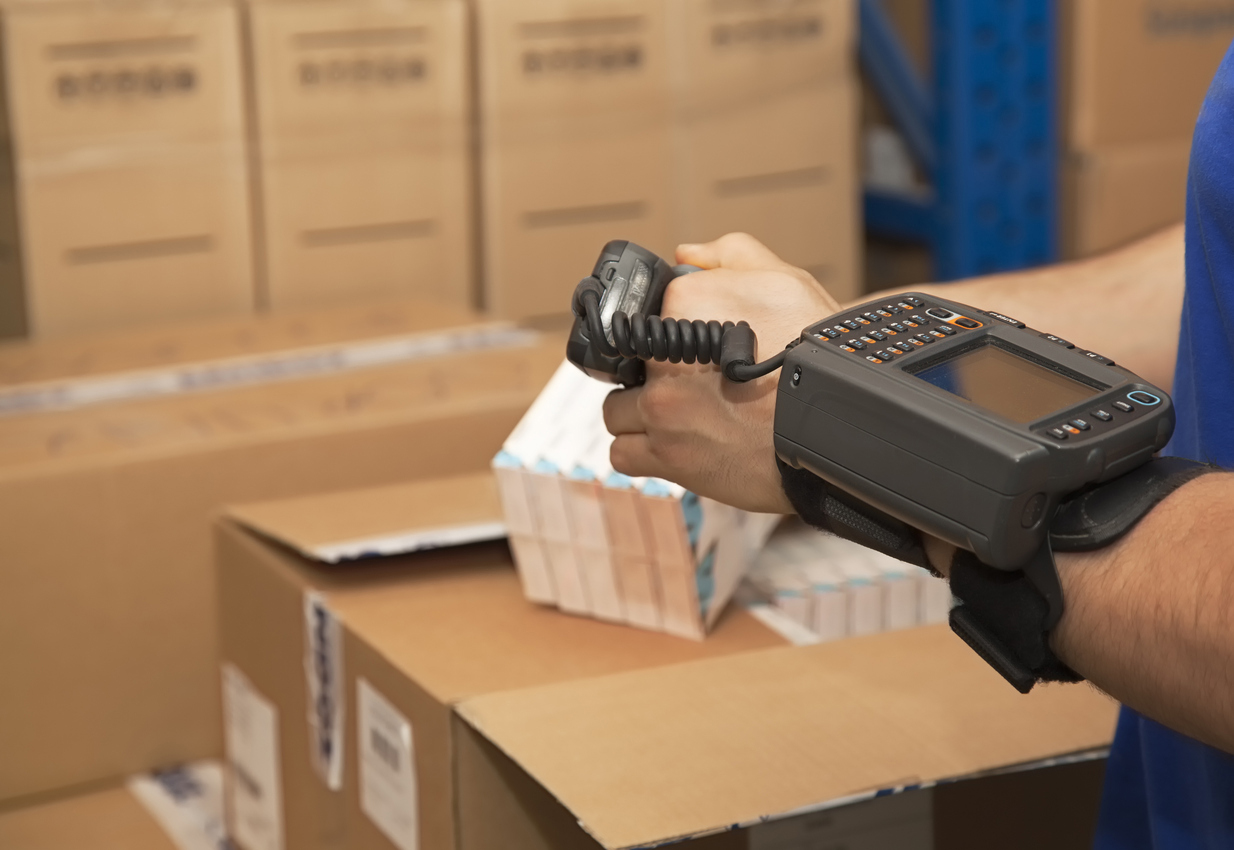
The legislation is intended to prevent counterfeit or unauthorised prescribed medicines from entering the legitimate supply chain. (Image: istockphoto.com/FotografiaBasica)
Automatic workflow and transparency
In order to avoid confusion, companies should proactive look for solutions whose implementation causes as little disruption as possible to ongoing work processes. These solutions should also increase efficiency and be as easy to use as possible in day-to-day business.
Companies must now take into account that no one is currently processing the data of individual products in the packaging facility. For compliance and reporting to the national hubs, wholesalers, distributors and logistics partners need to review current processes and ensure that they have Process data for each individual pack can.
This legislation favours efficiency and quality. Wholesalers, distributors and logistics partners should use this opportunity to optimise their capabilities within the warehouse and business processes. In doing so, it makes sense to Comprehensive, agile transparency layer into the existing processes and cross-functional systems. This will not only ensure compliance from 9 February 2019, but will also allow these infrastructures to be built upon. Companies are thus equipped to adapt more easily to changes in regulatory requirements in the future.