One trend at Anuga FoodTec 2017 will be the aseptic packaging of food. Consumers increasingly expect natural foods that have not been heated to high temperatures or preserved with preservatives. Instead, physical processes are being used that require aseptic filling systems in hygienically perfect production conditions.
According to the list of exhibitors, 55 companies will present their solutions for aseptic filling systems at the „Anuga FoodTec 2017“. One technology that has attracted particular attention in this area is the „Cold aseptic filling“ in plastic bottles or beverage cartons. In the run-up to the trade fair, Koelnmesse GmbH registered an increasing demand for the cold aseptic filling of fruit or vegetable pieces, which were previously always packaged sterilely using heat.
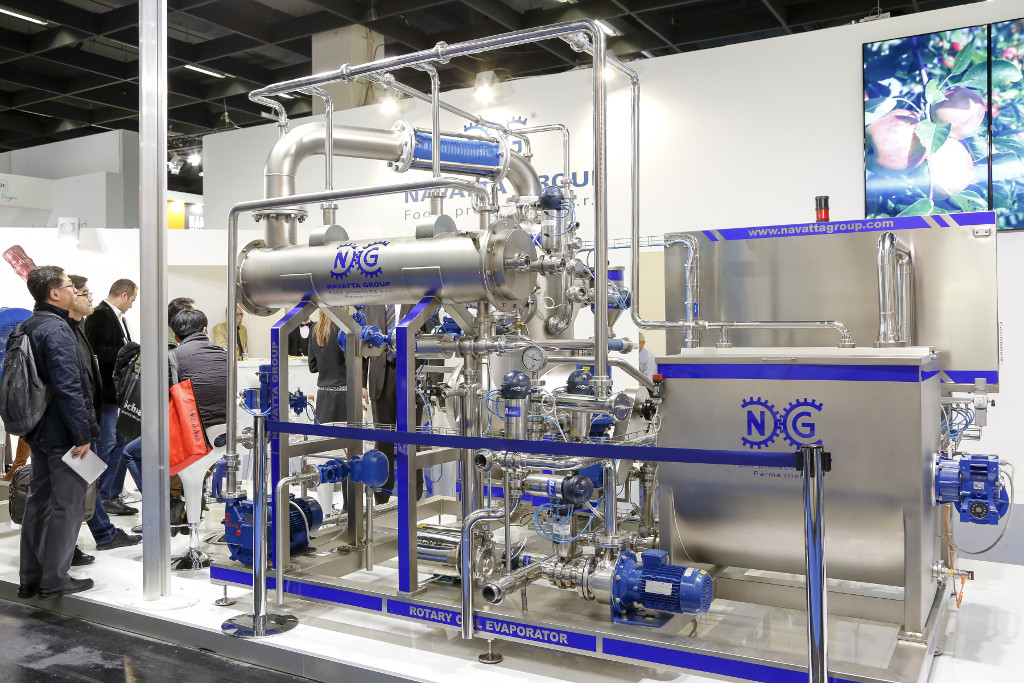
For applications such as these, for example, the Navatta Group has developed the „Calipso“ filling system, a solution for the aseptic filling of previously sterilised bag-in-box packaging without pouring spout. This allows liquids, which may also contain pieces of fruit or vegetables, to be filled aseptically and stored safely and in a space-saving manner. Bag-in-box bags with volumes of three to ten litres can be filled.

A lot of effort required to keep production environments sterile
Aseptic filling technologies require a great deal of effort when designing the production environment. The food is processed in a low-germ environment and, like the packaging, is sterilised separately. Both components are then brought together in an aseptic environment. It is particularly time-consuming to sterilise the „product contact area“ to be kept sterile. Where no Cleanroom solution If this is not possible, an aseptic zone is often created by a positive displacement flow of sterile air.
Aseptic systems must be easy to clean. It must also be possible to continuously maintain the sterility of the environment. The same applies to Packaging material and packaging aids. Methods such as sterilisation with hydrogen peroxide or peracetic acid are used here. Another method is the „Pulsed Light“ process. A high-intensity flash acts on the surfaces of the packaging for around 0.3 seconds and sterilises them effectively.
Navatta Group at Anuga FoodTec: Hall 04.2, Stand D030/E039