The barcode turns 50

For 50 years, the barcode has made it possible to scan and retrieve information about products from different industries at the checkout.

For 50 years, barcodes have made it easier to scan products at supermarket checkouts. Different industries use the code to quickly identify products.

The barcode celebrates a milestone birthday on 3 April 2023. Its introduction 50 years ago has Retail revolutionised and thus opened up the age of digitalisation. A few years ago, the BBC described the barcode as „one of the 50 most important things that have changed our global economy“. With a simple scan, a product can be identified at the checkout and connected to the digital world. Queues in supermarkets became shorter and stock management simpler and more accurate.

Today, the barcode can be found on over 1 billion products worldwide and its ubiquitous „beep“ can be heard more than 10 billion times a day at the checkout. Behind the barcode is a worldwide overlap-free GS1 Article number system for which GS1 Austria is responsible as part of the international GS1 network in Austria. 

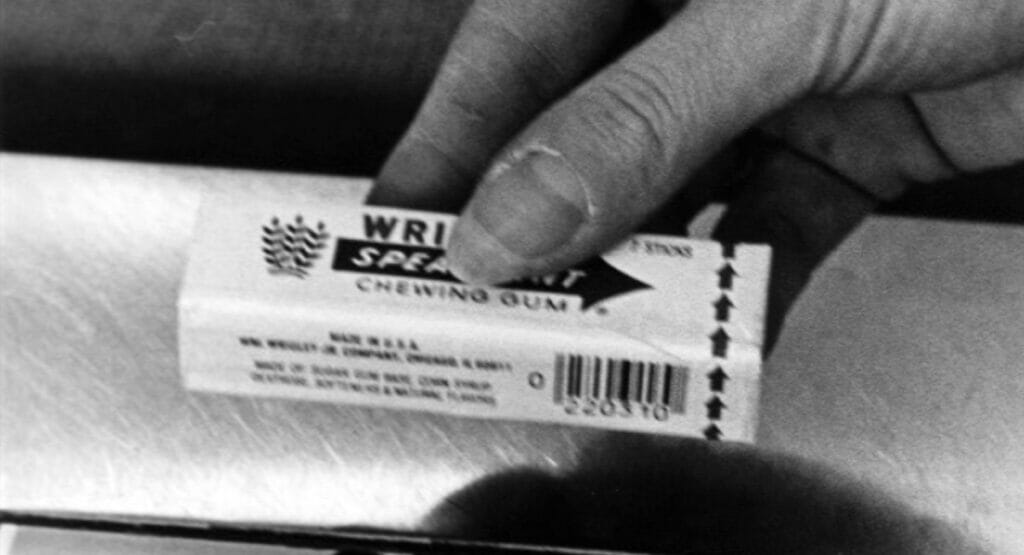
In 1974, a barcode was scanned at a checkout for the first time.
(Image: The Wrigley Company)

The invention of the barcode goes back much further than its market launch: the American Norman Joseph Woodland - also known as the „father of the barcode“ - had already invented the barcode for the first time. In 1949, he drew his first ideas in the sand on a beach in Florida and finally patented them in 1952. registered. It was not until around twenty years later, on 3 April 1973, that ten industry leaders from trade and industry in the USA agreed on the Use of a standardised symbol for the Universal Product Code (U.P.C.) to identify food products. They used Woodland's invention for this purpose: The barcode we know today was born.

Display

Another important milestone was the 1974 the first official scan of a barcode on a packet of Wrigley's Juicy Fruit chewing gum in a supermarket in Ohio. Three years later - in 1977 - the European Article Numbering Association (EAN) was founded in Brussels by leading organisations from 12 European countries (including Austria). EAN Austria (now GS1 Austria), which was founded in Austria in the same year, played a leading role in all developments from the very beginning. Over the decades, for example, many new sectors and areas of application have been conquered, such as healthcare or construction.

The barcode also makes a contribution to the topic of sustainability: for example, in the labelling of raw materials and packaging for a functioning circular economy, through better planning of order quantities for less food waste or as a basis in electronic data exchange for paperless document exchange.

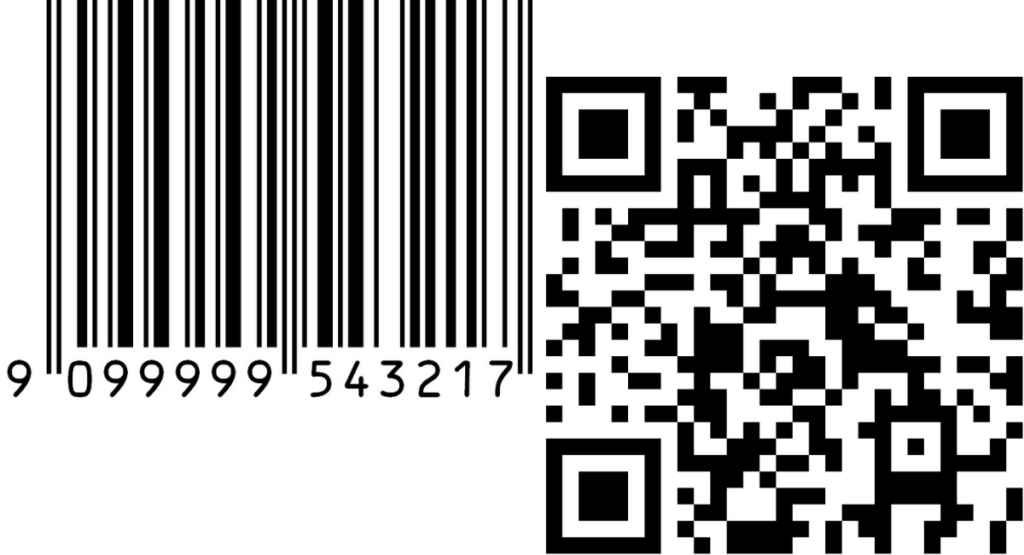
Barcode and Qr code
(Image: GS1 Austria)

The requirements of rapidly advancing digitalisation and the increasing desire for transparency and therefore more information have also set a new course for the generation of product labelling.

„The trend here is clearly towards 2D codes, which can encode much more information than one-dimensional barcodes. They are also more robust and easier to read.“

Gregor Herzog, Managing Director of GS1 Austria, Chairman of GS1 in Europe

Some industries have been relying on these advantages for years: For example, the 2D code „GS1 DataMatrix“ has established itself as a global standard in the healthcare sector and ensures secure supply chains and greater patient safety. It has also been used successfully in the railway industry for several years, for example by ÖBB, which uses it to label its safety-relevant components.

And at the latest since the Covid pandemic, another 2D code in the form of the QR code has also arrived in all living rooms at home. A two-dimensional code can process around 3,000 characters, making it suitable for more consumer engagement in the B2C sector, according to Herzog. GS1 has developed the „GS1 Digital Link“ to make this information accessible to consumers and business players in the future. This creates a simple and standards-based structure to make data from 2D codes or other data carriers „web-enabled“.

According to Gregor Herzog: „Not for the time being! Only the selection will become more flexible in future. In the food sector, for example, the price and item description are currently still sufficient information at the POS. The Increasing desire for comprehensive traceability and transparency will also require changes in some areas.“ According to Herzog, it is currently impossible to say whether the 2D code will completely replace the barcode at some point: „This depends on many external influences and, if so, will certainly come from the larger countries and not from Austria.“ 

Source: GS1 Austria

Further messages on labelling