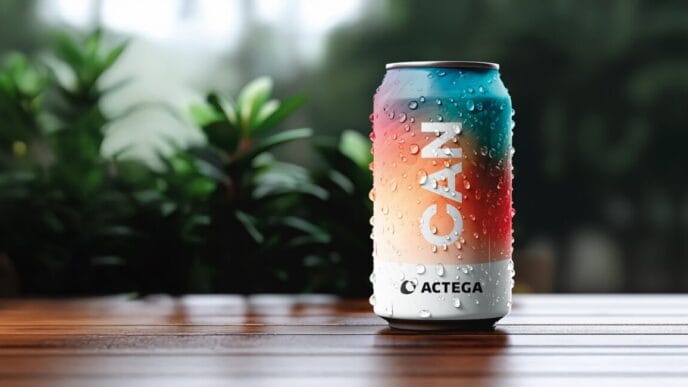
Gebrüder Leonhardt GmbH & Co. KG Blema Kircheis from Aue focuses on technical and economic efficiency in the development of new processes and machines. Its core competence is the supply of complete systems for the production of tinplate or cardboard packaging. The current focus is on the production of so-called „All Paper Can“, where at least 95 per cent of the material used is paper.
The production of packaging is directly linked to ecological aspects and Premises of consumer protection. This connection is available in four different places:
- The material from which the packaging is made. The task is to produce packaging from renewable raw materials wherever possible.
- On defining characteristics of a new integration into the material cycle after use. One hundred per cent reuse in the sense of real „recycling“ is the ideal here.
- The necessary energy consumption within packaging production plays an important role.
- It is imperative that food packaging must not pose a risk to health in any form whatsoever.
If all requirements are met, the result of a „ideal packaging“ close.

Situation with cardboard boxes
Cardboard cans are predominantly spiral-wound and consist of several layers of paper plus a barrier layer of aluminium foil. They are also sealed with an aluminium membrane and a base made of aluminium, tinplate or cardboard. Further mechanical protection and a possible reclosure are provided by an attached snap-on or press-in lid made of plastic.
This leads to the conclusion that there are both matching and diverging characteristics in relation to the „ideal packaging“. The currently used Cardboard composite can to evaluate all the criteria mentioned here would go beyond the scope of this report. Therefore, only the Recycling process reference is made: This is currently such that, due to the given material mix, only one type of can is detected and otherwise only an extremely limited utilisation of the other can components takes place. This is an unsatisfactory situation.
A whole lot closer to the „ideal“
The currently favoured way to move away from the aforementioned material mix for the most part is the so-called „All Paper Can“. All of the named parts of the can - body, base, membrane and lid - are made of a material that can be used for at least 95 per cent paper exists. This means that within the recycling process, it can be fully allocated to paper and returned to the material cycle accordingly.
Economical production
However, it is the case that the requirements relevant to the protection of the environment can only be realised to the extent specified if the restrictions imposed by the market are taken into account. Therefore, if the can shape shown is to achieve significant acceptance on an international scale, it must be based on the Production costs packaging must at least equalise, or better still reduce, the current level. This Unit costs are determined by a wide variety of factors:
- Material costs
- Maximum possible unit output
- Price of a corresponding production plant
- Quality of the packaging produced
- Times for switching to a different can size
- Appearance, design, opening behaviour.
These important influences emphasise the complexity of the topic: this is a development that offers great opportunities and cannot be solved with a few improved features on individual machines.
[infotext icon]Based on a broadly based research and development department, Blema Kircheis can support the customer from the first can samples to the provision of a highly specialised production line for tinplate and cardboard packaging[/infotext].Partner for complex new developments
Blema Kircheis began developing and building sealing machines for sealing cardboard cans with a cardboard base in the early 1990s. The sealing machine used for this purpose and adapted to the specific process conditions Heat contact sealing formed the basis for an economically even improved production compared to the previously used tinplate or aluminium floor.
This was followed in the years that followed by a large number of machine developments for the production of composite cardboard cans. In 2015, the expertise of another packaging machine manufacturer was acquired to complete the necessary range of machines in this area.
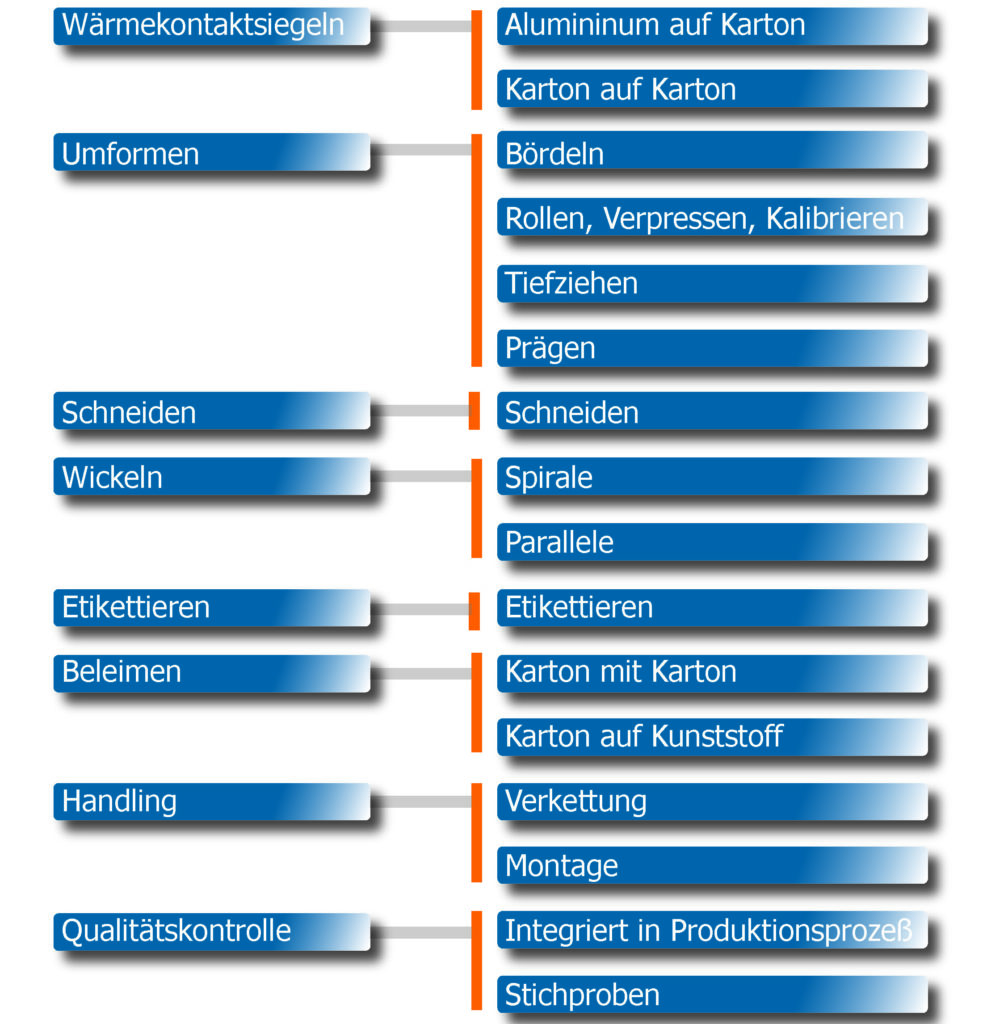
Blema Kircheis currently covers all process components plus machines, particularly for the high-performance sector, under one roof, which fulfil the technological requirements for Production of the cardboard composite can for the mass market (see chart below).
Comprehensive expertise
In order to guarantee the surplus-generating production of a new form of packaging such as the „All Paper Can“, a Close cooperation between packaging manufacturer and machine builder essential. The mechanical engineer has the following tasks:
- Process development
- Prototyping for tools and test rigs
- Preparation of can samples for qualitative evaluation
- constructive design (both for the mechanically and electronically solved part of the development),
- Prototype construction
- Production support at the packaging manufacturer
The conversion of large parts of the market to the use of the „All Paper Can“, i.e. a packaging form with significantly improved ecological features, requires the pre-financing of the necessary development work. The packaging machine manufacturer must provide the financial strength for the implementation.
Tomorrow today
There is a broad social consensus that preserving the environment for future generations requires the responsible use of available resources. The packaging industry can, must and will make a contribution to this. The market launch of the „All Paper Can“ is a step in this direction. However, this packaging can only be used under the condition of economic production the broad application aimed for find.
Providing the means, i.e. processes and machines, for this is primarily the task of packaging machine manufacturers. A task that Blema Kircheis can and is already taking on based on its existing range of processes and machines, coupled with technical expertise and financial strength.