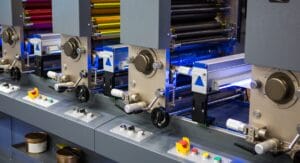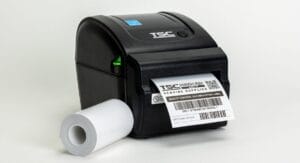
Modularity is a major trend in packaging technology - and labelling is no exception. Labelling specialist Cab has also recognised this. The company is presenting its Hermes Q and Squix modular printing systems at interpack.
Every industrial sector places specific demands on fully automatic labelling in systems. For example, cycle times and the processing of variable data at high speed are decisive factors. Whether an object is stationary at the time of labelling or is being moved on a conveyor belt and from which side labels are to be applied also plays a role.
Depending on the application, the Hermes Q and Squix cab printing systems can be individually combined with applicators or a robot arm with a print stamp. If the object to be labelled or the label changes, the applicator can be replaced quickly and easily.
One system, many possibilities
Labels can be applied to a surface after printing, Depending on the selected applicator and its transfer unit, various options are available. Labels can be pressed onto an object, triggered by a signal. Depending on the size or consistency of the object, Cab provides transfer units that are universally or specially sprung, damped or with a label stop.
Alternatively, labels can be applied by rolling onto an object while it is being transported on a conveyor belt. Blowing on with compressed air without mechanical contact is also possible. Labels can be shot up to 20 centimetres through the airbefore they land unerringly on the object and stick there. Finally, the systems also offer the option of wrapping labels around cylindrical bodies using an applicator with a moulding die.
Cab at the interpack: Hall 8b, Stand D04
Source: Cab
Further messages on the topic of labelling


CCL Industries expands labelling expertise

Perlen gets into moulded fibre packaging

Autajon Group strengthens presence in the Netherlands

Volati takes over Interket Group