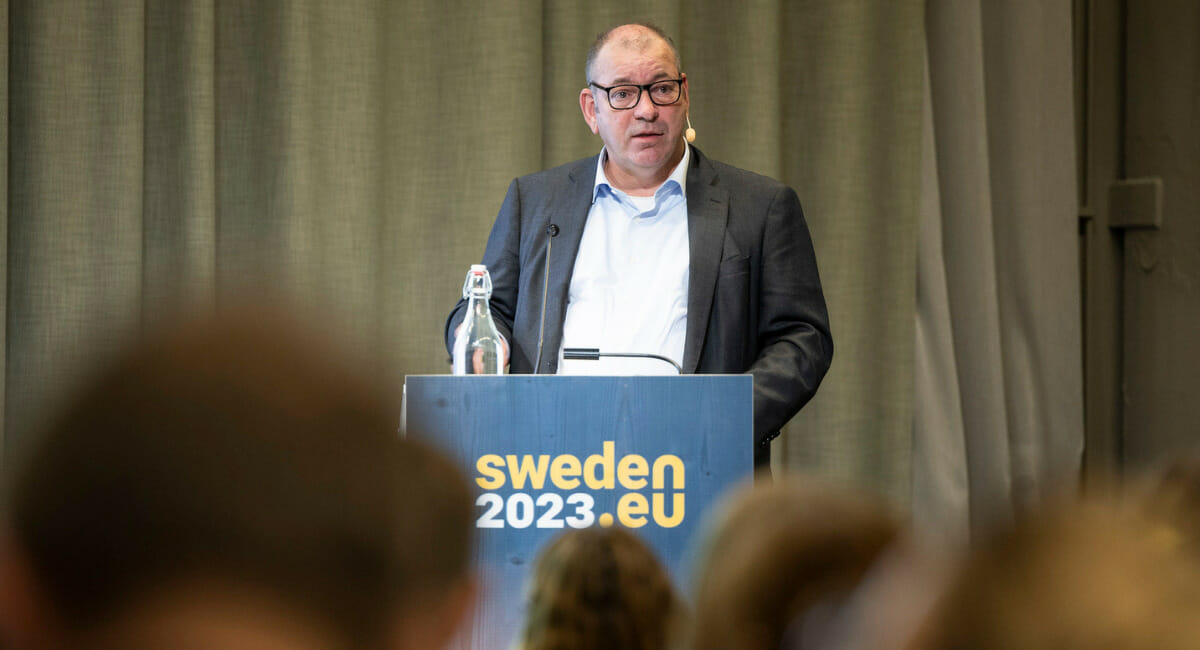

The two-day „Living in the Bioeconomy“ conference is being held in Sweden under the Swedish Presidency of the Council of the European Union. President and CEO of Billerud, Christoph Michalski, was also there and spoke about the importance of materials and design in packaging for a circular economy.
The bioeconomy is an important part of the circular economy. Fibre-based packaging is recycled and the fibres are used again and again until the quality of the fibres has become so low that they can no longer be used. It then becomes carbon dioxide again and the natural carbon cycle is closed. This is in contrast to the fossil fuel economy. Billerud replaces fossil-based materials with renewable and recyclable materials. Recycled content contributes to the sustainability of paper-based packaging and to a more sustainable circular economy.
„I would also like to emphasise the importance of food safety. Protecting food and reducing food waste have a greater impact than the actual climate impact of producing the packaging. We are focussing on the areas that have the greatest impact on the climate. LCA, Life Cycle Assessment, shows that fibre-based packaging often has an advantage over other materials such as glass and plastics. The reason for this is significantly higher packaging and transport efficiency. And if you look at drinks cartons, for example, these are mainly made from renewable raw materials, which reduces the impact on fossil resources.“
Christoph Michalski
The two-day conference will discuss strategies and measures for a sustainable, bio-based society with a resource-efficient value chain. The transition to a bio-based economy is crucial for climate, employment, growth and development in rural areas. The current challenges have further emphasised the need for renewable resources for a resilient Europe. In June 2022, the Commission presented its progress report on the implementation of the EU Bioeconomy Strategy.
Source: Billerud, Sweden2023.eu