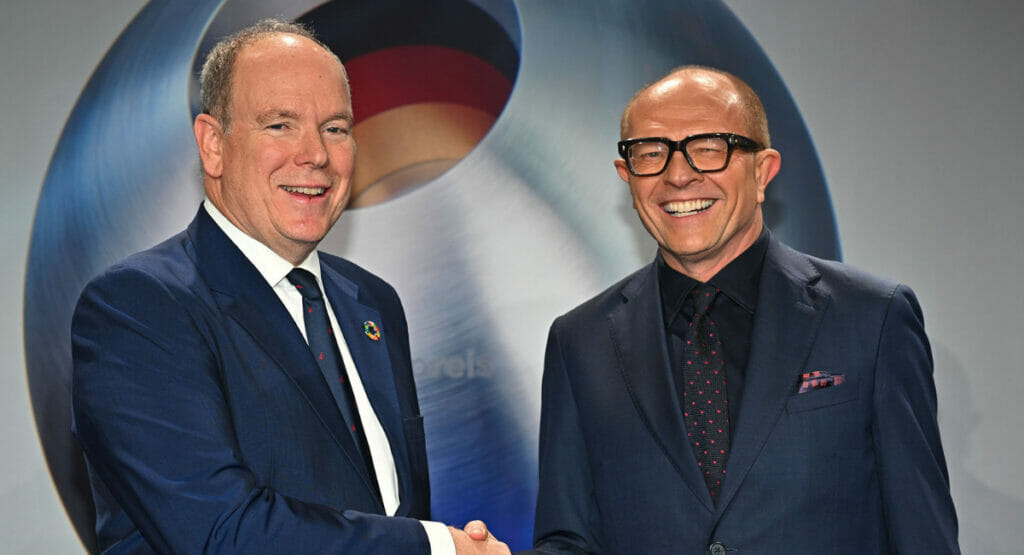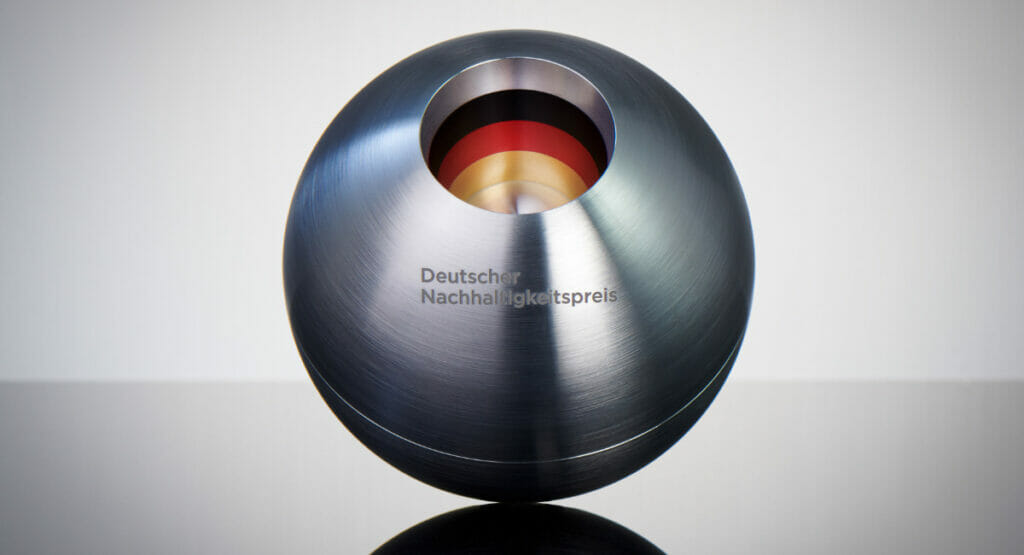
Sustainability was not only one of the topics that could not be ignored at this year's interpack in Düsseldorf - for many years now, the industry has been looking at how packaging, production and the packaging process can become more sustainable. Since 2008, the industry's pioneers have been honoured with the German Sustainability Award. Stefan Schulze-Hausmann, initiator of the German Sustainability Award, spoke to us live at the trade fair about trends in packaging and why problems and hopes crystallise in it.
The German Sustainability Award was launched 15 years ago. Why back then? What was your motivation?
The motivation at the time was that the topic of sustainability was becoming bigger. I had previously presented another award for ten years, the German Environmental Award. This is essentially a green award from the German Federal Environmental Foundation, and at that time, at least for me, it was the only visible award for the whole topic of environmental protection. At that time, the issue of climate change was becoming more and more prominent and many people were talking about sustainability. And I realised that there was no award for this at all. But at the time, companies were starting to make huge efforts in this area. And we then set up this award with partners in 2008, which in hindsight seems reckless, because the topic not only gained momentum, it also became increasingly complex.
Yes, absolutely. At best, sustainability is no longer something special for a company, but something that is taken for granted. In other words, finding the pioneers - and that is the idea behind the German Sustainability Award - isn't that becoming increasingly difficult?
No, I don't think so. You're right to say that nowadays it's hopefully a matter of course for companies. Dealing with it is a matter of course. Changing the core business is not a matter of course. What is not a matter of course is housekeeping, i.e. getting what happens in the company itself up to scratch. It is not yet mainstream. And if you look at the many hundreds of thousands of companies in Germany, not all of them are pioneers. Of course not, but there is a small group of those who started early and who are serious about it and do a lot, and who also earn money from it. It was a bit frowned upon back then. When we started 15 years ago, it was more or less mandatory to at least say that you were acting sustainably in order to protect the environment and treat employees better. The fact that sustainability is also a real advantage in the industry and a real competitive edge only emerged later and is only now being openly stated.
We are at the interpack packaging trade fair. I'm sure you have an eye on the developments here in terms of sustainability. We're talking about 100 industries that you're honouring. One of them is packaging. How important is it among these 100?
We have a little story to tell about packaging. We started honouring companies in 2008 - large, medium and small. And the packaging industry was attentive right from the start. We received applications from this field. And six years ago, our long-standing partner, Rewe, came and said we wanted to organise a special award with you on the subject of packaging. The background to this is, of course, that such a retail giant also has leverage. It can negotiate with its manufacturers about how goods are packaged more favourably, where you can save, reduce, rethink packaging sizes and so on. And then we launched this special prize. It has been awarded five times. This year we are doing something different with Rewe, but it has become clear that there really are many levers in this industry. I'm not telling anyone anything new at this trade fair. A lot is expected of packaging. We take a lot for granted: transport safety, hygiene, all the requirements we set. And on the other hand, we demonise packaging, sometimes rightly so, because it is of course sometimes far too opulent, made from materials that contain environmental toxins and cause huge problems when it comes to disposal. And it stays longer than you do and perhaps in places where you don't want it and didn't even imagine it. The whole world of sustainability is crystallised in the world of packaging. Everything that is of the devil is crystallised in the packaging. Everything you want, everything you want in terms of benefits and positives, is also crystallised in the packaging. And that's why, for example, Rewe, other retailers and, of course, almost all companies are scrutinising how they deal with this issue. And that's why interpack, where this industry meets, is also an incredibly important trade fair, because this is where things are decided.
You look at packaging from two perspectives: as a consumer and „industry outsider“, and on the other hand as an expert thanks to your 15 years at the German Sustainability Award. What trends do you see when you look at packaging?
Well, I'm a journalist by trade, and my vertical integration cannot be compared with that of the experts who are watching or who are at this trade fair. One topic is definitely natural packaging materials. We also had a design award for many years, which also looked at the packaging world with open eyes, and the leap from plastics to natural materials is evident. Starting with very visible things that are also prescribed by legislation, such as straws, which are now no longer allowed to be made of plastic, we can see a change in all possible worlds. And there is a responsibility among this clientele here at the trade fair.
Yes, I would say that responsibility has arrived. Companies have realised this and, just as you said at the beginning, have recognised it as a competitive advantage. And now you can't do without it.
No, everyone is saying it now. It's now become a level playing field, so to speak. Everyone says there's something about sustainability. The website gives it away, there's a bit of green in there. But greenwashing is of course also a monster topic. It pretty much ends at the top with the big companies that have to report. That's where the auditors sit at the back, and then the seriousness of the figures is required. But I'm afraid that there's still a lot of lying going on in the mid-tier. That has to stop. It is increasingly coming to an end, but there is still a need for action.
The 16. German Sustainability Award will be awarded on 23 and 24 November 2023 in Düsseldorf. For the first time, 100 pioneers in sustainability will be honoured. packaging journal is the official media partner.
More news from the magazine

MM Pharma & Healthcare Packaging has developed translucent, paper-based tamper-evident labels that are recyclable and contribute to greater sustainability in pharmaceutical packaging.
Read more "

Packaging machine manufacturer in flow
In the 70th anniversary year of Hugo Beck Maschinenbau GmbH & Co. KG, the family business reached a special turning point in 2025.
Read more "

Powerful automation for mills
How four mills master the sack with Koch robot systems - from manual labour to high performance and into the automated future.
Read more "

Decentralised signal processing with the Schmersal Safety Fieldbox
Packaging machine manufacturer Meypack relies on Schmersal's Safety Fieldbox for safety-related signal processing. This concept benefits not only the designers, but also the users of the machines.
Read more "

One hundred years blue tin
Since 1925, the Nivea cream can has borne its deep blue colour, white lettering and round shape - a design that has remained stable over generations, markets and crises and is now celebrating its 100th birthday.
Read more "

Why the ink makes the difference
Edding AG and Elried Markierungssysteme decided to combine their strengths back in 2018.
Read more "
Display