EU project for the sustainable production of bioplastics

The EU project Bio-Plastics Europe is working on the sustainable production of bio-based and biodegradable plastics.

Plastic that ends up in the environment and does not degrade is a problem. In the EU project Bio-Plastics Europe, 22 scientific and industrial partners from 13 countries have joined forces. They are working on sustainable solutions for the production of bio-based and biodegradable plastics. 

As a scientific partner, the Austrian Centre of Industrial Biotechnology (acib), together with technology experts from Graz University of Technology, is contributing its Materials science expertise in polymer production a. Thanks to the new technologies developed in the Bio-Plastics Europe project sustainable strategies and solutions for the production and use of bio-based plastics The aim is to support the EU plastics strategy and promote the circular economy.

„Our big goal is to, Bio-based, biodegradable, sustainable and safe materials for the manufacture of various products,“ explains Anita Emmerstorfer-Augustin, Project Manager and Molecular Biotechnologies at the Austrian Centre of Industrial Biotechnology (acib) in Graz. The researchers were able to develop new plastics based on five different bio-based materials.

„What makes them special is their biodegradability. While many types of bioplastics currently available on the market, such as polyethylene, which is used to make films and packaging, can also be of biogenic origin, this does not mean that they are also biodegradable. They do not necessarily decompose through biological activity with the help of microorganisms or enzymes, so that only water, biomass and carbon dioxide remain.“

Display

Anita Emmerstorfer-Augustin

Degradability as an important goal

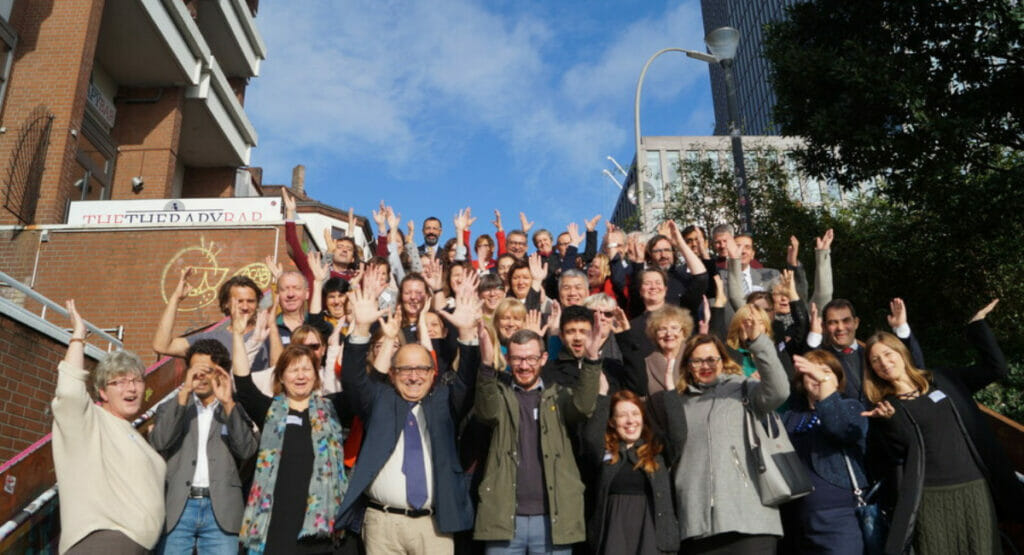
22 scientific and industrial partners from 13 countries are taking part in the Bio-Plastics Europe project.
22 scientific and industrial partners from 13 countries are taking part in the Bio-Plastics Europe project. (Image: Bio-Plastics Europe)

Plastic often remains in the environment in the form of waste, abrasion from car tyres, artificial turf and much more. As if that were not enough, hazardous substances such as additives, which are supposed to improve the properties of plastics, also pollute nature and people's health.

„In addition to biodegradability, our new polymer materials, known as ‚blends‘, must also have other properties, which we characterise in the laboratory. For production, we vary the process conditions, such as temperature and pressure, using various additives. We then test the biodegradability of the end product using suitable enzymes and determine how well it works based on the weight loss and the presence of various degradation products.“

Anita Emmerstorfer-Augustin

It could be shown that the new materials, including biopolyester (PHB) and natural rubber blends, are more elastic and flexible than conventional bioplastics are. „To accompany the production process, we created a safety protocol as part of the project to ensure safe Improve the use and end-of-life management of bio-based and biodegradable plastics.“ These prototypes are currently also being tested for toxicity in the laboratory and in field trials. „Toxicity tests carried out at the Medical University of Graz show that the material we have developed is harmless,“ explains the researcher.

Several hundred grams of bio-based, biodegradable plastic prototypes have already been produced. One Expansion of production to industrial scale is planned. The first results are expected at the end of the year and should help to improve many products in terms of the environment and health. „The aim is to transfer our findings to reusable cutlery, toys, soft and rigid packaging, agricultural films and geomembranes as well as fishing bait and boxes,“ says Emmerstorfer-Augustin.

Source: Bio-Plastics Europe

Further news on bioplastics