It is not a new technology and most people hold it in their hands when they buy their breakfast - packaging made from cast fibre. The process is currently experiencing increased demand in the search for sustainable packaging alternatives. The fibre casting expert Papacks has also been involved since 2011. Unlike its competitors, however, the company does not use recycled fibres, but fresh fibres from tree and hemp cultivation.
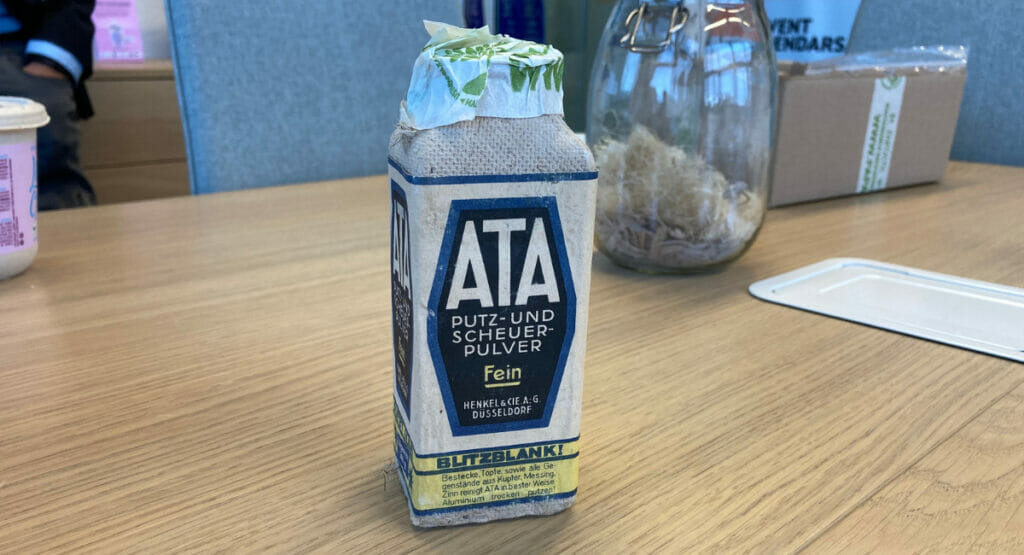
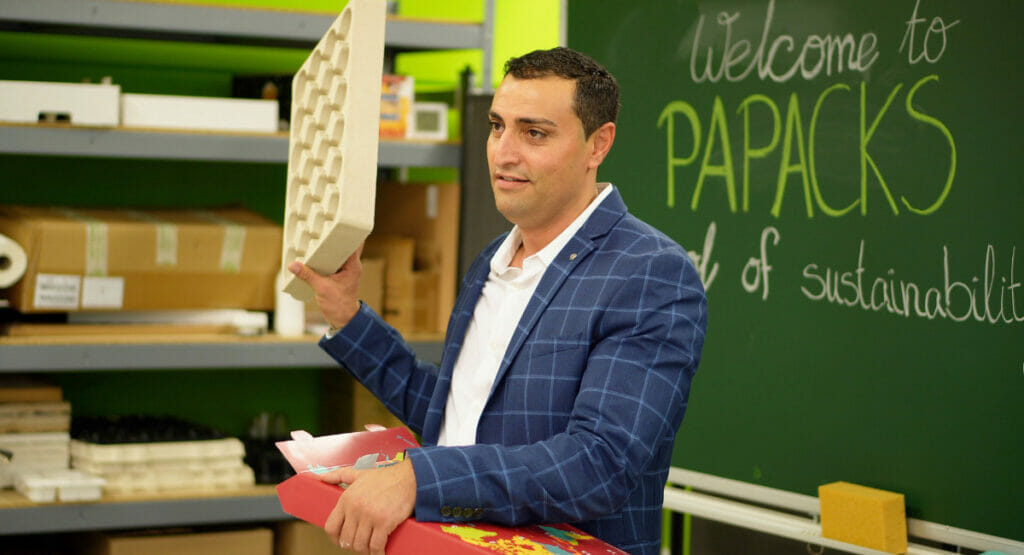
At the Innovation Hub in Cologne, founder Tahsin Dag takes customers and those who want to become customers on a journey. There is a real treasure in the conference room: a Bottle for scouring milk - made of fibres and more than 100 years old. In the past, there was already a different solution for packaging that we know today from materials such as plastic and glass.
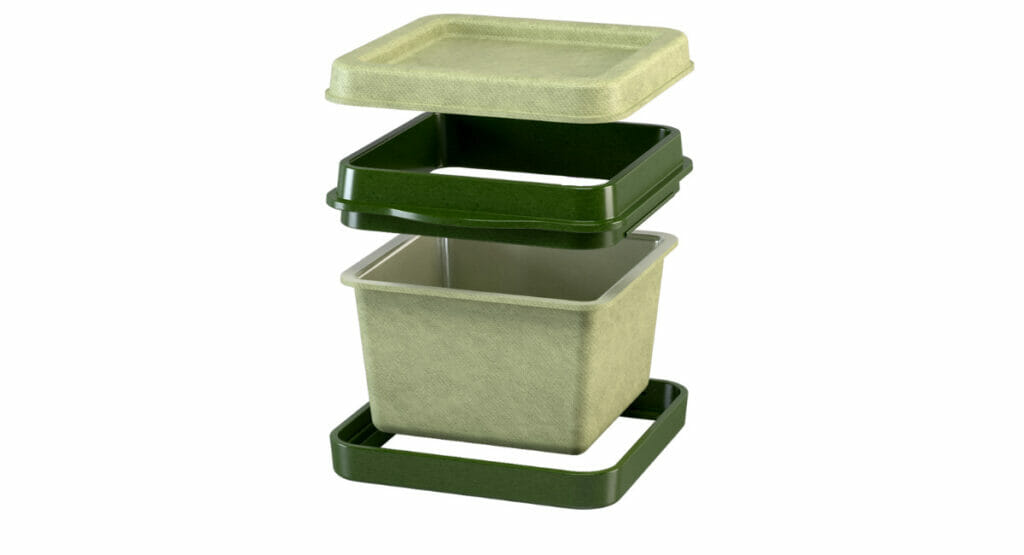
Today, the industry is once again working on bringing bottles made of fibre-based material onto the market. Tahsin Dag and Papacks are also among them and are working in particular on organic barriers and closures, with the aim of completely dispensing with plastics. to be able to do so. Such "hybrids" are then made entirely of organic material and the need for such solutions is already apparent - the fibre bottles are among the company's bestsellers and so the question of the closure must also be resolved.

Transport packaging as an important sector
Packaging for the food and cosmetics industries are two important areas for packaging manufacturers. But also in the Tahsin Dag sees great potential for fibre casting solutions made from hemp in the transport packaging sector. Depending on the application, the packaging can be between one and six millimetres thick, which ensures a high level of stability. The material is also lightweight, making it a good alternative to the expanded polystyrene (EPS) that has often been used to date.
Papacks is one of 40 fibre casting manufacturers in Europe. Just under 89 per cent of these work with recycled fibres, but Papacks has decided to take a different approach and is now using recycled fibres. Fresh fibres from hemp and tree fibres and other regional renewable raw materials. Similar to the technology itself, hemp is also a tried and tested material that has been partially forgotten. In recent years, however, packaging made from hemp paper has become increasingly popular and Tahsin Dag also emphasises the advantages of this fast-growing raw material. The company is also capitalising on a niche market and generates the raw materials from Germany or its own cultivation in Ukraine.
Fibre casting as a rediscovered technology for packaging
Thanks to the upturn in moulded fibre packaging, all companies can currently look forward to a good order situation. Papacks is particularly involved in individual large projects with blue ship companies and is pleased with the ongoing interest. Challenges along the way included the Development of an effective barrier, but also the establishment of regulations and standards.
"When you're doing pioneering work, inventing things, setting up machinery, designing, researching and bringing everything together, you mustn't forget the regulations. But these did not yet exist in fibre casting and we had to go to great lengths and invest a lot in green technologies, laboratories and new test methods to create them. Because you come from the world of plastics and want to replace something. But how is that supposed to work? And that was a huge challenge: data sheets, standards that didn't yet exist in fibre casting."
Tahsin Dag
The packaging is now suitable for products from different sectors. Particularly relevant are the Food, cosmetics, pharmaceuticals and transport. Here, Papacks is also taking part in the topic of reusable packaging with refill caps. In the long term, a hybrid lid solution, the glass or plastic container is even completely replaced by a fibre-based solution be used. In a project with the Cinedom cinema in Cologne, the plastic nacho shells were replaced with fibre-cast ones. The technique is particularly popular at Christmas time for producing plastic-free inlays for Advent calendars.
Waste products are turned into new raw materials
Even though Papacks has opted for hemp as the material for its packaging, fibre casting is particularly suitable for utilise by-products or waste that are always generated in agriculture, for example. The beet pulp left over at the end of the sugar production process can therefore fulfil another purpose and serve as a material. For fibre casting manufacturers, these are important raw materials that can be used to create new packaging.
"We can process this raw material with our technologies and recover the fibres. Depending on the product application, we can then prepare the fibres with our organic coatings and manufacture a new product - packaging. And all plastic-free."
Tahsin Dag
After testing different materials, Papacks decided to stick with hemp fibre and acquired an area of 2,000 hectares in Ukraine to grow the fast-growing raw material.
Association for fibre casting in Europe
In order to bring the industry together in Europe and to have a common voice, an association has now also been created in which the founder of Papacks is involved. The European Molded Pulp Producer Association (EMPPA) held its first meeting in Berlin in October 2022 and started work. Tahsin Dag is particularly proud of the fact that it was possible to bring the industry together around one table:
"The European Molded Pulp Producer Association is the first European fibre casting association. There are only two in the world and we are very proud to be one of them now because we have brought the whole industry together. We want to go into green lobbying, scrutinise recycling systems and see how we can advance the circular economy."
Well-known companies and personalities are also taking part. For example, Fritz Rudolf Körper, former State Secretary (retired), brings his experience from 40 years in politics as Managing Director of the association. Franz Jäger from pulp-tec supports the activities as treasurer and, like the other members from European fibre casting companies, contributes his knowledge of the industry.
More news from the magazine


Packaging machine manufacturer in flow

Powerful automation for mills

Decentralised signal processing with the Schmersal Safety Fieldbox

One hundred years blue tin