Consumers, manufacturers and retailers are all looking for packaging solutions that are as climate-friendly as possible. However, progress in terms of sustainability should not come at the expense of product safety, convenience or efficiency in the filling process. Elopak shows how it is possible to combine all these requirements using the example of its new aseptic filling machine, which is optimised for the aluminium-free Pure-Pak-eSense aseptic carton.
Consumers agree that the environmental friendliness of packaging urgently needs to be improved. As part of the DLG consumer study Sustainable Packaging 2024 almost 80 per cent of respondents agreed with this statement. More than half said that they pay close attention to how environmentally friendly the packaging of food products is. However, government institutions and NGOs are also increasingly demanding that food manufacturers produce their products as sustainably as possible and use packaging that is Avoid negative influences on the environment as far as possible.
The associated challenges can be immense. On the one hand, it is not always easy to find suitable and available options with a demonstrably better environmental balance for the respective application. On the other hand changes in packaging can have an impact on the filling technology, This means that filling machines have to be modified or replaced in order to fulfil the new requirements.

Elopak, a system supplier of carton packaging and filling machines, is familiar with all these requirements and has already helped many bottlers in the dairy and fruit juice industries to optimise their packaging. Switch to its tried-and-tested cardboard-based packaging system to be realised. Such projects require extensive planning and take a lot of time. However, the investment pays off in the long term for customers and the environment. This is because the beverage carton can help manufacturers and brands to position themselves more sustainably.
The cardboard for Elopak's Pure-Pak packaging consists of an average of 75 per cent cardboard, made from wood that comes exclusively from sustainable and controlled forestry. Also the plastic components used can now be obtained from plant sources. For renewable polyethylene (PE), the company relies exclusively on biocircular polymers that do not compete with food production. This makes the beverage carton a low-carbon composite packaging that is fully recyclable.
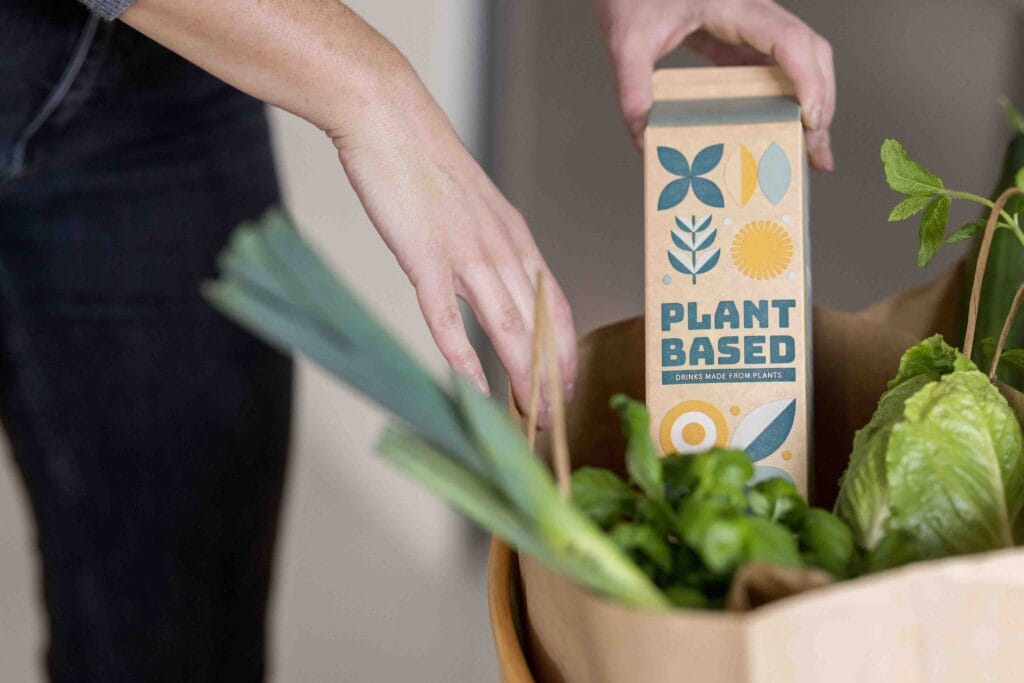
New aseptic carton without aluminium
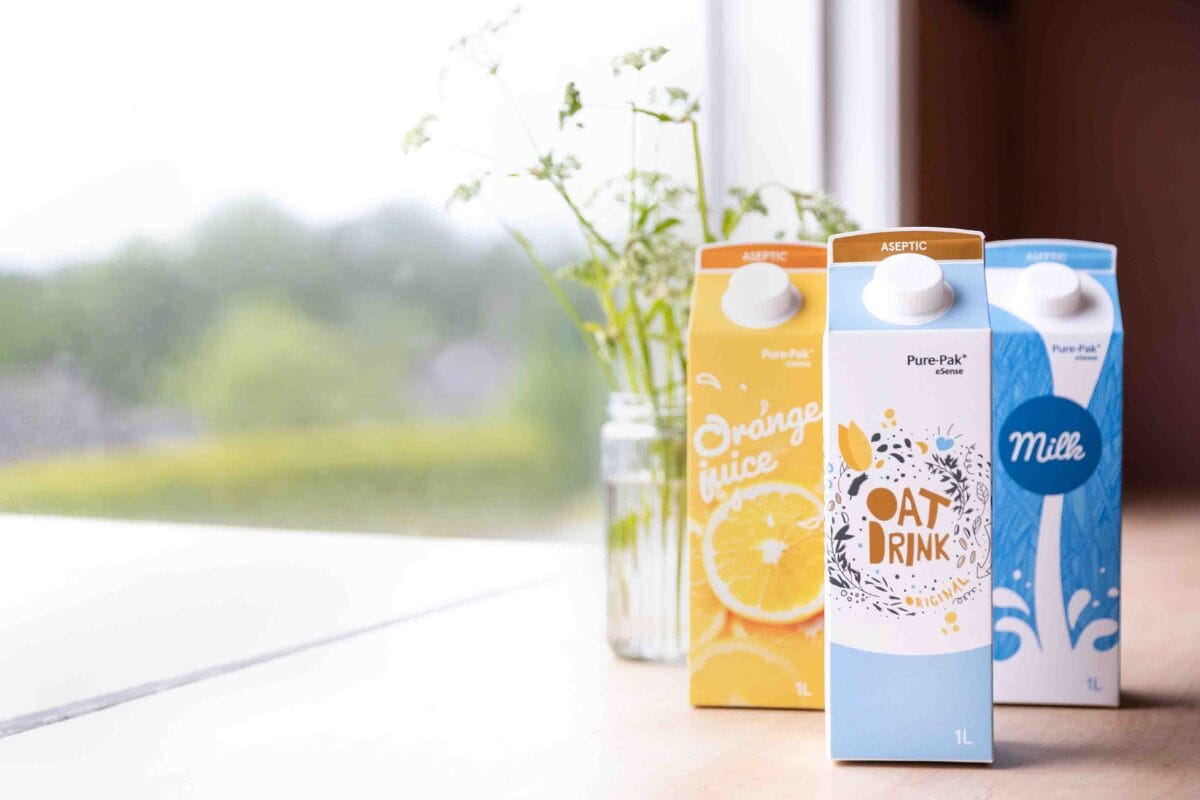
With the new beverage carton Pure-Pak-eSense for aseptic filling the company is going one step further. The Barrier layer consists exclusively of PE-based polyolefins. This means that the use of aluminium can be completely dispensed with. At the same time, there are no compromises in terms of functionality, product protection and convenience. The CO2-The packaging's carbon footprint is reduced by up to 50 per cent compared to standard aseptic cartons. Recycling is also simplified as the composite contains one less material component. All in all, this makes it the most sustainable aseptic carton from Elopak to date.
The Dispensing with the aluminium layer However, aluminium brings with it a number of technological challenges. This is because aluminium not only protects products from external influences, it also also influences the stiffness of the cardboard. The light metal plays an important role in ensuring the stability of the folded gable. The conventional sealing process using induction cannot be used with aluminium-free cardboard either.
New generation of filling technology
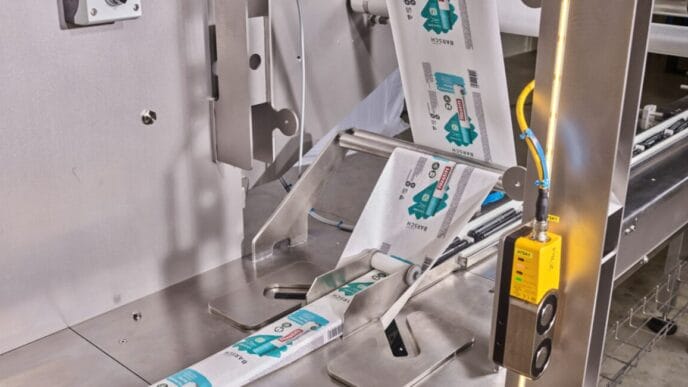
Elopak has therefore developed a new hybrid filling machine (E-PS120A Hybrid), which can process both cartons with and without aluminium and thus offers customers maximum flexibility. The machine layout is based on the existing platform of the E-PS120A aseptic filling machine with a nominal output of up to 12,000 beverage cartons per hour, which can be used flexibly for all products from the low to the high-acid range, such as milk, juices, iced tea or plant-based drinks. To fill the aluminium-free Pure-Pak eSense cartons, it had to be optimised in a number of areas. At the centre of this was the Change from an inductive to an ultrasonic sealing process.
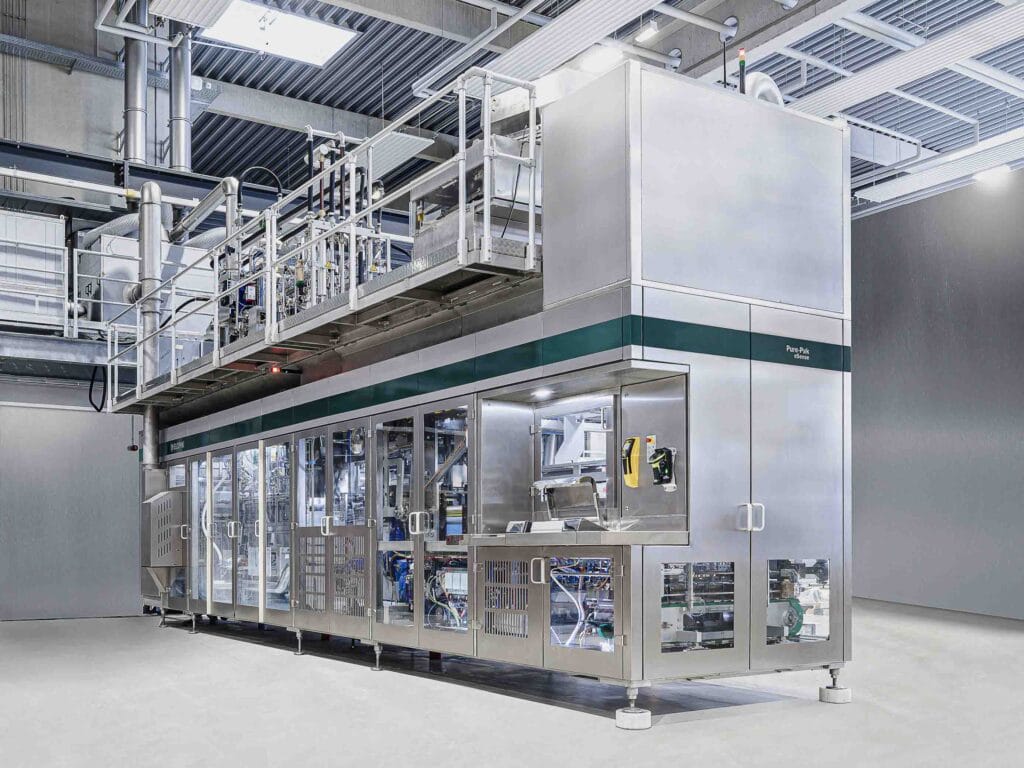
„Ultrasonic technology itself is a proven process. The biggest challenge for us was that we wanted to remain very compact in order to ensure integration into the existing machine platform. Of course, we also had to recalculate all parameters, such as energy requirements and sealing times, and harmonise them for all available packaging sizes. By further optimising the system, we succeeded in reducing the energy requirement by up to 30 percent, depending on the material. As a result, we have developed a highly flexible filling machine that can process any packaging material quality in an environmentally friendly way.“
Saied Nadjafpour, Senior Project and Programme Manager at Elopak
For maximum user-friendliness, the parameters for product and packaging changeovers can be changed at the touch of a button, minimising the time and effort required by customers. Despite the significant increase in flexibility, the efficiency of the filling machine was maintained. With the option of extending uninterrupted production between cleaning cycles to up to 96 hours, the new filling machine offers the highest efficiency on the market, according to the company.
Successful in the market
García Carrión from Spain was the first company in the world to opt for the system solution consisting of Pure-Pak eSense cartonboard and E-PS120A Hybrid. Under the well-known Don Simón brand, the company has Six different plant drinks in the new aluminium-free pack was launched on the market. In the meantime in Germany at a dairy and a fruit juice bottler the first machines were successfully installed.
The switch to aluminium-free cartonboard is closely monitored by Elopak technicians. As a system provider, Elopak ensures that customers can produce on their systems without disruption at all times. Perfect interaction between the packaging components is essential for this. The machine platform must always function equally reliably with variable packaging materials and various cardboard composite materials and closure variants must work in harmony with the filling technology. In addition, there are individual filling curves and other parameters for the respective filling product.
Support over the entire life cycle
With in-depth knowledge and many years of experience in filling technology, the system provider supports customers throughout the entire machine life cycle. In addition to the production of aseptic filling machines, the Elopak site in Mönchengladbach is also home to the global customer service headquarters and the central warehouse. From here the teams of over 200 technicians and maintenance engineers coordinated. They support customers every step of the way, from planning to installation, training and maintenance. This ensures smooth operation with a focus on maximum efficiency, food safety and cost predictability.
„We are proud of the fact that we have a very close relationship with our customers,“ summarises Volker à Brassard, Director Service Operations & Supply at Elopak. „We can react quickly with our service and send spare parts to all European countries. We also have a web shop where customers can check the availability of parts and place orders. We do everything we can to ensure that both new and existing machines do what they are supposed to do for customers: produce with maximum performance, flexibility and reliability.“