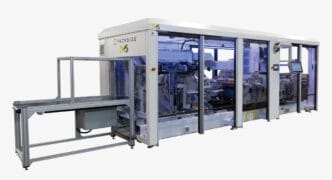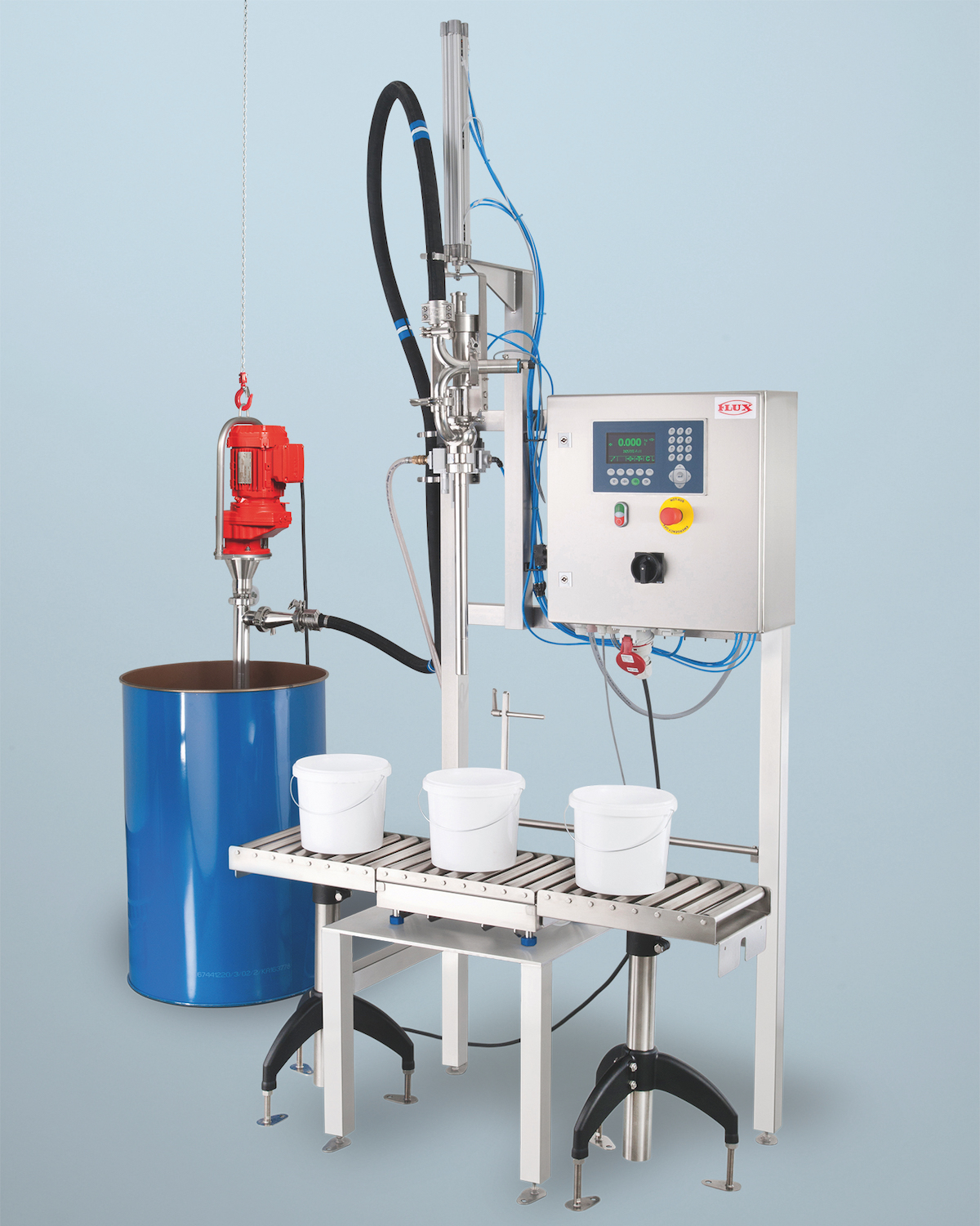
Customer satisfaction is at the centre of all developments at FLUX-Geräte GmbH, Maulbronn. For 60 years, the company has been offering convincing product solutions and efficient services for the safe handling of a wide variety of media. Trends are picked up at an early stage and effectively implemented: The Flux-Fill WT system is an example of the move towards semi-automatic filling with integrated weighing technology.
The first electric drum pump was introduced in 1950. It bore the name FLUX. This brand still stands behind the name of the medium-sized company that Highly regarded solutions in the field of pump technology developed and distributed.
The performance spectrum ranges from the well-known drum pumps to progressive cavity, submersible centrifugal and compressed air diaphragm pumps, flow meters, mixers and Complete system solutions up to a comprehensive range of accessories.

The demands of users now go far beyond simply pumping liquids. In demand are Complete solutions, that can be integrated into the process chains, can be used flexibly and Additional functions to make their contribution to the Resource and energy efficiency and last but not least ergonomic requirements do justice to them.
Specifically, the aim was to develop a filling system that is suitable for different liquids and containers and the use of different filling processes, dispenses quantities accurate to the gram, can also be used in the food and cosmetics sector, counts and is easy to clean. The result, the Filling system FLUX-FILL WT, is something to be proud of.
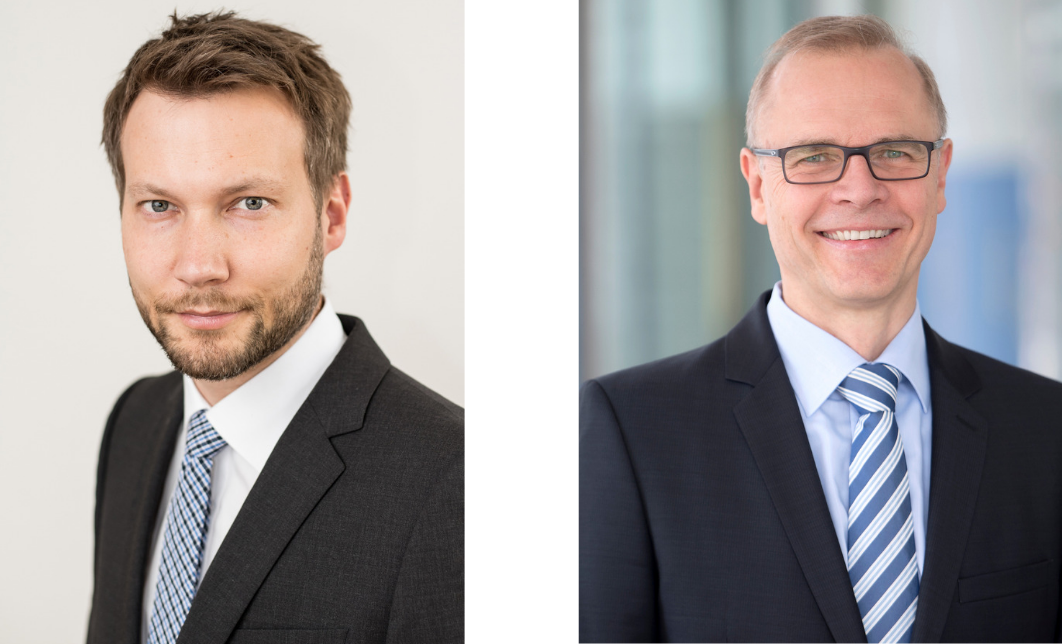
Pumping, emptying, mixing, filling, dosing: When liquids are in motion, there are many different requirements. In any case, the processes must run smoothly. Sales managers from the company's own sales department explained to us how low-viscosity or high-viscosity, perhaps foaming fluids can be filled quickly, efficiently and safely with the new system. Jürgen Rabenseifner and the Head of Development and Design, Tobias Ahrens, explained in detail:
pj: Mr Rabenseifner, what prompted the company to invest in the development of this system?
Jürgen Rabenseifner: Time and again, customers have asked us for solutions for filling containers. In addition to our pump programme, we already offered individual components such as flow meters, hoses or dispensing nozzles for these tasks, but no integrated overall solution.
In addition, it became clear that many users prefer to fill containers using the gravimetric measurement of a volumetric measurement in other words: reliable, precise and simple. This practically eliminates the possibility of the measurement being influenced by the properties of the medium and makes cleaning issues superfluous.
pj: Which media can be processed with the new system and which filling techniques are possible?
Jürgen Rabenseifner: Our filling system can be Wide range of different media handling. In combination with our range of drum pumps, low-viscosity media such as cleaning agents, acids or flavourings can be filled.
If a volumetric pump such as our progressive cavity pump is used as a feed pump, our customers can use it to fill media up to 25,000 mPas, such as resins, silicones or viscous oils. In the Ex version, which we will be presenting at the next interpack, it is possible to fill solvent-based media, for example.
Three selectable filling processes are possible. They allow above-bunghole filling, which tends to be used for highly viscous fluids, below-bunghole filling and below-bunghole filling, which is used for liquids that tend to foam, for example.
For each filling programme, the Weight proportions of coarse and fine filling can be parameterised within the filling cycle. We therefore offer users a high degree of flexibility to optimise their filling tasks.

pj: Mr Ahrens, what can the system do, i.e. what container types and sizes are possible, what quantities or volumes and what quantities per hour are possible?
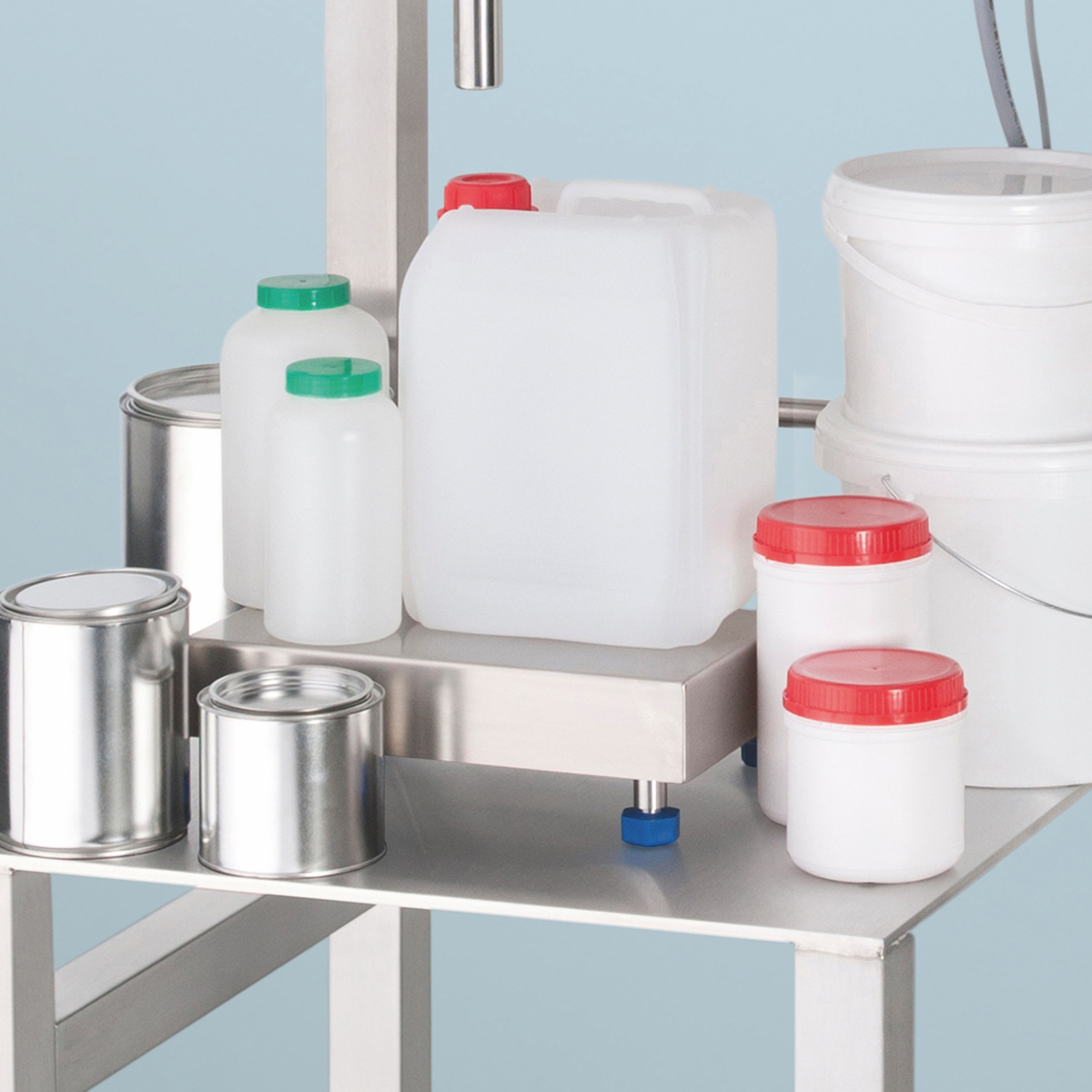
Tobias Ahrens: We make a fundamental distinction between the different filling system variants Two container sizes: Containers with a height of up to 250 millimetres and a height of up to 400 millimetres with a bunghole diameter of at least 40 millimetres. All variants can fill a wide variety of container types, such as wide-neck bottles, screw-top cans, clamp-lid cans, canisters or buckets. We cover a range of filling quantities from 0.5 to 50 kilograms.
The output naturally depends heavily on the container size and the required accuracy. Our target group are customers who have to fill around 100 to 500 containers per day or shift. It is helpful that the system counts ...
pj: What quantity tolerances are achieved with the load cell?
Tobias Ahrens: Depending on the weight range, the load cells have a resolution of two, five or ten grams, which makes the Maximum theoretical accuracy of the bottling process.
The filling process begins with coarse dosing for fast filling and ends with fine dosing to achieve the preset weight as precisely as possible with a reduced volume flow.
pj: For which users was this solution designed?
Jürgen Rabenseifner: Our target group are, for example, users who have so far tended to carry out container filling manually, for example with a dispensing nozzle, flow meter and checkweigher, and who want to carry out this process step more efficiently and reliably in future. They want to concentrate on their core business instead of having to deal with the coordination of components, their integration and, ultimately, the Conformity assessment of the overall system to deal with.
Typically, the filled containers go on sale and must then also fulfil the requirements of the Prepackaging Ordinance. But also In-house filling and decanting tasks are conceivable. In times of individualisation, the focus is on containers in small and medium batch sizes and frequently changing container sizes and occasionally also changing container shapes.
pj: What are the advantages for the user?
Jürgen Rabenseifner: The user has the option of 99 filling programmes The system can be parameterised once and easily recalled for each picking job. Parameters such as tare weight control, container counter, the three filling processes mentioned and coarse and fine filling allow every filling job to be carried out efficiently and reliably.
The Integrated pressure monitoring The high level of safety in volumetric feed pumps and the start/stop control of the pump via the system also make working with the system safe and quiet. We have currently defined a filling weight of 500 grams as the lower container limit and a filling weight of 50 kilograms as the upper limit. Below and above this, we no longer believe that the current concept is scalable.

pj: The system must be cleaned when changing products. How is this solved?
Tobias Ahrens: All the main components of the system are made of stainless steel and are therefore very easy to clean. Only the dosing valve, to which the hose of the feed pump is connected without tools using a clamp connection, is in contact with the media. The dosing valve consists of very few components. It is CIP-capable and can be dismantled in a few simple steps in about two minutes.
FLUX-FILL WT is also available as Food variant for use in cosmetic or food applications with EC1935/2004 resp. FDA-compliant materials and a special version of the scale are available.
pj: The containers have to be fed in and removed manually. Have you also considered ergonomic aspects?
Tobias Ahrens: We currently offer roller conveyor modules for container infeed and outfeed as well as roller conveyor attachments for the scales. Combining these elements results in a continuous roller conveyor in three segments. The system also has a Folding positioning aid for easy positioning of the packs under the filling lance. This already makes container handling much easier for the operator. We intend to expand the system peripherals step by step. There are more than enough ideas for this.
FLUX-Geräte GmbH at FachPack 2019: Hall 3, Stand 521