


First 5-litre drum made from CO2-reduced bluemint packaging steel

German tinplate manufacturer thyssenkrupp Rasselstein, together with metal packaging manufacturer Kleemann and Westerwald Brauerei, is launching the world's first 5-litre beer keg made from CO2-reduced bluemint steel.

In May, the German tinplate manufacturer thyssenkrupp Rasselstein, together with metal packaging manufacturer Kleemann and the Westerwald brewery, will launch the world's first 5-litre beer keg made from CO2-reduced bluemint steel onto the market.

In the joint project, thyssenkrupp Rasselstein supplies the CO2-reduced packaging steel, The Kleemann company produces and prints the barrels and the Hachenburg brewery uses 100 per cent aroma hops in the production and bottling of the beer.

„In the production of the new bluemint packaging steels, we are clearly focussing on CO2- Reduction: By using biomethane and a specially processed steel scrap, we can reduce our CO2 -emissions can be saved. This makes packaging steel even more sustainable.“

Dr Peter Biele, CEO of thyssenkrupp Rasselstein GmbH

Display

Packaging steel is also the European leader in terms of recycling rates: 85.5 per cent of tinplate packaging is recycled again. This makes tinplate packaging the most recycled packaging in Europe.

The use of bluemint steel in the manufacture of the beer kegs Kleemann was able to significantly reduce its Scope 3 emissions. As a family-run company, Kleemann is committed to sustainability and environmental awareness.

„With Kleemann, we have a partner with whom we have been working for years. Long-term partnerships at eye level are our aspiration. With a sustainable raw material and a reliable partner at the side of Westerwald-Brauerei I see our 5-litre party kegs as future-proof“, says Jens Geimer, Managing Partner of the Westerwald brewery. The 5-litre party keg is a successful concept for the family brewery from the Westerwald. By converting the 5-litre party kegs to bluemint steel, the Westerwald brewery can reduce its CO2-footprint further.
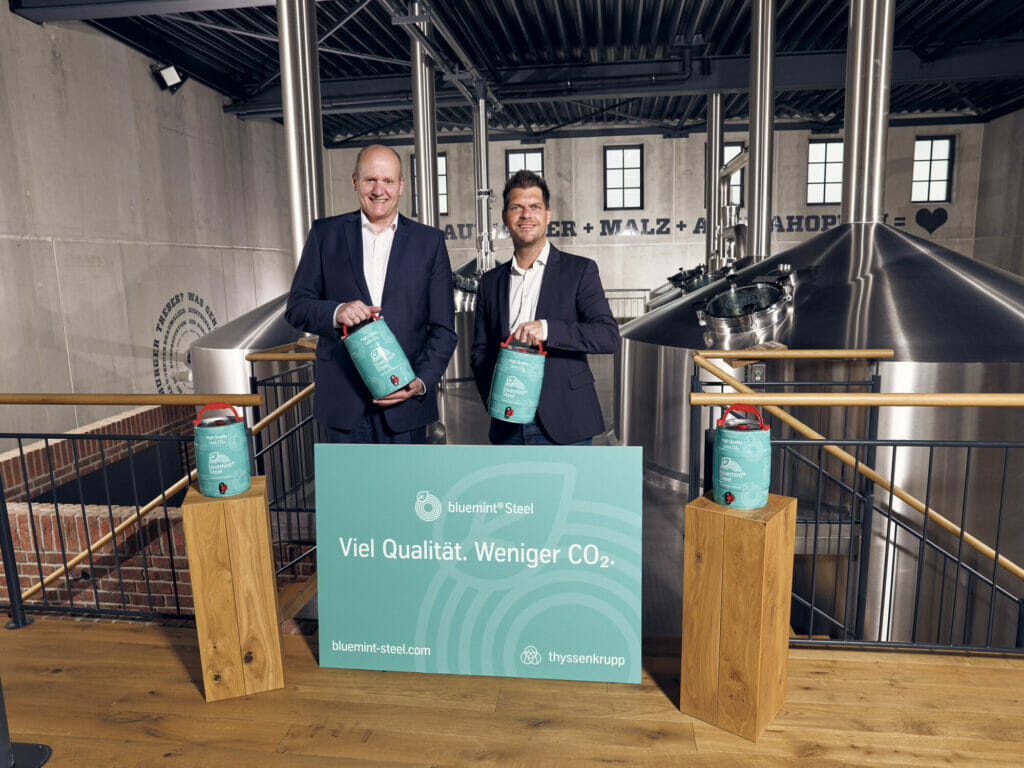
Dr Peter Biele, CEO of thyssenkrupp Rasselstein GmbH (left) and Jens Geimer, Managing Partner of Westerwald Brauerei (right)
Dr Peter Biele, CEO of thyssenkrupp Rasselstein GmbH (left) and Jens Geimer, Managing Partner of Westerwald Brauerei (right). (Image: thyssenkrupp Rasselstein)

The Westerwald brewery is already climate-neutral according to Scope 1, 2 and 3 thanks to offsetting and would like to achieve this on its own by 2030 and generate more energy than they consume.

thyssenkrupp also has very ambitious targets: The German steel manufacturer wants to be completely climate-neutral by 2045. „Since 2022, we have been selling the first quantities of our new, CO2-reduced tinplate,“ says Dr Peter Biele, CEO of thyssenkrupp Rasselstein. „We will be investing heavily in our climate targets over the next few years.“ In March, thyssenkrupp Steel the construction of a new, hydrogen-based direct reduction plant with two innovative melters to SMS group.

Source: thyssenkrupp Rasselstein