From a three-man business to world market leader: a portrait of Marbach
Marbach started out in 1923 with cutting knives for the shoe industry. Today, the family business is closely linked to the packaging industry as the global market leader for cutting dies and thermoforming tools.
29. October 2020
Packaging die-cut with Marbach tools (from left to right): Counter-scoring technology for visually appealing tear-open mechanisms, round-corner packaging (produced with a Marbach creasing plate mould), packaging with an embossed face, packaging with Braille embossing. (Pictures: Marbach)
The company history of the Marbach Group has a lot to offer: in 1923, the 25-year-old Karl Marbach Sr. started his own business with two partners, producing cutting knives for the shoe industry. Today, the medium-sized family business from Heilbronn is closely linked to the packaging industry as the global market leader for cutting dies and thermoforming tools.
Yet the economic situation in 1923 was extremely poor. Nevertheless Karl Marbach sen. takes the risk of founding a company. The talented technician quickly broadened his horizons and, at the request of the company Nupnau Werbemitteltechnik, became involved with the Steel strip technology. Success follows - the new clientele comes from the paper processing and advertising material industries.
Then came the setback: during the Second World War, the Company building partially destroyed. After almost 25 years, Marbach starts again from scratch, rebuilding the company with great perseverance and many hardships. Then 1955, after his training as a mechanic and subsequent engineering studies, he also Son Karl Marbach jun. joins the still small company and assumes responsibility.
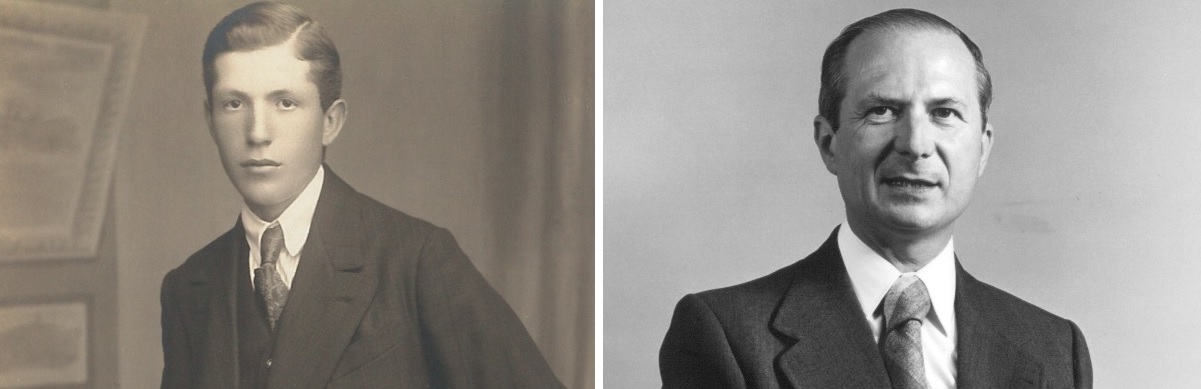
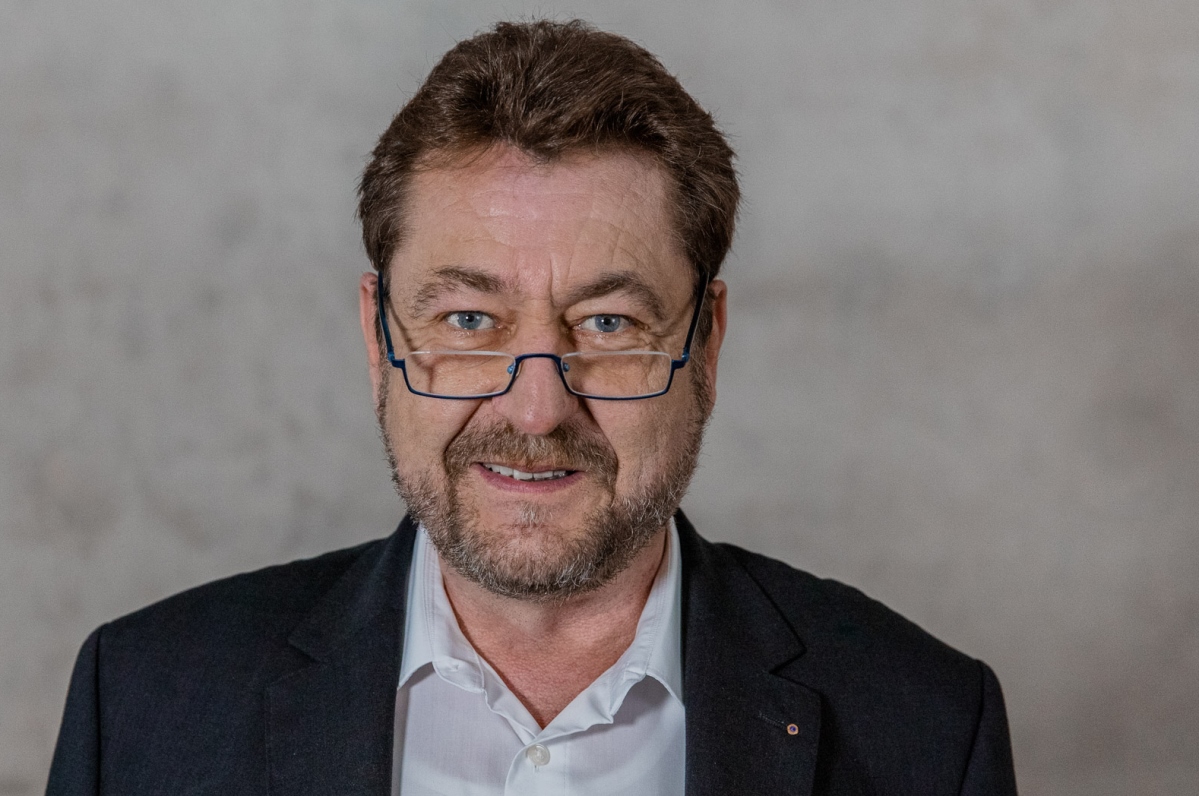
Founder Karl Marbach Sr (left) ventured into self-employment in 1923. Karl Marbach junior (right) retired from the management in 2007. (Pictures: Marbach)
As a result, the tool manufacturer grew continuously and expanded its portfolio: In 1957, the toolmaking division is established, and the first thermoforming mould is manufactured. With Marbach toolmaking, a completely new area is created, which will play an important part in the company's success in the future as a second mainstay. 1968 sees the start of Production of rotary cutting dies for the corrugated cardboard industry.
Display
Pioneering decisions
In the same year, Karl Marbach Jr. comes across information about the „Cutting with light“. This topic never lets him go.
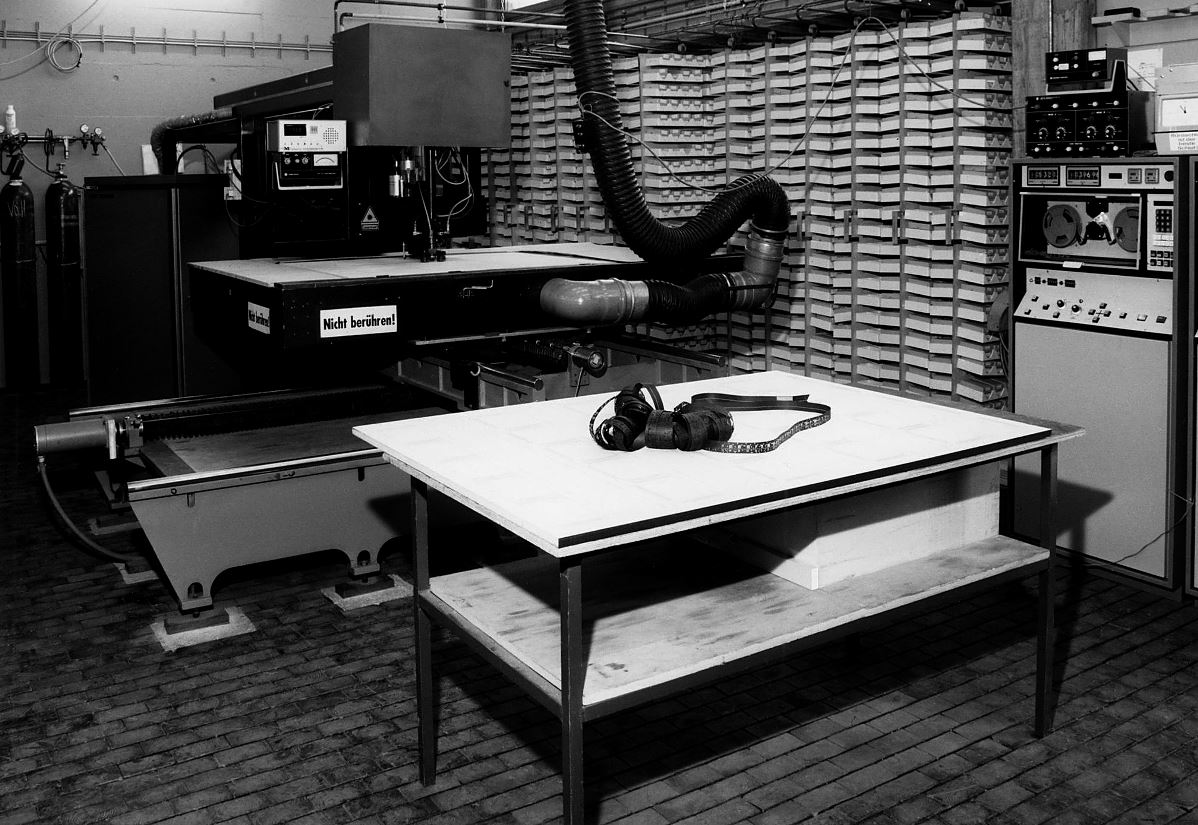
In 1972, the time had come: the first CO2 laser system for cutting die production in Europe is installed in Heilbronn. The use of laser technology for the production of cutting-dies is a pioneering step for the success of the Marbach Group.
The first CO2 laser cutting machine for cutting-die production in Europe was installed at Marbach in 1972. (Picture: Marbach)
Laser technology is regarded as Revolution in die-cutting technology, as it replaces several manual activities whose tolerances have accumulated. The new mould quality is therefore unique on the market.
Marbach is thus increasingly looking for customers outside Germany. The drupa in Düsseldorf in 1977 is the first major trade fair as an exhibitor and is an outstanding success. Marbach becomes increasingly international and Cutting dies „made by Marbach“ a synonym for quality.
A long-needed step is therefore taken in 1984: Marbach goes international. An initial investment in the UK is gradually followed by the first branches abroad. One year later, the company is divided into Punching mould technology and Toolmaking (thermoforming moulds).
[infotext]Between 2010 and 2020 alone, Marbach will open five new branches in America, Asia and Europe. In addition to Germany, production sites are also located in Poland, the Czech Republic, Romania, Slovakia, Malaysia, China and the USA. In other countries, the company's customers are supported quickly and competently by corresponding partners[/infotext].
Development of market standards
1988 enters with Peter Marbach The third generation of the entrepreneurial family joins the company. In the years that followed, Marbach developed numerous innovations, many of which are now market standards. In 1994, for example, the first cutting segments for rotary moulds were produced, and shortly afterwards the rotary moulds product area for cigarette packaging was created.
At the end of the 1990s, Marbach starts selling machines and cutting-die materials to its competitors. The Marbach division Supplies & Automation is created.
Expansion and investments
The following decades are characterised by global growth and the expansion of international partnerships. In 2001, Marbach expanded its portfolio to include embossing and is now one of the few companies that can offer both - embossing and stamping. die-cutting moulds and embossing - produced and offered by the company itself.
At the headquarters in Heilbronn, a 15,000 square metre, New building related. The focus is on optimised processes in tool production and low energy consumption.
The company headquarters were rebuilt at the Heilbronn site in 2008. (Image: Marbach)
In 2017, Marbach invested in a die-cutting machine: the Marbach Academy is born. From then on, Marbach trains the industry and expands its portfolio of packaging services.
Today, Marbach is the world market leader and, thanks to its Focal points unique on the market:
Automation and digitalisation
The production of cutting dies used to be a very labour-intensive process with a low level of automation. Over the last few decades, Marbach has developed machines and systems that enable a sfast, flexible and very precise production of tools enable.
A comprehensive machine park consisting of laser systems, water jet cutting systems, milling machines and line processing machines as well as various assembly machines ensure efficient processes and precise tools. The use digital manufacturing technologies and Tool solutions ensures a further increase in performance for customers.
Die-cutting tool in use in a die-cutting machine. (Image: Marbach)
Cross-industry tooling
Marbach is as diverse as the packaging industry. Its customers include manufacturers of Folding boxes and Corrugated board packaging - but also many other industries. Supermarket shelves are full of packaging produced with Marbach moulds.
Whether cosmetics, food, confectionery, beverages, non-food, electronics, medicine or products from the dairy and tobacco sector: when shopping in a German supermarket, the probability of buying a product whose packaging Marbach was involved in is around 50 to 60 per cent. The packaging produced with innovative Marbach moulds ensures that at the point of sale Perfect presentation of products.
Packaging services
Marbach offers with its 360-degree service Marbach offers various packaging-related services. The Marbach experts advise on packaging optimisation, provide support with packaging development and create CAD data.
In addition, under the motto „More knowledge. More skills“ The Marbach Academy offers a comprehensive training programme in the areas of die-cutting of cardboard and corrugated board.
Another building block is the Marbach Performance Package. Experienced Marbach application engineers analyse the die-cutting processes and environment of Marbach customers on site. Based on this analysis, a package of measures is developed to reduce set-up time and increase productivity. For optimised processes and maximum performance in packaging production.
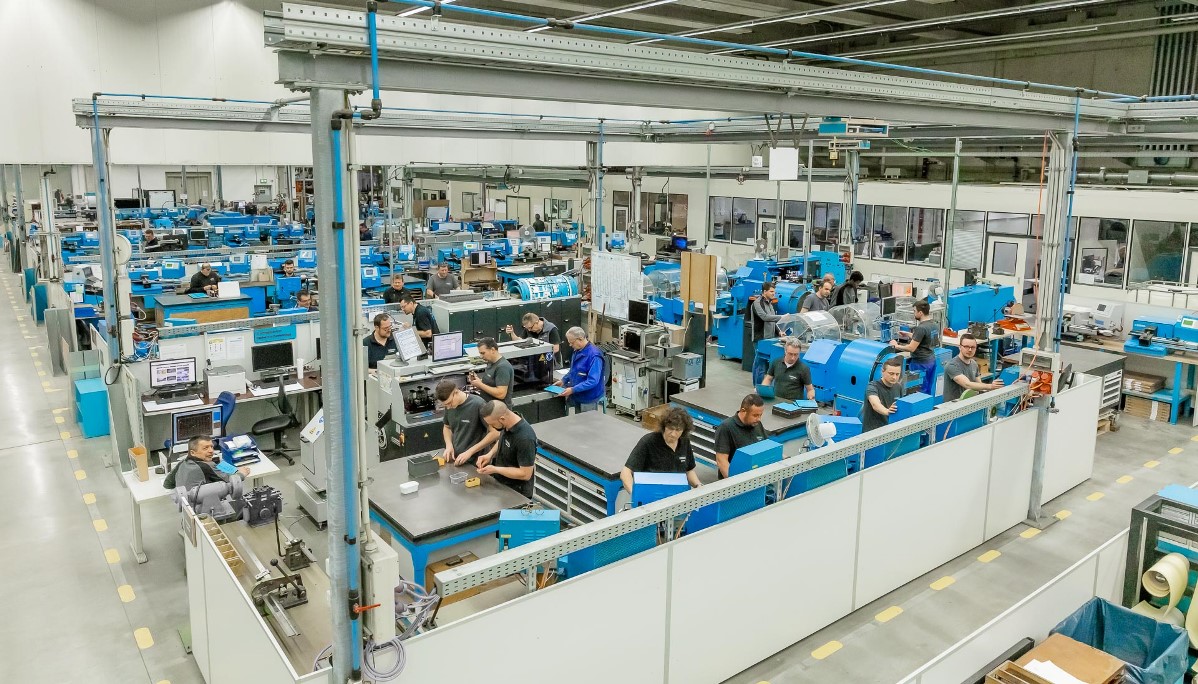
View of production at the company headquarters in Heilbronn. (Image: Marbach)
Innovations relevant to packaging
Over the decades, Marbach has introduced numerous technologies to the market that today Standard in the industry are. These include mpower, marbastrip, rillplattenform and greenplate.
The new mpower-cutting line sets an important standard. It has a rounded cutting tip that absorbs tolerances, eliminates angel hairs and is virtually immune to overpressure. In combination with other components such as special processing and assembly techniques, this drastically reduces blade set-up times.
The break-out system marbastrip has a perfectly matched upper and lower stripping section. In combination with the marbastrip stripping claws developed by Marbach, it ensures that even small internal waste is optimally stripped. The time-consuming setting of bottom pins is no longer necessary.
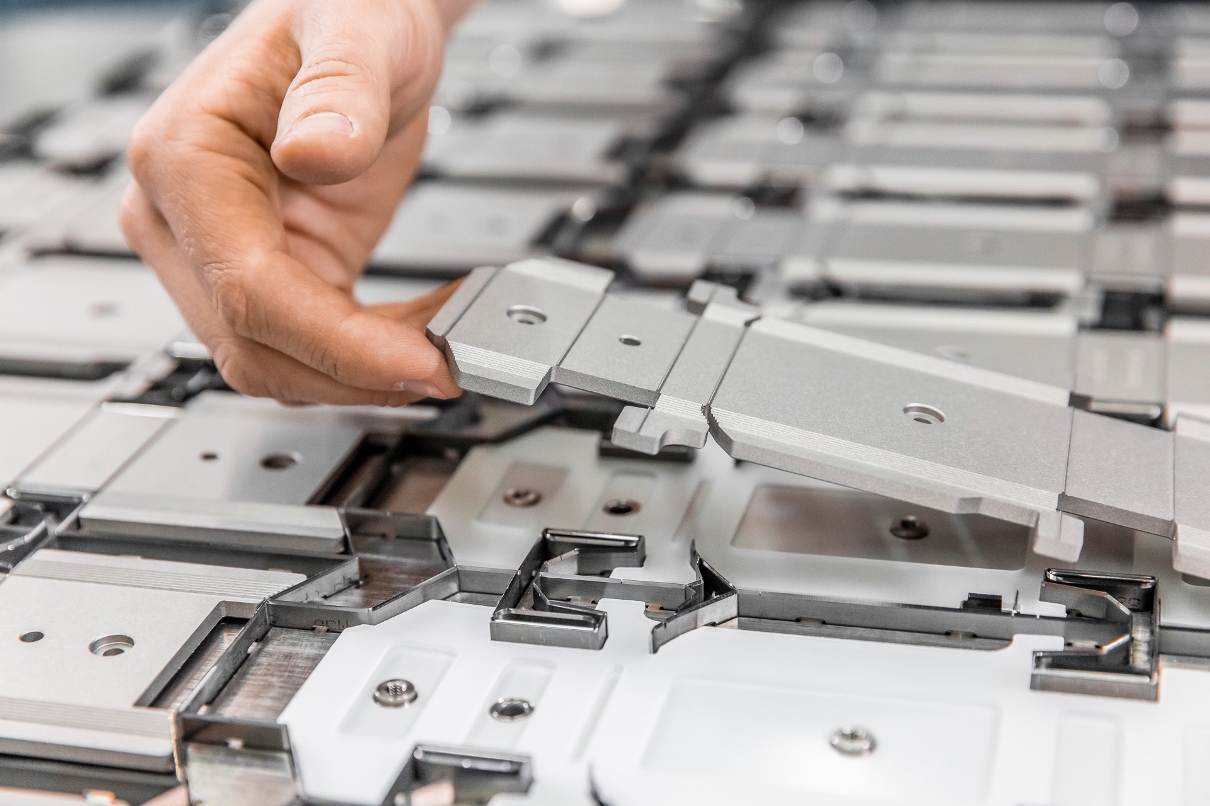
The grooved plate mould is used for very long runs and the highest demands on die-cutting and creasing results, primarily in the tobacco and beverage sector. But also for packaging whose Grooves very low restoring forces should have. CNC-milled creasing plates ensure maximum precision. Special packaging solutions can therefore be realised. The creasing plate mould stands for fast and reliable processing of blanks on packaging machines.
For the best creasing results from the first to the last sheet: the creasing plate mould. (Image: Marbach)
The greenplate is a carrier plate developed by Marbach that consists of 30 per cent primary raw material birch and 70 per cent environmentally friendly, special secondary material. This innovative structure achieves a significantly higher degree of wood utilisation than conventional cutting-dies.
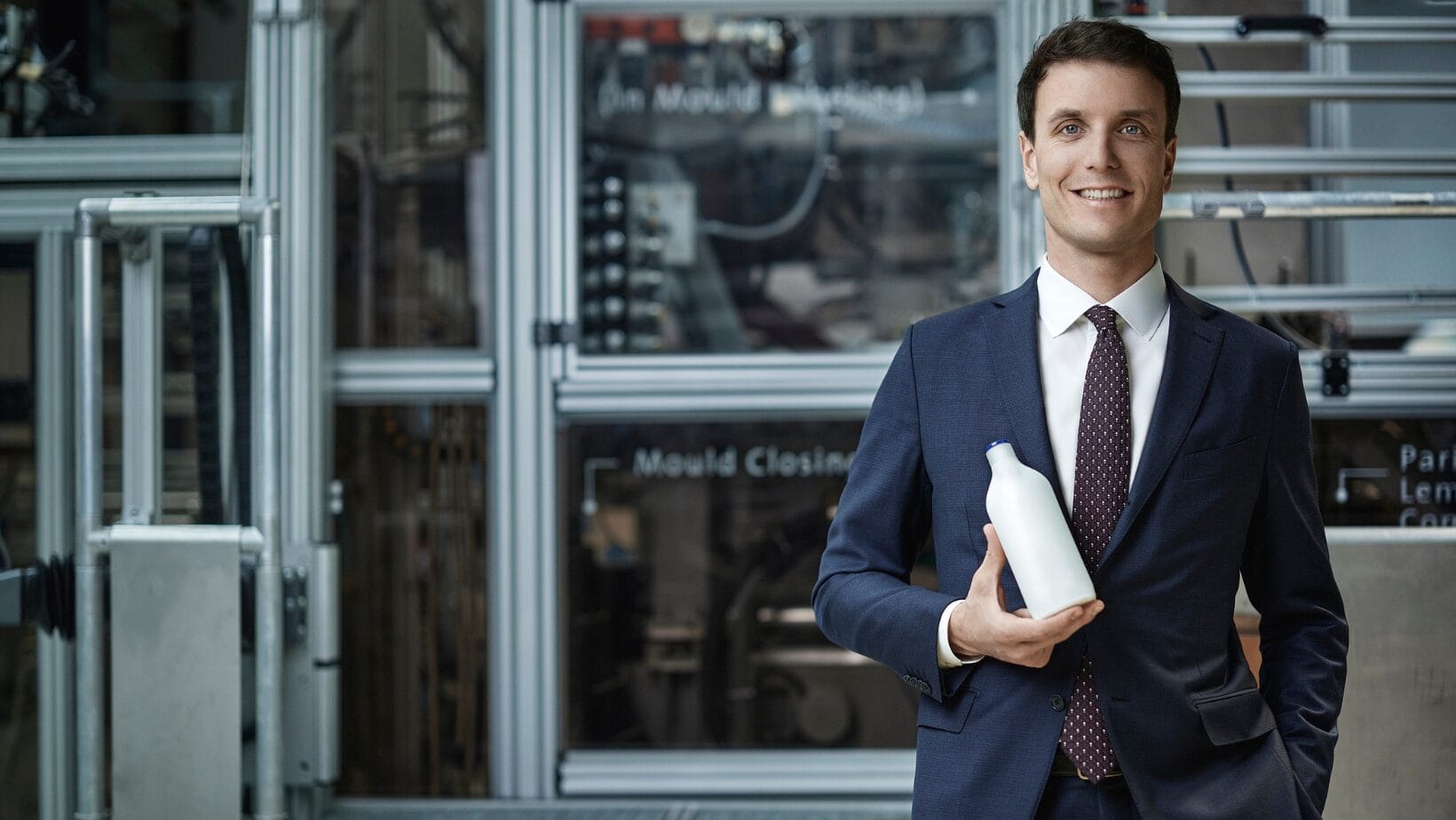
Peter Marbach, Managing Partner Marbach Group (Image: Marbach)
„We can all contribute to preserving the habitat of future generations. We are happy to take on this responsibility for the environment and for the future. With the greenplate we have developed a future-oriented and sustainable carrier board that consciously conserves our natural resources and, thanks to its good flatness and high printing stability, is also ideal for the future. First-class punching results “, emphasises Managing Director Peter Marbach.
Current highlights and outlook
The punching machines are subject to wear-related tolerances, which is why, in practice, zone levelling had to be carried out for each individual job until now. This has changed with the DZL|plate digital zone levelling system. This is because it compensates for tolerances in the die-cutting machine for months after it has been applied and therefore stands for Reduced set-up times for every single order. Numerous other innovations for minimising set-up times are currently under development at Marbach.
„For our future, we are working on the keywords ‚Digitalisation‘ and ‚Industry 4.0‘. This change will face many challenges but also many opportunities. That is why we are constantly working on our digital future and want to play an active role in shaping it. With many new ideas such as CONNECT|M, CONNECT|AR, as well as the use of digital production technologies, tool solutions and Optimised, digitally supported customer support. This ensures even better performance for our customers,“ emphasises Peter Marbach.
[infotext icon]
Packaging. Performance. You.
This is the motto of the internationally leading group of companies in the fields of die-cutting technology and toolmaking. With 1,500 employees worldwide and branches in 20 countries, Marbach sets the benchmark in its industry and delivers pure performance - always customised to the individual requirements of the customer.