From cotton factory to sensor expert

The history of Leuze begins in 1963 in Owen/Teck. Today, Leuze is a sensor expert and technology leader in the field of optical sensors.

Leuze's history as a sensor expert began in 1963 in Owen/Teck at the foot of the Swabian Alb. 60 years is an important milestone in the history of the company, which has its roots in the textile industry. Today, Leuze is an international sensor expert in industrial automation as well as a technology and world market leader in the field of optical sensors.

The tradition of the family business Leuze At that time, the water power of the Lauter still drove the machines of the Leuze cotton spinning and weaving mill. However, as everywhere in the textile industry, fierce competition began in the late 1950s. The young fourth generation, who took over the reins in 1961 with the 100th anniversary of the family business, quickly realised that there was need new ways to make their company fit for the future. Diversification was the recipe for success. From then on, Leuze textil and bielomatik in Neuffen were part of the Leuze Group. The weaving mill was sold in 1962. Together with four employees from the textile sector, a small team led by Christof Leuze started in 1963 in a section of the former Leuze textil weaving mill in Owen. A new era began: From cotton to electronics.

Expert for the packaging industry

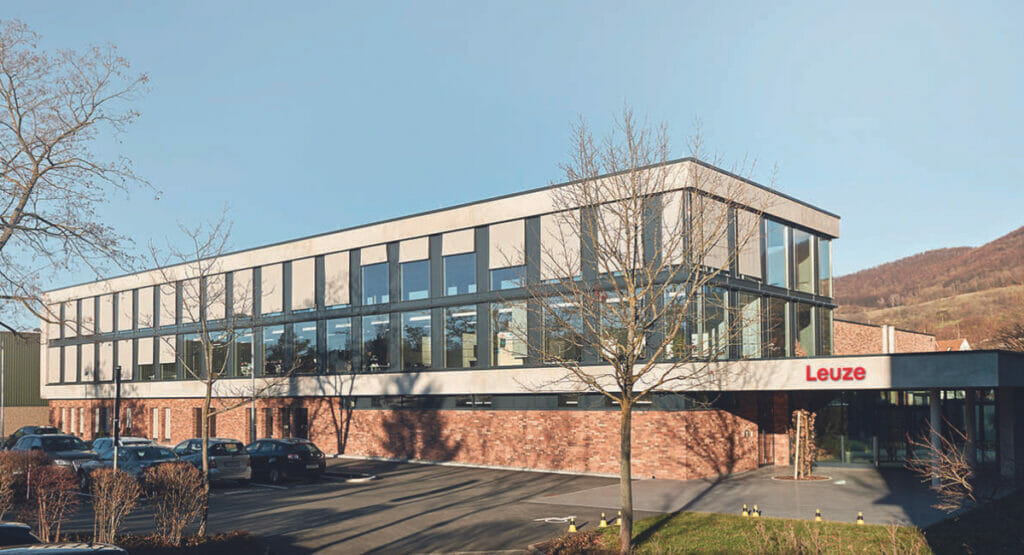
The company headquarters in Owen/Teck, southern Germany.
The company headquarters in Owen/Teck, southern Germany. (Image: Leuze)

The start-up Leuze electronic had a business idea in 1963: the production of electronic optical sensors. The founders Helmut, Christof and Adolf Leuze were looking for new business opportunities - even if they were initially in areas that had nothing to do with light barriers. Among the The first sales driver was, for example, a packaging machine for textile goods. - a suggestion from Leuze textil. The so-called „Conopack“ was used to seal high-quality textiles and spools of yarn in plastic semi-tubular film. This machine became an export hit over 15 years. It reduced packaging costs by 40 per cent and led to time savings of 30 per cent compared to manual packaging.

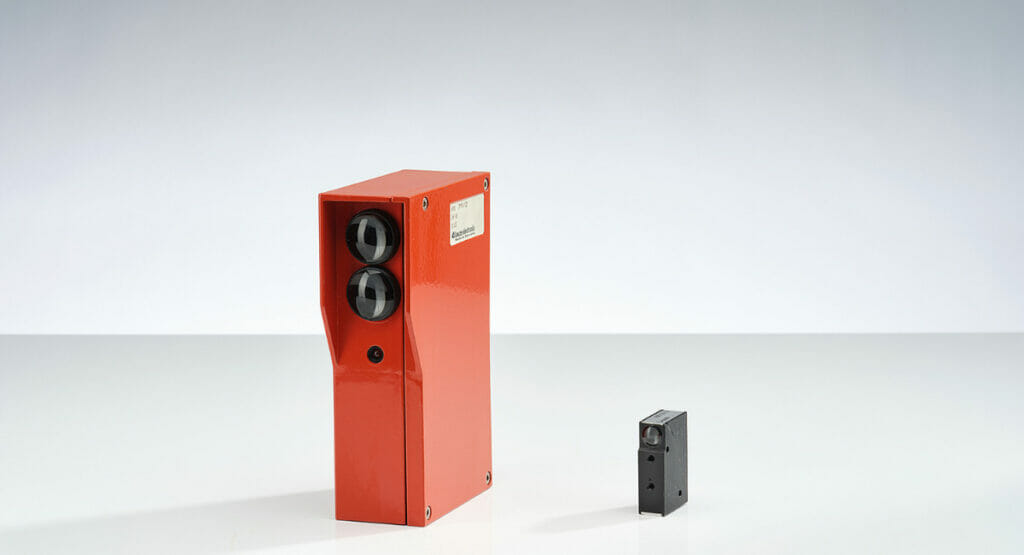
The experience with customers from the paper and printing machine industry then resulted in the The idea of developing a new, contactless scanning system for sheets of paper, before they are fed into the printing unit. As the installation situation in this industrial environment is very cramped, the new sensor had to be very small. This is how the the world's smallest reflex head at the time, whose first customer was bielomatik, the mechanical engineering arm of the Leuze Group.
Display

Always with the customer in mind

The interest in technological change has characterised Leuze from the very beginning and runs through the entire history of the company. The Sensor People have always endeavoured to recognise and understand the specific problems of their customers in various industries and then find the right sensor solution for them. find. Over the decades, Leuze has developed into a genuine sensor expert in its customers' market segments.

Leuze for example, integrated LEDs into its sensors at a very early stage in the mid-1970s, which were brighter and more durable than incandescent lamps. At a later stage, the first laser diodes were added, which represented a further leap forward in terms of brightness and the ability to delineate the light spot. This made a big difference for customers: the sensor detects exactly where the light spot is and nowhere else.

Reflection light barriers of the first generation from the 1980s.
Reflection light barriers of the first generation from the 1980s. (Image: Leuze)

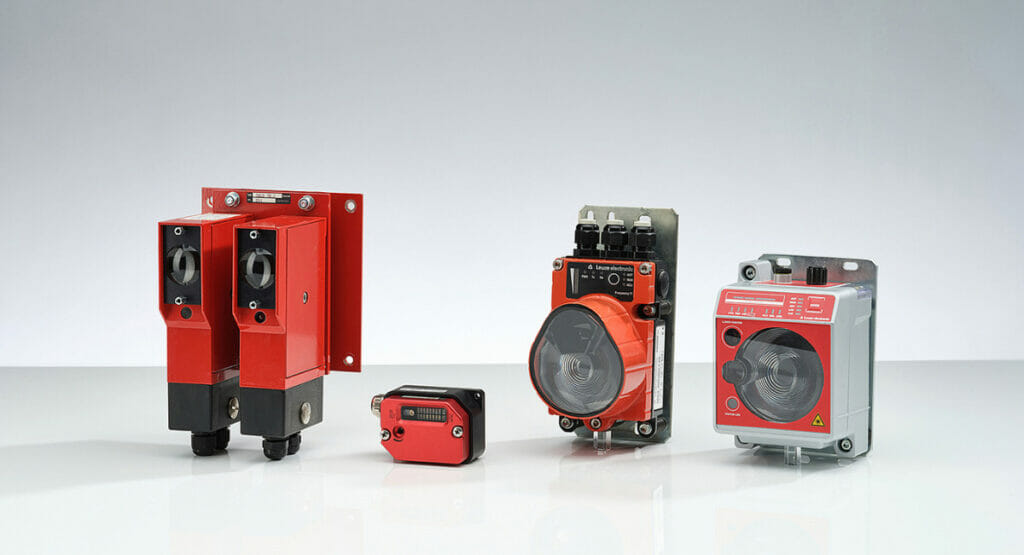
Since the middle of the last century, there have been so-called „light intercoms“: Data transmission with light. However, this type of transmission only became established in the industrial environment much later. In the mid-1970s, trailing cables were replaced by contactless data transmission for the first time in warehouse logistics. This is how the The world's first industrial optical data light barrier, the DDLS 78, from Leuze are used. Today, the use of such data light barriers in different variants and designs has become standard in warehouse aisles hundreds of metres long. They enable Stable and wireless data transmission free from any interference over long distances.

Broad-based expertise

The development of the The first retro-reflective photoelectric sensor enabled Leuze to enter the packaging industry in the 1980s and soon also in beverage bottling. Based on this industrial experience, sensors with an integrated polarisation filter were developed for the reliable detection of transparent objects.

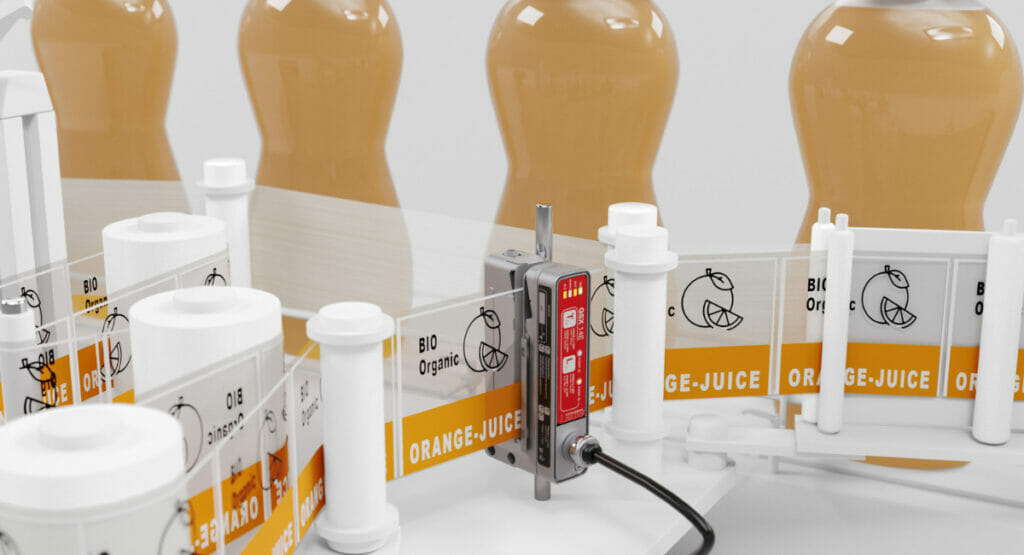
Leuze transferred this expertise to other applications: For labelling machines, for example, the company developed the very first GS 05 optical label fork. In the 2000s, the company then launched an absolute innovation on the market: the GSU 14. Fork sensor for the detection of transparent or metallised labels with the completely new detection principle of ultrasound.

Several generations of the later optical data light barrier (series 78, 160, 200, 500).
Several generations of the later optical data light barrier (series 78, 160, 200, 500). (Image: Leuze)

The next world first in this area followed in the 2020s: the Leuze GSX 14E combination fork sensor, which combines both detection principles - light and ultrasound - in one compact sensor. This fork sensor is a flexible solution for all labelling machines on which a wide variety of label types are processed.

Another current highlight for packaging processes is the DRT 25C dynamic reference sensor: it uses the conveyor belt as a reference and is therefore a specialist for detecting products with challenging shapes or surfaces. The LS 25CI Super Power through-beam photoelectric sensors effortlessly shine through even metallised films and detect the leading edges of products in non-transparent packaging.

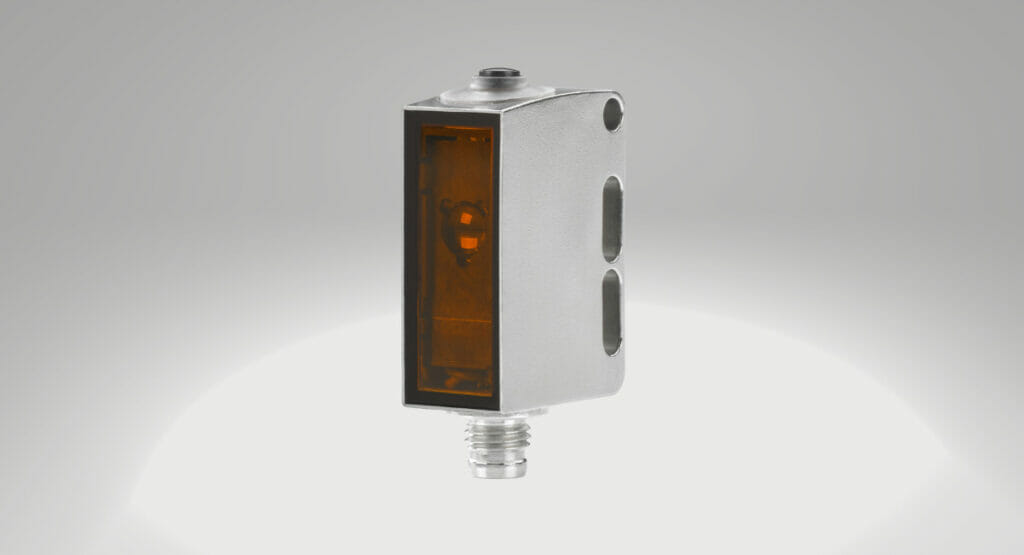
Convincing innovation on the market: The GSX 14E combines the two detection principles of light and ultrasound in one compact sensor.
Convincing innovation on the market: The GSX 14E combines the two detection principles of light and ultrasound in one compact sensor. (Image: Leuze)

High demands on sensor technology

The demands on packaging machine manufacturers and packaging machine operators today are high and dynamic: consumers expect innovative and sustainable packaging materials; brand and consumer protection are becoming increasingly important; e-commerce is the defining trend in retail. Packaging processes in the food and pharmaceutical industries must therefore become increasingly flexible, efficient and intelligent. become.

Leuze's broad portfolio includes Sensors for the entire packaging processThe range of products is tailored to the specific requirements of customers and applications: While hygiene requirements are very high in the primary packaging of sausage or cheese, for example, speed and cost-effectiveness are also important in the beverage industry. In confectionery packaging, the focus is on flexibility and simple format changeovers.

With sensors as well as automation and safety solutions, the Leuze Group supports its customers in all steps of the packaging process: from primary and secondary packaging to labelling, final packaging and palletising of food, beverages or pharmaceuticals. The range includes solutions for Machine safety, for optical detection or measurement tasks, for the detection of 1-D or 2-D codes or for demanding inspection tasks. Robust and hygienic sensors fulfil the highest IP protection classes and certifications and have proven themselves for decades even in extremely harsh environments.

Robust and hygienic sensors fulfil the highest IP protection classes and certifications and have proven themselves for decades even in extremely harsh environments.
Robust and hygienic sensors fulfil the highest IP protection classes and certifications and have proven themselves for decades, even in extremely harsh environments. (Image: Leuze)

A look into the future

The family-owned company also has a vision, ambitious goals and concrete plans for the future: the existing plants in the hemispheres will be further expanded and manufacturing capacities increased. Leuze continues to focus on industries that promise high market and development potential: In addition to the packaging industry, these include intralogistics, the machine tools sector, the automotive industry and laboratory automation. Leuze will increasingly develop sensor and safety solutions specifically for these focus industries that are orientated towards their requirements and topics such as Industry 4.0, increasing networking and communication.

„As a family-owned company, we act globally to create the innovations of tomorrow together with our customers.“

Andreas Eberle, Corporate Industry Manager Packaging

http://www.leuze.com

More news from the magazine

One hundred years blue tin

Since 1925, the Nivea cream can has borne its deep blue colour, white lettering and round shape - a design that has remained stable over generations, markets and crises and is now celebrating its 100th birthday.
Read more "