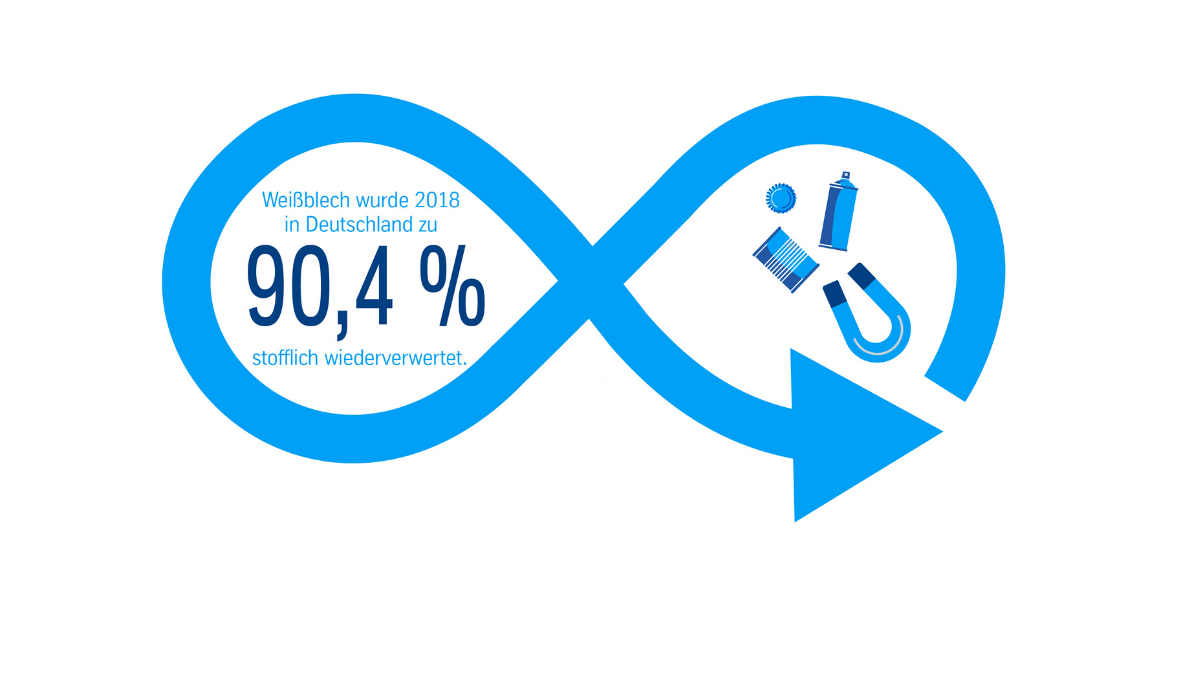
In 2018, 90.4 percent of tinplate packaging consumed in Germany was recycled. This figure was determined by the Society for Packaging Market Research (gvm) in their recently published annual recycling balance for packaging.
The recycling rate from end-consumer waste was even 92.2 % – this means Tinplate here again the master-recycled packaging material.
„The high recycling rate of tinplate is a strong signal to the filling industry, trade and consumers: If you are looking for a sustainable packaging material in a closed, functioning material cycle, tinplate is exactly right,“ according to Dr Peter Biele, CEO of thyssenkrupp Rasselstein GmbH.
tin has another significant advantage over many other packaging materials: it is almost 100% recyclable – practically infinitely often and without loss of quality.

Closed material cycle and multi-recycling
The multirecycling common with tinplate – i.e. multiple recycling of a material – as well as the Saving primary resources also the plus point, the Environmental impact due to many consecutive usage and recycling cycles to improve.
„Very plainly: If consumers separate their waste correctly today and throw their tin can into the yellow bin, it might become a component of a bicycle tomorrow and a car part the day after. Tinplate produced decades ago is still found in today's new steel products,“ according to White.
The thyssenkrupp Rasselstein GmbH contributes to effectively closing the material cycle itself: through its own return systems – the DWR – German Tinplate Recycling Association Ltd for private and Circular System Sheet Metal Packaging Steel Ltd for the commercial/industrial sector – should ensure the recycling loop for packaging steel in Germany.
Source: thyssenkrupp Rasselstein