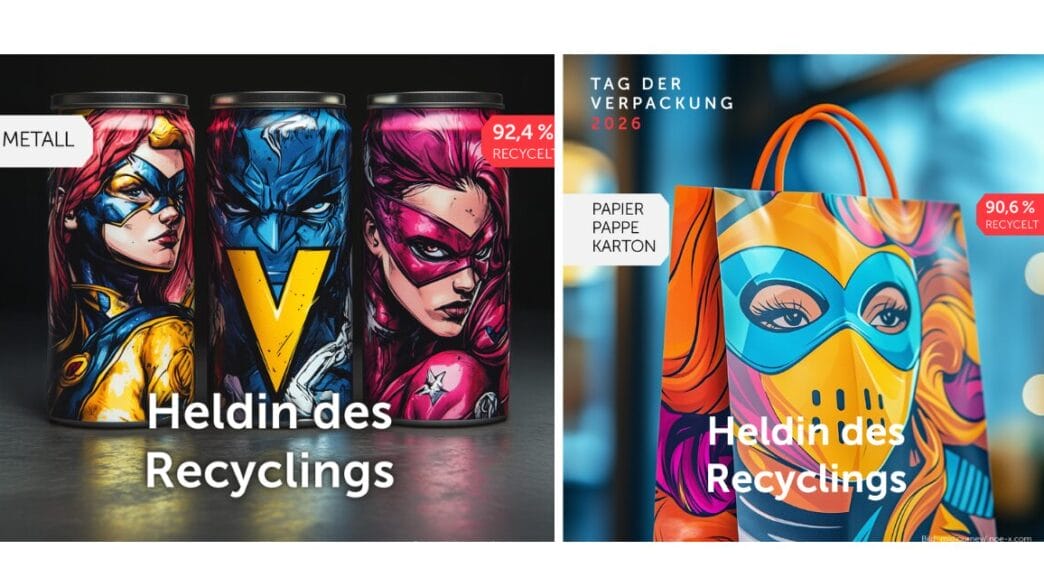
Germans have clear ideas about what they expect from packaging, and the results of a recent survey by the German Packaging Institute (dvi) show that sustainability and the circular economy are at the forefront. On the 11th nationwide Packaging Day, the German Packaging Institute (dvi), together with eleven industry associations, published the results of a representative survey from May 2026. In focus, among other things: 13 expectations that packaging must meet in everyday life.
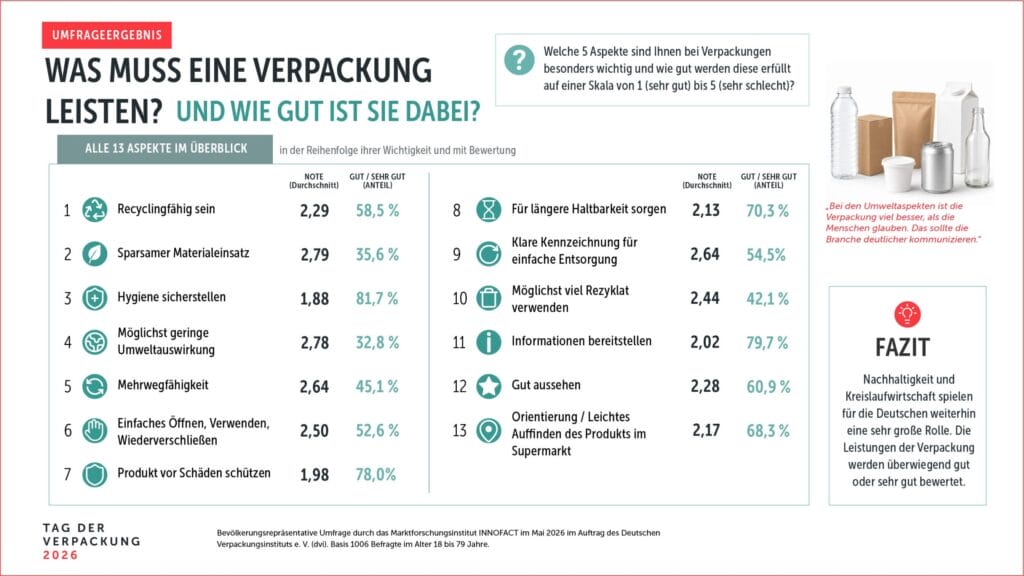
Looking at the expectations that Germans as a whole have of packaging in general, recyclability clearly comes in first place among all 13 tasks and expectations surveyed. For 48 percent, it is among the top 5 expectations of packaging. In second place is the economical use of packaging material (40.3 percent). However, minimal environmental impact (36.1 percent) and – where ecologically and practically sensible – reusability (33.3 percent) are also part of the overall top 5.
When asked about personal priorities for the top 5 aspects, hygiene proved to be the dominant feature (37.6 percent), followed by ease of opening, use and resealing (33.1 percent), protection of the product from damage (32.6 percent) and extension of shelf life (32.1 percent).

„It shows that sustainability and the circular economy continue to play a very important role for Germans. Packaging traditionally has a flagship function here because we use it daily and hold it in our hands. When four of the top 5 expectations for packaging come from the areas of sustainability and the circular economy, that is a clear statement. At the same time, citizens are aware of the important job that packaging does in terms of product protection, hygiene, and safety. There is also a clear mandate for packaging in these areas.“
Dr Natalie Brandenburg, Managing Director of the German Packaging Institute (dvi)
Satisfaction and need for action
The survey shows that Germans are, on average, satisfied with the performance of their packaging. In particular, the assurance of hygiene and product protection is viewed positively. However, there are also areas that present potential for improvement, such as the easy opening and reclosing of packaging. The industry sees a need for action here to meet consumer demands.
Misconceptions about recycling
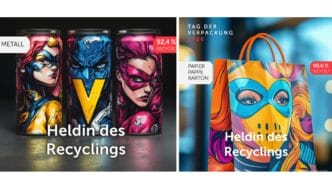
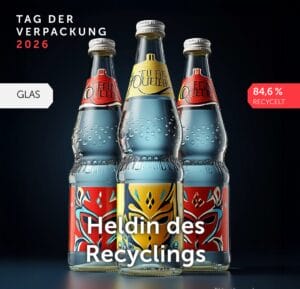
Another interesting survey result is the discrepancy between consumer perception and the actual recycling rate of packaging. More than two-thirds of Germans underestimate reality – across all materials. Only 31.2 per cent know that glass is recycled in more than 80 per cent of cases (2024: 82.9 per cent). For paper, card, and cardboard too, only 31.2 per cent correctly assess a recycling rate of over 80 per cent (2024: 91.8 per cent). This also applies to metal, where 83.4 per cent believe in a recycling rate below 80 per cent, while metal actually has the highest overall recycling rate. For plastics, 67.5 per cent suspect a recycling rate of under 60 per cent (reality 2024: 70.8 per cent). For composite materials, 70.7 per cent believe in a recycling rate of under 60 per cent (reality 2024: 69.5 per cent). This indicates that the industry needs to do more to raise awareness and highlight the successes of the circular economy.
 The conclusion of the associations: „Our citizens can be proud of what they are doing for the circular economy. The high recycling rates we achieve are only possible because people responsibly dispose of their packaging after use. The circular economy is teamwork. The notion that everything we previously collected separately ends up being mixed together again and incinerated is a myth,“ emphasises Brandenburg.
Less packaging, more efficiency
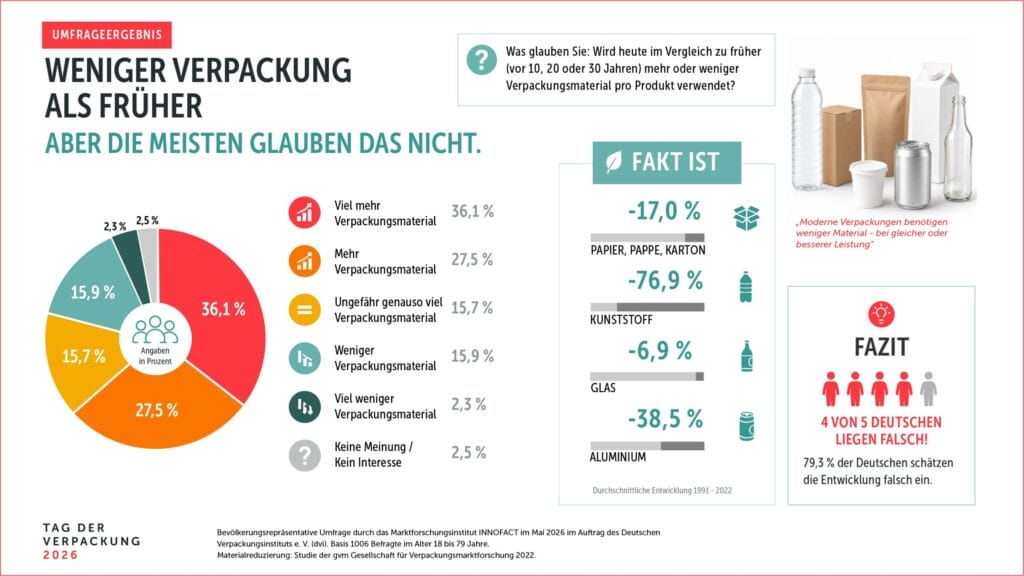
Despite the increasing demand for packaging due to a rising variety of products, the packaging industry has made significant progress in reducing material usage. Since 1991, material consumption for various types of packaging has been considerably reduced, highlighting the sector's efficiency and innovative strength. On average, as shown by a 2022 study from the Institute for Packaging Market Research, 17 percent of material was saved in 2020 compared to 1991 for paper, cardboard, and carton packaging, 38.5 percent for aluminium, 6.9 percent for glass, and an impressive 76.9 percent for plastic packaging.
The future of packaging
In the run-up to Packaging Day, the dvi, in cooperation with eleven universities and colleges from Germany and Austria, launched a countdown video campaign. Students, apprentices and alumni from packaging-related degree courses and apprenticeships explain in 25 Reels on Instagram why they chose the field of packaging. The common theme: packaging is indispensable. Instead of bad-mouthing it, it can be actively shaped to make it even better and more sustainable. For Natalie Brandenburg, it's clear: „Packaging often only registers when it has already done its job. Yet, without packaging, there would be neither transport nor storage. Functional supply chains, the secure supply of food, medicines, technical goods and raw materials, and the sustainable use of resources – all of this requires good packaging. That's why we, as an industry association, are promoting our sector across all materials. Packaging is the future. And the future needs people to shape it.“
Source: Deutsches Verpackungsinstitut e. V.