Innovative aluminium aerosol cans win awards

The winners of the Aerobal World Aluminium Aerosol Can Award 2023 have been announced. The jury selected innovative and sustainable concepts.

The winners of the Aerobal World Aluminium Aerosol Can Award 2023 have been announced. The jury selected innovative and sustainable concepts. Among them are solutions from Tubex and Linhardt.

The jury chose the aluminium aerosol cans of pearl & beauty antiperspirant from Nivea, produced by the German can manufacturer Tubex were produced. At first glance, they impress with their Design with an eye-catching colour scheme. The dark aubergine colour is translucent, so that the finely brushed aluminium shimmers through and gives the whole tin a special sparkling effect.

At the centre of the design, however, is the pearl, which is printed in fine gradients. For these colour gradients, the Copy-dot technique used to create the special lustre of the pearl. The challenge here is to apply the right amount of colour to the dark background. This ensures that the lighter colour is not contaminated with the darker colour and that the fine details of the design remain visible and come into their own.

This artwork technique is used to emphasise design elements. The possibilities this opens up are demonstrated by the example of the winning box. In addition, the Design concept of the cans with the interplay of colour, shape and elegant lines.

Display

Winner in the category Prototype Walnut and Salchi Metalcoat Srl
(Image: Aerobal)

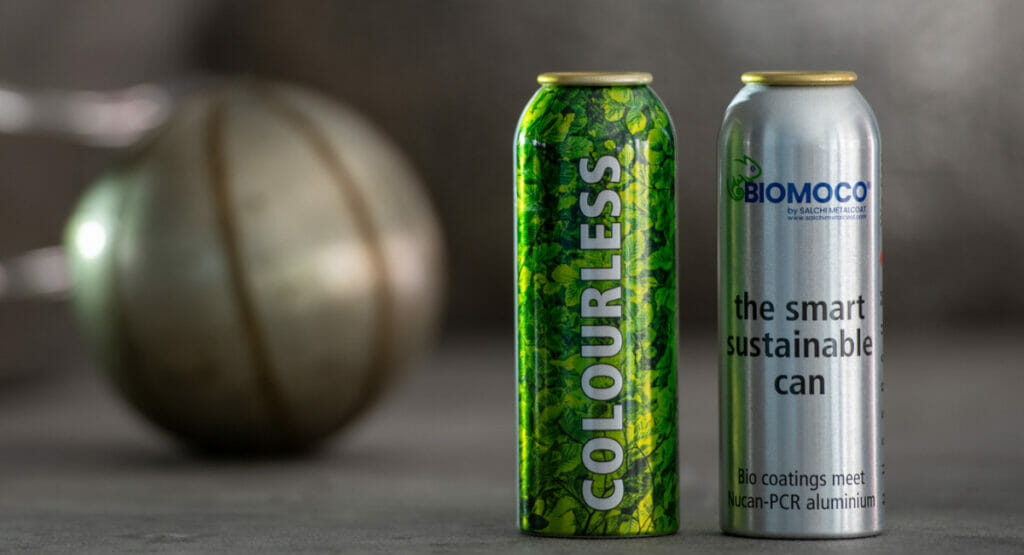
Winner of the prototypes, the „smart sustainable aerosol can“ was“ from the Swiss company Nussbaum. It was developed in co-operation between the Swiss company and its partner, the Italian coating manufacturer Salchi Metalcoat Srl. This innovative tin combines Sustainability and functionality without compromising on performance, safety and stability. to enter into.

The Can body is made from 100 percent recycled aluminium which is made from used beverage can waste without the addition of new or post-industrial recycled material. The patented Nucan PCR alloy is certified in accordance with DIN EN ISO 14021, which guarantees the Transparency and traceability of the value chain from the used beverage can to the finished Nucan PCR can. This can-to-can upcycling concept saves 96 per cent CO2 in.

The clear and white The basecoat and the clear overprint varnish on the cans are bio-based polyester varnishes from the BIOMOCO line from Salchi. The name stands for BIOsustainable MOdern COatings and summarises the company's coating portfolio, which is made from castor oil and used cooking oil and partially replaces conventional fossil materials. The coatings impress with their mechanical properties, elasticity, low VOC content and resistance to water baths.

The Organic content of solids is more than 40 per cent. Finally, the inner coating of the cans is also innovative: the BPA-free epoxy gold lacquer combines the outstanding compatibility properties of epoxy coatings with the advantage of a bisphenol A-free lacquer solution.

Winner of the Sustainability category: Linhardt and CD
(Image: Aerobal)

In the „Sustainability“ category, first place was awarded twice. On the one hand, the German manufacturer Linhardt for its cans for Lornamead CD deodorants. The 150 ml aerosol cans are made from 17 percent lighter slugs and are made of an alloy with 100 percent post-consumer recycled aluminium and 0.3 per cent original manganese. In line with the sustainability principle of avoiding packaging as far as possible, the primary objective of this packaging project was to minimise the to minimise material usage and at the same time meet the stability requirements for a deodorant aerosol can.

The second objective of the project was to reduce CO2-footprint of the can through the Use of post-consumer recycled (PCR) aluminium. This innovative can thus saves 296.5 tonnes of CO2 per million cans produced. In contrast to most PCR slugs, the slugs used by Linhardt here are produced directly from molten aluminium scrap, i.e. without an energy-intensive second melting process.

For this reason, the results of the life cycle assessment show that these PCR slugs have a very low CO2-footprint of 1.1 kg CO2e/kg. This enables savings of 92 per cent compared to the otherwise used slugs made of primary material (13.1 kg CO2e/kg). In addition, the lower weight also saves on transport emissions. The supply chain is traceable in accordance with ISO 22095:2020. High delivery reliability is guaranteed by high material availability and assured quantities. These 150 ml CD deodorant aerosol cans produced by Linhardt therefore represent a Combination of material savings and use of recyclate.

Also winners in the Sustainability category: Tubex and Nivea
(Image: Aerobal)

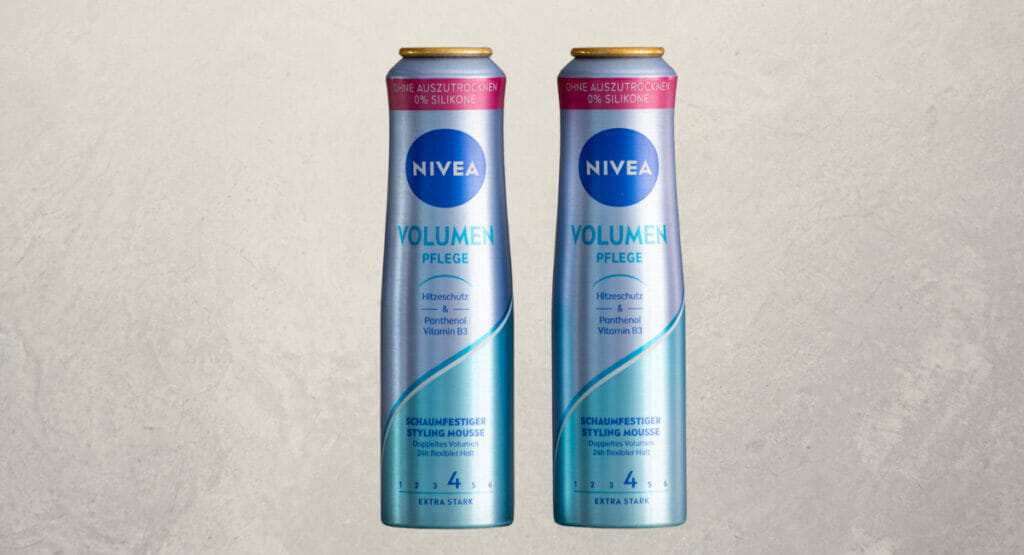
The jury also awarded first place in the highly competitive „Sustainability“ category to the aluminium aerosol can produced by Tubex Germany for Nivea's mousse. This can shows that a Recycling concept can also be implemented for aluminium monobloc cans is: The patented Neucan 3.1 alloy combines the advantages of a weight reduction and a possible integration of real-PCR.

This can is produced with 50 percent real PCR and is printed with natural colours for design and decoration. The use of PURe (organic printing inks) means that - in addition to all the other known advantages of this natural printing ink used for the first time - the holistic approach was further optimised.

The decisive innovation, however, lies in the concept of the recycling process of the material used in this can as real PCR. Not only is recycled material used, but the manufacturer has also thought about exactly where the recycled material comes from and how the recycled material has been processed in order to bring it back into the cycle. The advantages of the can therefore lie not only in the use of post-consumer recycled (PCR) material, but also in a energy-efficient recycling process

„Once again this year, I am very satisfied with the quality of the competition, which year after year impressively demonstrates the performance of our industry and not least the creativity and innovative strength of our member companies. The fact that, in addition to excellent designs, the focus was once again on sustainability emphasises its immense importance in the packaging sector. And that makes me very confident about the future. Because aerosol cans made of aluminium have more than just an ace up their sleeve compared to other packaging materials due to the numerous positive properties of the metal in terms of sustainability. In addition, the continuous investments and innovations in our industry ensure that the position of the aluminium aerosol can as a sustainable packaging material of the future will continue to develop positively.“

Gregor Spengler, Aerobal Secretary General

Source: Aerobal

More news on aluminium packaging

Aluminium packaging as a sustainable alternative to plastic?

The Swedish company Meadow wants to replace single-use plastic in certain product categories with a new aluminium pre-fill system. The company is pursuing a long-term strategy for recyclable packaging and is working with well-known industrial partners. Aluminium is considered to be particularly easy to recycle, but it also has some disadvantages.
Read more "