The European Packaging Regulation PPWR requires companies to use recycled raw materials in packaging in the future. However, precisely these recyclates, which are suitable for contact-sensitive applications such as food and cosmetics, are lacking on the market. Interzero has now developed a process with which food-grade and near-food-grade recyclates can be mechanically processed from the material in the Yellow Bin. The circular economy service provider, which operates throughout Europe, is opening a new site in Dessau for production.
The PPWR introduces mandatory minimum quotas for the use of recycled materials in packaging. As things stand today, from 2030 onwards, plastic packaging for food or cosmetic products that is not made of PET must contain at least ten percent post-consumer recycled material (PCR), i.e. recycled raw materials from used packaging. From 2040, this will increase to 25 percent. The problem is that these quantities are not yet available on the market today, and the requirements for the production of recycled materials are high. There is a significant need for investment in sorting and processing to meet the regulatory requirements. However, the recycling industry is under pressure due to high energy costs, fluctuating prices, and currently subdued demand for recycled materials.
„With our new site for the production of recyclates suitable for contact-sensitive applications, Interzero continues to invest in mechanical recycling for the needs of tomorrow, despite the current challenging market environment. With this step, we are demonstrating the potential of the circular economy and making a clear commitment to Europe's resource sovereignty.“
Jan Kroker, CEO of Interzero
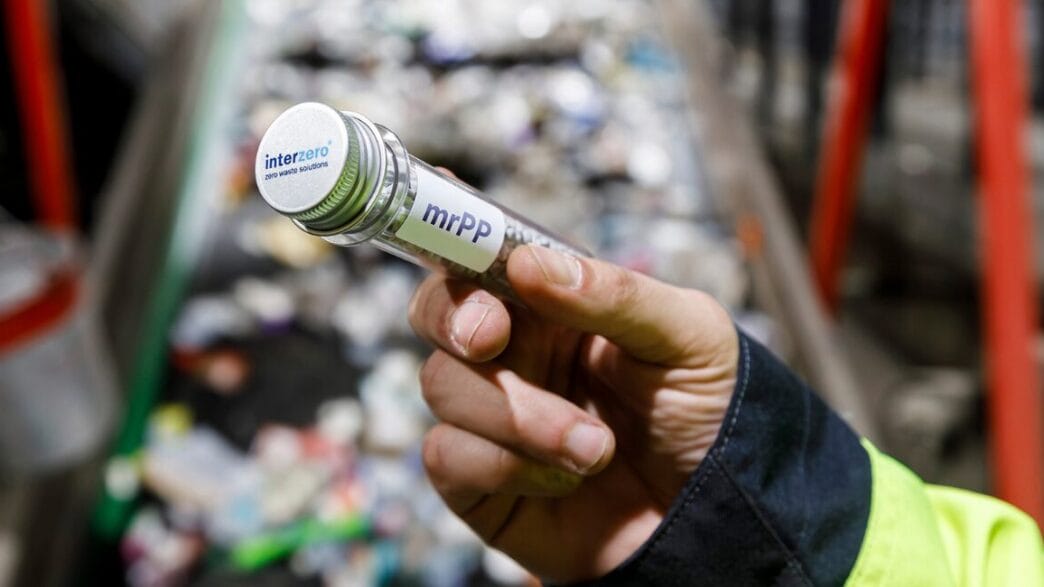
Mechanically recycled PP from the yellow bag
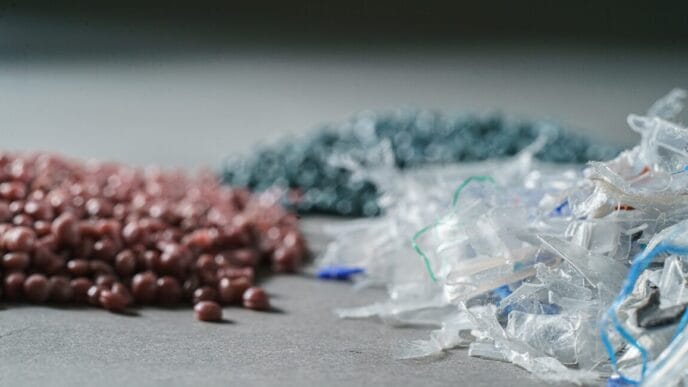
For over five years, Thomas Herkert's engineering team has been working to develop the optimal sorting and recycling process for polypropylene (PP) material streams from the Yellow Sack initiative in Germany. The feedstock for the new plant in Dessau comes from Interzero's own lightweight packaging sorting facilities. In Dessau, the bales of recyclable materials are first shredded and washed, and then elaborately re-sorted and processed. The flakes are subsequently processed into high-quality recyclates. The necessary decontamination is achieved on-site in collaboration with a partner. The end product is a recyclate that is also suitable for high-requirement applications.

„In product development, we have focused on creating a recycled raw material that is suitable for use in hot filling, for microwaveable products, or for foods with a high fat or acid content.“
Thomas Herkert, Head of Sorting & Processing Segment at Interzero
Pilot plant and scalability
The pilot plant in Dessau, which has a production capacity of 5,000 tonnes of mrPP granulate per year, is currently under construction. Initial tests for the use of the material in food packaging have already been successfully completed. The approval process with the European Food Safety Authority (EFSA) for the use of the regranulates in food-grade, near-food-grade and cosmetic applications is currently being initiated.
The project is highly scalable, offering a solution for the majority of rigid plastics from household collections. According to a packaging study by Pforzheim University of Applied Sciences, polypropylene accounts for around eleven percent of plastic packaging in Germany's Yellow Bin system.
„To achieve the goals of the PPWR, a combination of strong technologies is needed,“ says Jan Kroker. Mechanical and chemical recycling must be used complementarily to keep as many valuable materials as possible in the circular economy. Now, it is time to create the framework conditions for utilising the technological know-how.
Source: Interzero