Sustainability is part of Weleda's identity. All areas of the company are committed to sustainable management - from the extraction of product raw materials, their processing, filling and packaging, placing on the market to recyclable packaging. IWK is also contributing to this with its new flexible packaging line for many natural cosmetic products.
Weleda is the world's leading manufacturer of certified natural cosmetics and anthroposophic medicines with a product portfolio of more than 1,000 medicines, a large number of manufactured products and 120 natural cosmetics. The company invested in the „Skin Food“ and „Pomegranate“ care ranges and other applications at its largest German site in Schwäbisch Gmünd into a turnkey packaging line from IWK Verpackungstechnik. The particular challenge was the Variety of products and their different formats and volumes, which should be filled and packaged on the line. The flexible packaging line is automated and safely processes both aluminium and plastic tubes in different sizes. Collaborating robots (cobots) ensure automated processes at the beginning of the line at the tube filler.
Modern tube line on a limited area
Weleda's enquiry to IWK for a high-performance, automated packaging system for filling, cartoning and packaging certified natural cosmetic products was made in the run-up to Weleda's 100th anniversary. The aim was to replace an outdated packaging line at the Schwäbisch Gmünd site with the Largely automated and flexible IWK turnkey system as possible without disrupting production operations.

The entire tube line, including the upstream and downstream automation solutions, had to be designed to fit into the existing production building - a particular challenge. The tube line could not be laid out in a row of machines one behind the other, as is generally the case, but had to be be set up in a U-shape due to the limited parking space. Creating the technical design was a complex task even for the product engineers at IWK, but in the end it was solved thanks to many years of experience and the excellent co-operation of the Weleda-IWK project team.
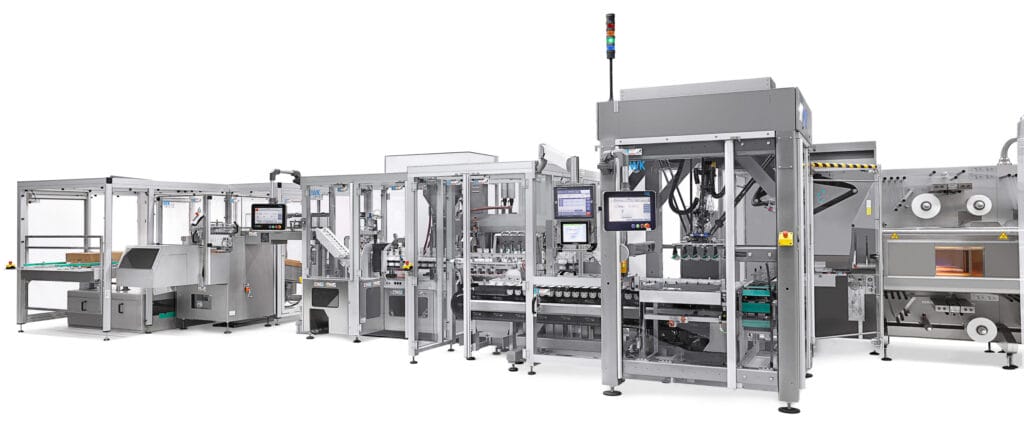
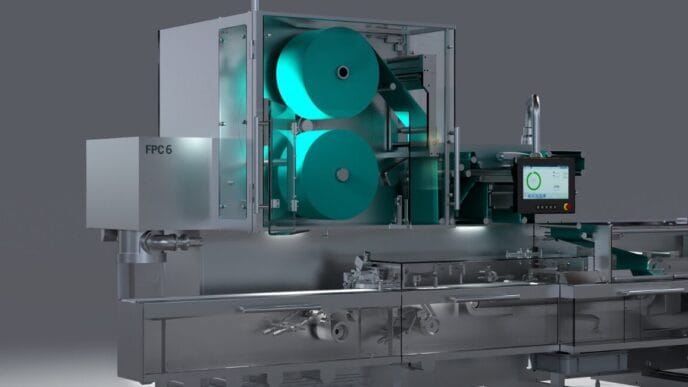
The centrepiece of the technical solution is a flexible IWK FP 64-2 tube line with two filling heads and a maximum filling capacity of 220 tubes per minute with maximum process reliability. The modern control and drive technology with energy-efficient servo drives enables automated height adjustment of the 64 tube holders, precise positioning and safe transport of the tubes in the work stations as well as quick and easy format changeovers.
Weleda processes sensitive cosmetic products here. Therefore the Filling area designed in accordance with GMP guidelines (Good Manufacturing Practice) with smooth surfaces, The system is easy to clean throughout and has excellent accessibility from all sides. Weleda uses dosing cylinders adapted to the required volumes on the commissioned system for filling into different tube materials and tube shapes. In general, the IWK FP system in this series can safely process filling volumes from 1.5 to 350 millilitres.
Automation across the board
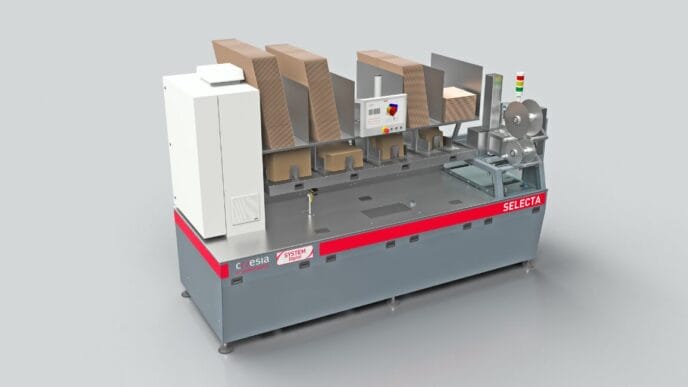
Upstream of the tube filling system are Cobot-supported modules. The special feature is the flexibility of the primary packaging. Both conical and cylindrical tubes can be processed without long changeover times. A DPC depalletising cobot with two pallet positions continuously feeds the empty tube cartons into the tube feeders. The emptied cartons are then dismantled in a very space-saving manner by a TDC tray disassembly unit. The tube infeed (DPC, TZC and TDC) is controlled centrally.
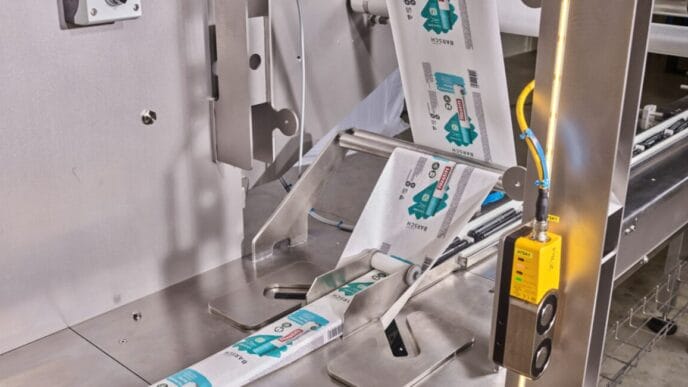
The FP tube filling system is with a Pharmacode scanner and a print mark sensor for image alignment equipped. The empty tubes are placed in the tube holders, aligned and filled. The tubes are then sealed either with folding tools for metal tubes or using a hot-air unit for the plastic versions. The sealed tubes are marked by embossing or laser in the fold and can then be labelled.
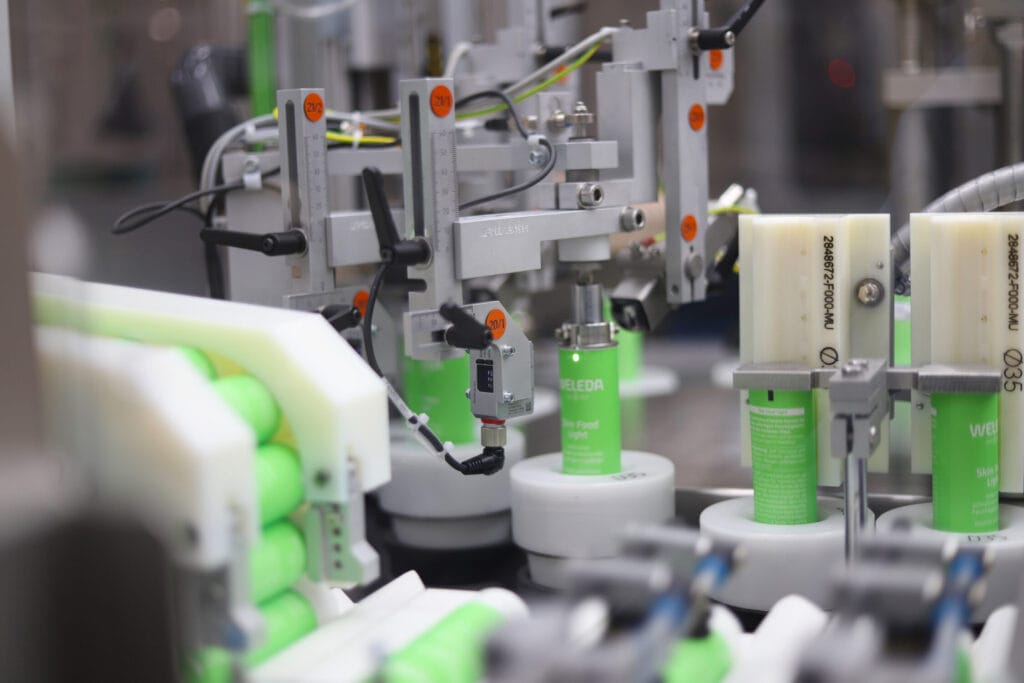
Downstream of the filling area is an in-line weighing system with 100 per cent weight control including trend control. It offers sufficient space for customer-specific requirements. A pick & place arm then places the so-called good tubes into the forming cups of the XTS linear transport system. The individually driven transport carriages of this collection system ensure empty space compensation from tube filling and thus a constant product flow to the connected robot cell IWK FeedCell. This means that the machine manufacturer always guarantees full packaging units.
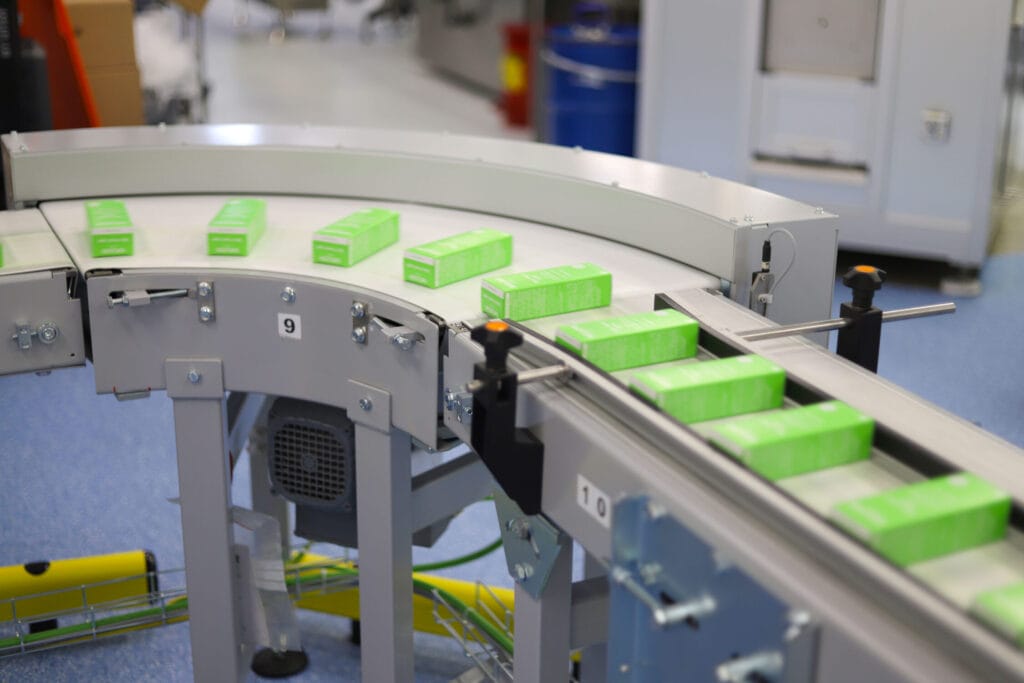
The FeedCell, which is flexible for different product configurations, feeds the tubes optionally to the IWK SC 4 HS horizontal cartoner for the Packaging of individual tubes in folding boxes or places them in the mini trays provided. These are automatically erected from a flat blank, loaded and sealed. Particular attention was paid here to the safe transport of the folding boxes or mini trays to the finished sales unit in bundles of 5, 6 or 8.
Securely boxed, bundled and packaged
A cycloidal system with counter suction cups patented by IWK ensures reliable erection of the folding carton. The tubes are continuously inserted together with a folded leaflet. The cartons are closed, Optionally customised with an embossing or a laser with variable data and then bundled with film and packed in an automatically erected shipping tray. The minitrays reach the shipping trays without being wrapped in film. A palletising system positioned at the end of the line (EOL) then places the individual shipping trays on a pallet according to a predefined pattern, which is then labelled.
„The project was an absolute novelty for our production area. The order value, team size and number of machines in a line were unprecedented. All the employees involved were highly motivated to support this investment and innovation.“
Paola Nell, Weleda Team Leader Industrial Engineering
The turnkey line for natural cosmetics was commissioned even before the coronavirus pandemic. What nobody could have foreseen at the time were the unforeseeable project safeguarding measures due to the pandemic in the coming period. However, it turned out that those responsible at Weleda and IWK in the joint project management team had an excellent rapport and communicated very well with each other. Despite the adverse circumstances, IWK facilitated a two-week qualification programme for production and technology on site in Stutensee. This was necessary because Weleda placed very high demands on the documentation. The effort was comparable to that in the pharmaceutical sector. „Here, too, IWK fulfilled all our wishes and delivered comprehensive documentation in top quality,“ says Paola Nell.
But it wasn't just the pandemic adversities, including a lockdown during commissioning, that caused the team problems. During the course of the project, there were Several changes to primary and tertiary packaging materials and also a relocation of two tube formats from external to Weleda in-house at the start of production. „Thanks to IWK's expertise and experience and the motivation of the fitters to work on the machines with Maske for three weeks at a time, the project was a complete success. Even after acceptance, IWK was always on hand and continued to support us via telephone, email or short-term on-site visits. If only all projects went this well,“ summarises Paola Nell in retrospect.

(Image: Weleda)
Logistical masterpiece
Following the successful training of the Weleda employees and the factory acceptance test (FAT) in Stutensee, the next step was the dismantling and transport to Schwäbisch Gmünd in eight forty-tonne lorries. The sequence of the machines to be transported was crucial to ensure that the installation on site would be successful due to the limited space. During this phase of the customer project in particular, additional service providers were brought in who had to be instructed precisely. Thanks to their extensive experience and numerous completed projects, those responsible at IWK knew exactly what needed to be taken into account when planning, transporting and precisely installing the Weleda packaging line in the customer's premises. „Together with the haulage company, we measured and determined the exact positions of the individual machine positions at Weleda. That was millimetre work. I would particularly like to emphasise IWK's competent project management, which coordinates such large-scale projects with different suppliers perfectly,“ emphasises Barbara Otrzonsek, Area Sales Manager at IWK.
Two years after commissioning, the IWK packaging line is running in stable condition and produces around 80,000 units of the highly successful Skin Food range every day. The project managers at Weleda are satisfied and pleased with the performance, even if there were some difficulties due to the Complexity with a total of seven formats There are always challenges to overcome. An internal continuous improvement project (CIP) at Weleda continues to support and promote the line's success story.