Lidl Switzerland packs fruit and vegetables in organic packaging

Researchers at Empa have developed a protective cellulose coating for fruit and vegetables in collaboration with Lidl Switzerland. The innovative coating is made from pomace - pressed fruit and vegetable peelings.

Researchers at Empa have developed a protective cellulose coating for fruit and vegetables in collaboration with Lidl Switzerland. The innovative coating is made from pomace - pressed fruit and vegetable peelings. This innovative project can reduce packaging and avoid food waste.

Plastic packaging in grocery stores protects fruit and vegetables from spoiling, but also generates considerable amounts of waste. Together with Empa, Lidl Switzerland has now developed a Protective cover developed for fruit and vegetables based on renewable raw materials. For its latest project, Lidl Switzerland chose Empa as a partner because it offers a Decades of research experience with cellulose products was available.  

Keeps longer at home

In Empa's Cellulose & Wood Materials laboratory, the researchers have developed a new material on behalf of Lidl Switzerland then worked for more than a year to create a special protective cellulose layer that can be applied to fruit and vegetables. The result: the coated fruit and vegetables stay fresh significantly longer. In tests, the shelf life of bananas has been extended by over a week. This Food waste significantly reduced.

„The big goal is that such natural coatings will replace many petroleum-based packaging in the future can.“

Display

Gustav Nyström, Head of the Research Department
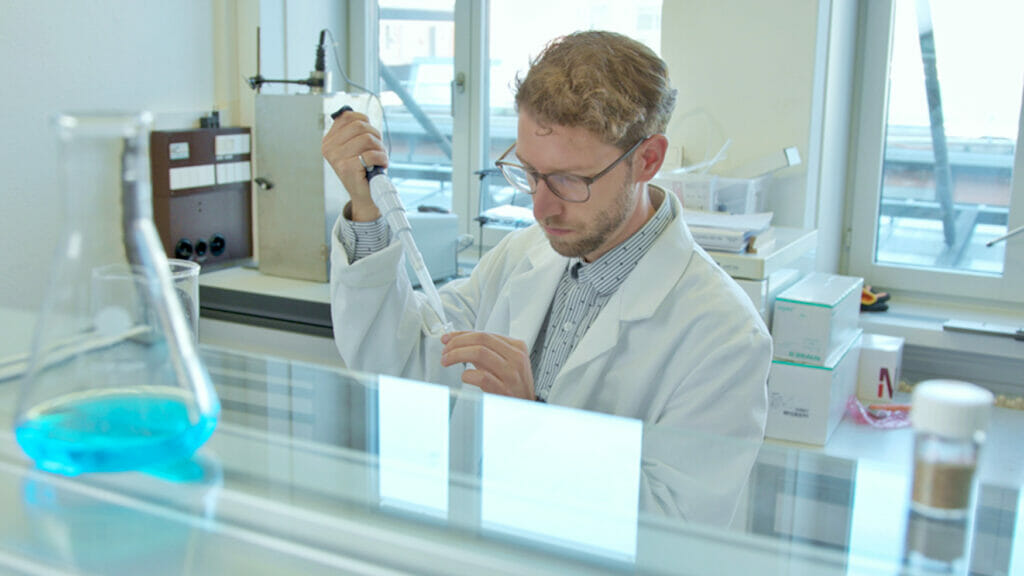
Empa researcher Kevin DeFrance is working on ecological packaging for fresh fruit and vegetables.
mpa researcher Kevin DeFrance is working on ecological packaging for fresh fruit and vegetables. (Image: Manifesto Films, Lidl Switzerland)

Production from press residues and residual materials

In future, the main focus will be on processing pomace into fibrillated cellulose. Pomace - this is the solid residue that remains after squeezing the juice from fruit, vegetables or plants. Until now, these plant residues have been disposed of in biogas plants or directly on the field. Protective coating for fresh fruit.

Depending on the results of the study, the coating is either sprayed onto the fruit or applied to the products as an immersion bath and is easy to wash off. As it is safe for the consumer, it can also be consumed without any problems. The The potential of cellulose coating is far from exhaustedThere is the option of adding additives such as vitamins or antioxidants, etc.

Deployment planned throughout Switzerland

This summer, the promising preliminary study, which has been running since 2019, was successfully completed and the main study started. The cellulose layer developed at Empa is beingn the next two years together with Lidl Switzerland and a fruit and vegetable supplier and further improved. The project is financially supported by the Swiss Innovation Agency (Innosuisse). The aim is for the new technology to be rolled out after the successful main study. will be used in all over 150 Lidl shops in Switzerland can.

Source: Empa

More news