To round off the year, we once again present our most-clicked articles of 2021. 3rd place: The industry talk about the circular economy
17 May 2022
To round off the year, we once again present our most-clicked articles of 2021. 3rd place: The industry talk about the circular economy
Plastic does not have the best reputation among consumers. Other voices, however, consider it to be a sustainable material with a future - if it is used correctly. In the third round of our packaging journal TV Live Talk, we took a look at current developments and the future of plastic in packaging, the circular economy and recycling.
In the latest episode of our industry talk, Andrea Siebert-Raths, head of the Institute for Bioplastics and Biocomposites at Hanover University of Applied Sciences and Arts, Henning Wilts, a circular economy expert from the Wuppertal Institute for Climate, Environment and Energy, and Alpla CEO Philipp Lehner all agreed that the positive properties of plastic are too often forgotten.
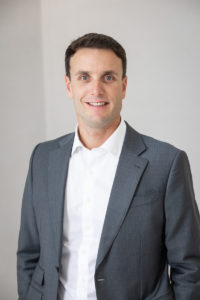
Philipp Lehner knows what he is talking about: his company Alpla, which he has been managing in the third generation since January, develops and produces plastic packaging with around 21,000 employees in 178 production plants worldwide and also operates its own recycling plants for PET recycling. „Plastic has many facets. The strength is an important property, the good mouldability is of particular interest to our customers in the marketing sector - and not to forget: the cost efficiency.“ To emphasise the positive aspects of plastic, Alpla is proactively participating in the public debate on sustainability and the use of recycled materials. „We want to lead the discussion on how to deal with packaging materials after their use in a targeted manner.“ A world without plastics is hard to imagine.
Display
(Image: ALPLA Group)
„The lightweight structure of the plastic and its CO2-This advantage over other conventional packaging materials will make it even more important in the future. If we the topic of CO2 solve global problems holistically plastic is simply indispensable. But living standards are rising and more and more people want to consume. As a result, the mountains of waste are growing. The circular economy is certainly one of the ways to get to grips with the problem. Plastic is certainly suitable for this if it is recycled and processed over several cycles.“ Philipp Lehner, CEO Alpla
Recycle instead of composting
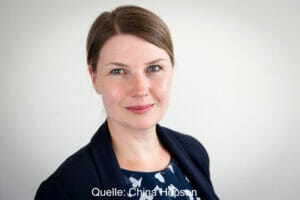
Many see a future in plastics made from renewable raw materials. At the Institute for Bioplastics and Biocomposites at Hanover University of Applied Sciences and Arts (IfBB), scientists are not only researching new materials and their sustainability, products made from bioplastics are also produced there. Prof Dr Andrea Siebert-Raths heads the institute and often has to explain things first, what is behind the term „bioplastics“. „There is often confusion here because there is no real definition. We divide bioplastics into two categories and talk about degradable and non-degradable materials. The raw material base for degradable plastics is either bio-based, i.e. made from renewable raw materials, or petrochemical-based and therefore made from crude oil.“
Analysing alternative materials is important. „We fully share the view that plastic is an excellent material, but we also recognise that conventional plastic can certainly be substituted. Oil reserves are finite, which is why we are looking for alternatives.“ However, materials made from renewable raw materials must fulfil the same requirements as conventional plastics and, above all, should be integrated into the circular economy.
(Image: China Hopson)
„It is not enough to produce plastics from renewable raw materials that are then biodegradable or compostable. That contradicts the circular economy concept that we are very proactive about at the institute. We must ensure that plastics are also recyclable. This applies not only to bioplastics, but to all plastics. Here we are not in competition with each other. We generally see plastics as recyclable materials that need to be preserved.“ Prof Dr Andrea Siebert-Raths, Head of the Institute for Bioplastics and Biocomposites at Hanover University of Applied Sciences and Arts
In a joint project with the start-up Crafting Future, the IfBB has just designed a reusable tray for out-of-home catering, selected the material, built the tools for production and launched the trays on the market. „At the moment, they are still petrochemical-based, because the first step is to switch from disposable to reusable. The next step will then be to produce these trays from renewable raw materials. In doing so, we have always keeping an eye on circulation, because it's about the entire life cycle. With this project, we want to make plastics, whether bio-based or made from recyclate, more acceptable, because there are still hurdles to be overcome in the recycling sector.“
Crafting Future and IfBB have developed a reusable tray for take-away food on behalf of Recup, the largest German deposit system for to-go food. (Image: Recup)
Using plastics sensibly
The European Union and Germany have set themselves an ambitious goal: the Transformation towards a circular economy, in which waste is avoided as far as possible, products and components are utilised for as long as possible and waste is viewed as a potential resource. The associated challenges and questions are the starting point for the research carried out by the Circular Economy department at the Wuppertal Institute.
„There is a great need for information on the circular economy, including from industry. Many companies are willing to make improvements, but don't know where to start,“ says Dr Henning Wilts, Head of the Circular Economy Department. He and his team are researching systemic solutions for packaging avoidance, among other things.
(Image: Wuppertal Institute)
„In Germany, we have seen a doubling of plastic waste in the packaging sector in particular over the last 20 years. This is clearly a trend that cannot be allowed to continue. Yes, plastic is fantastic when we talk about potential. We will not be more sustainable tomorrow if we do away with plastic. But the question is, how do we use it sensibly? All our simulations point to a further increase in resource consumption and therefore a further rise in plastic waste. It is therefore not enough to simply optimise individual production processes; we really need systemic solutions, completely new materials and reusable solutions. We have made too many small adjustments in recent years and now need to look at the system as a whole.“ Dr Henning Wilts, Head of the Circular Economy Department at the Wuppertal Institute
A ray of hope: Packaging manufacturers are just getting started, to network much more with each other. This is important because: „For a functioning circular economy, we need products that are designed for recyclability from the outset. And no company can do this alone, but only in cooperative structures.“
Incorporating alternatives into the circular economy
Bioplastics only have a small share of the market so far, albeit with good growth rates. „We need to look at how bioplastics can also be integrated into the circular economy,“ says Andrea Siebert-Raths. „But if the capacities on the market are low, it's not worth thinking about large plants. The recyclability is there, for example with PLA, and the detection in the sorting plants also works. The demand is also there, but it will take time to increase production capacity, as this always involves investment. Nevertheless, we should to deal with alternatives, also to make us less dependent on oil. If you look at where oil is produced and what the political framework conditions are like in the individual countries, it makes perfect sense to have technology and raw materials in your own country.“
The type of renewable raw materials should also be considered so that they not in competition with food production stand. „Residual materials from which biomaterials can also be produced play a role here.“ The IfBB is therefore exploring various avenues to identify new possibilities. „We still have a lot on our to-do list for bioplastics.“
Recognising black sheep
All of the dialogue partners would like to see more information - about the importance of the circular economy, the necessary requirements and what this means for specific products. Henning Wilts: „The stakeholders know that there is a need for change; there are demands from both the European Commission and consumers. I hope that we can actually recognise this clearly, who is really committed now and has set themselves real goals and who is actually just greenwashing and going with the flow. Only then will consumers have a chance to reward genuine efforts through their consumption decisions.“
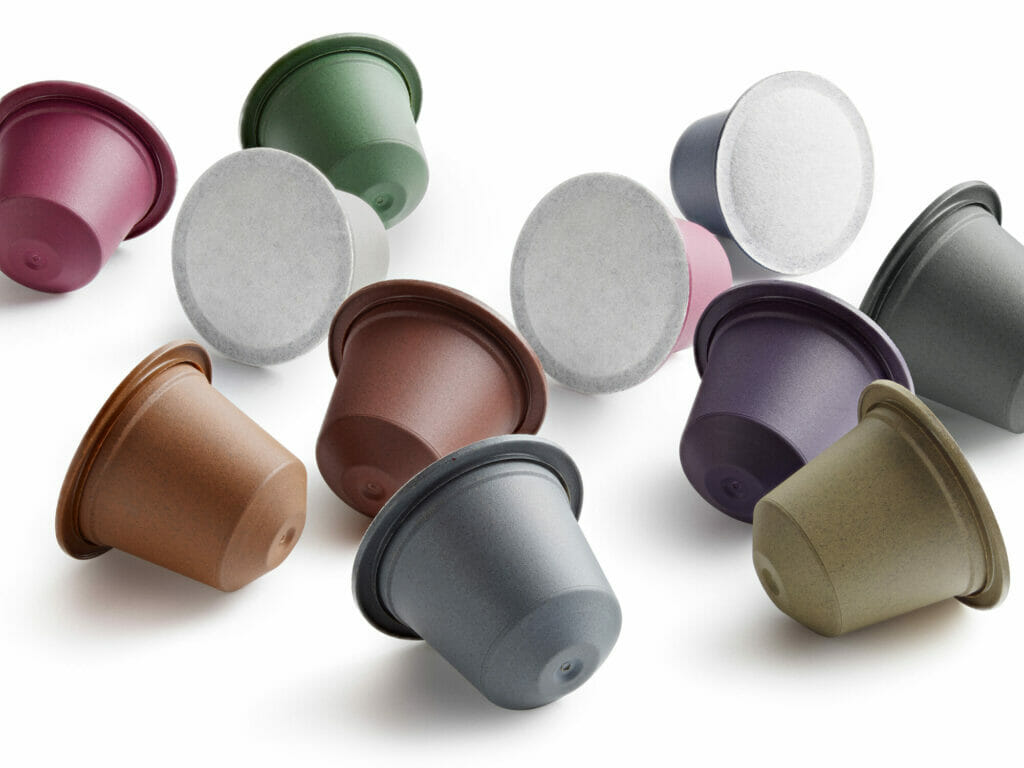
Sustainable coffee capsules were the first product in the Blue Circle range. (Image: Alpla)
Andrea Siebert-Raths adds: „If we want a circular economy, we have to make it clear to consumers what plastics, including bioplastics, can do. That brings us back to communication. In the supermarket, a purchase decision is often made not only because of the product, but also because of the sustainable packaging. We are currently developing an app to help consumers make sustainable purchasing decisions in the supermarket.“
Alpla also provides education and information on the topic of the circular economy. Philipp Lehner: „Thinking and developing packaging for the future is currently one of our biggest services for customers worldwide. We have has been running a design-for-recycling programme for four years. We also pass on knowledge about the circular economy here. And the demand for workshops and advisory sessions is increasing because brand owners need to think about how they position themselves in the market.“
At a political level in Europe, there is a growing realisation that the circular economy is also industrial policy. „People are asking how we can secure raw materials from domestic sources and from waste materials and thus become a global pioneer. How can we ensure that value creation actually takes place in Europe again? The EU Commission also wants a circular plastics economy in Europe,“ says Henning Wilts.
Commitment must be rewarded
In Germany, there is also the question of how fees can be used as an incentive to organise packaging in sensible cycles. According to Section 21 of the Packaging Act, dual systems must grant their customers benefits if they use recyclable packaging. Wilts: „The same will happen at European level. This means that waste avoidance and the sensible use of packaging can become a business model. However, we must ensure that those who invest massively, like Alpla, are rewarded for doing so. For me, this is one of the crucial points in the coming years, because it raises the question of sensible packaging and packaging that is simply superfluous and should be taken off the market. There is still plenty of it.“
It's also about consumer behaviour and how consumers shop, says Andrea Siebert-Raths. „Does the shelf life offered by a plastic bottle for juice even need to be that long, or are its properties perhaps oversized in relation to the product? We should question: Do we still need the full performance? Are multilayers necessary, which make recycling more difficult, or does a single-material solution also work in many cases?“ Regulations are important here to bring dynamism to the market. „The companies naturally also look amongst themselves to see who does what and how others are positioning themselves on the market.“