Circular economy with multipurpose and recycling

Metsä Board called for the Design Challenge again this year. We spoke to Ilkka Harju about the challenges facing the industry.

High quality with low material usage - that is one of the criteria of Metsä Board's „Better with Less“ design challenge. The company is calling on young designers to develop sustainable and recyclable packaging solutions. We spoke to judge and Packaging Services Director, EMEA & APAC, Ilkka Harju, about the competition and the challenges facing the industry.

Metsä Board has once again launched the Design Challenge 2022 and is focussing on the circular economy. What does circular economy mean for Metsä Board and why is it important?

Of course, sustainability and the circular economy are now more important than ever. The Ellen MacArthur Foundation provides a kind of benchmark and a principle here. The basic principles are reduce, reuse and recycle - in other words, reduce, reuse and recycle. These are the principles that we follow when designing packaging solutions. And that starts with the raw material from the forests. Even here, it is important to know exactly which raw materials you are using and where they come from. In our case, we use certified forest material for the production of pulp and therefore cardboard. Today, we are able to produce our materials and packaging in an energy-efficient way. This is because there is also a discussion about the footprint and CO2 emissions in the production of materials. Our goal is to no longer use fossil fuels by 2030. When designing and developing packaging, we can create solutions that are fit for purpose and fulfil the circular concept so that a minimum of raw materials and energy are used. We work with a lightweight material that still has to carry and protect the products. Packaging should be designed to be ecological and material-efficient. If we have designed solutions in such a way that they are efficient across the entire value chain, cycles can be closed. In the end, the product should always be recyclable.
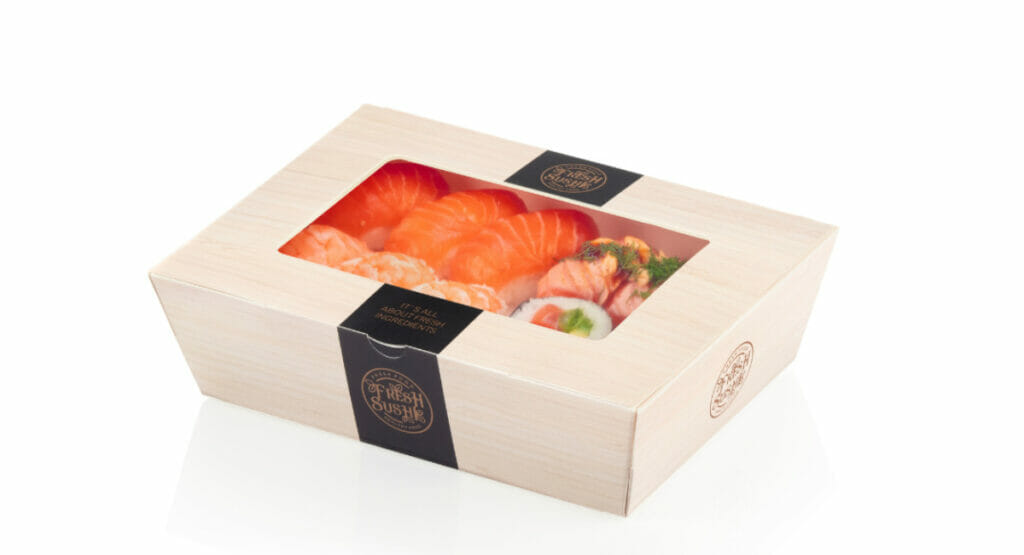
The sushi packaging combines two materials that can be fed separately into the respective recycling streams.
The sushi packaging combines two materials that can be fed separately into the respective recycling streams. (Image: Metsä Board)

You also mentioned energy savings and renewable energies or material reduction. Are there any other aspects that go into sustainability when developing packaging made of paper or cardboard?

The problem is often that, in addition to sustainability aspects such as material reduction, we also have to address the problems that the packaging is intended to solve. So we have lightweight but also intelligent solutions that can offer a multi-purpose and a second life. Of course, there always comes a point in the end when it's time for recycling. But how can this point be delayed? There have been many discussions pitting plastic against cardboard, but it's not so black and white. From a consumer perspective, for example, there are some requirements that are easier to fulfil with plastic packaging. For example, if the packaging needs to be transparent or particularly rigid. With sushi packaging, it is possible to combine two materials. The sushi tray can be made of cardboard and supplemented with a plastic lid. Both materials can be recycled in different recycling streams. In addition, the plastic lid serves as a cup holder for the sauces and when the consumer eats the sushi, they can use the lid to pour in the sauces and dip the sushi. We can get more out of the packaging and use it for multiple purposes.
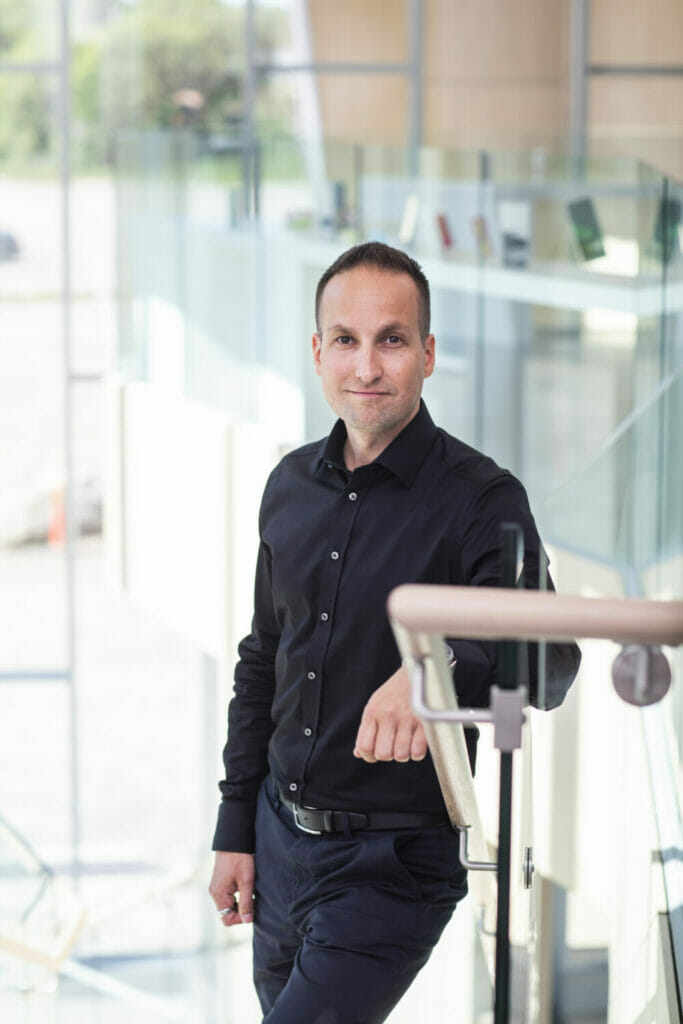
Ilkka Harju is an expert on the jury of the Design Challenge and is looking for innovative packaging solutions that save material and perform strongly in terms of quality.
Ilkka Harju is an expert on the Design Challenge jury and is looking for innovative packaging solutions that save material and perform strongly in terms of quality. (Image: Metsä Board)

Let's move on to the Design Challenge. What is the focus of the challenge? Is it design, convenience for consumers, sustainability or do the topics go hand in hand?

They basically went hand in hand. And this year, the „Better with Less“ theme was all about finding innovative solutions using cardboard as a material. There were various packaging solutions for very different purposes. The solutions can now be viewed on the shortlist on our website. There are some very good examples where the packaging has been given a second life before being recycled.

What would you say are the major challenges in the circular economy?

I would say that the biggest challenge is the recycling system. For example, we have well-developed recycling systems for paper and cardboard in the Nordic countries. But we also see that there are many countries where this is not the case. Consumer awareness is also important here. We should inform consumers about different materials, how they can recycle them and what impact they have on the environment. Another challenge is that we need innovative start-ups and companies that develop technologies to produce our solutions and designs. There are good ideas, but we often lack the right technologies to realise them. So it's about how we combine materials and technologies and create something new.

Many parts have to fit together to create a cycle. What innovations do you see when you look ahead to 2023?

I am sure that there will be new solutions for transport packaging and new manufacturing processes. Where plastic is still used, we will see fibre-based packaging. Then 3D fibres. This is not a new technology, but moulded cellulose-based packaging will be an important segment. How big this will be depends on the cost and efficiency compared to cardboard and on new solutions in the cardboard sector. Barriers are another issue. We are already seeing ecological alternatives that have the same barrier properties as plastic barriers. This applies to baked goods, for example, but when it comes to meat, etc., we are not quite there yet.

More news from the magazine

One hundred years blue tin

Since 1925, the Nivea cream can has borne its deep blue colour, white lettering and round shape - a design that has remained stable over generations, markets and crises and is now celebrating its 100th birthday.
Read more "