Fresh fibre cartonboard with barrier for premium food products

Metsä Board offers paperboard solutions made from virgin fibres with a dispersion barrier coating as an alternative to plastic packaging for demanding food products such as chocolate or baked goods.

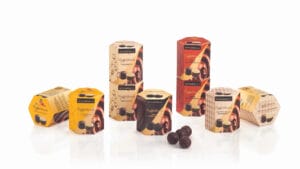
In many cases, cartonboard solutions with a barrier can now be an alternative to plastic packaging for sophisticated foods such as chocolate or baked goods. The new truffle packaging from Kultasuklaa is a good example of how cardboard can be used as a sustainable packaging solution even for premium foods.

Recyclable, biodegradable and made from renewable materials: These are the properties that companies and consumers increasingly expect from packaging - including food packaging. Especially However, food often requires a fat or moisture barrier. This is why many manufacturers and consumers initially think of plastic-coated packaging in this context.

However, often Cardboard solutions with dispersion barrier coating and a varying degree of grease and moisture barrier can be used. This is because they are recyclable and can be processed in paper and cardboard recycling: At over 80 per cent, paper and cardboard packaging has a very high recycling rate. This is a very important factor, as packaging for consumer products now accounts for more than half of all packaging produced worldwide.

In addition to a high recycling rate, cardboard solutions also score with other qualities: The Finnish cartonboard manufacturer Metsä Board, for example, relies on pure virgin fibres that can be traced back to their origin in sustainably managed Nordic forests. The material is lightweight, yet very stable and versatile for offset, flexo and digital printing. With a dispersion barrier coating, it is used to produce the board quality Metsä Board Prime FBB EB, which is suitable for direct contact with food and offers medium-strength protection against grease and moisture thanks to its dispersion barrier.

Display

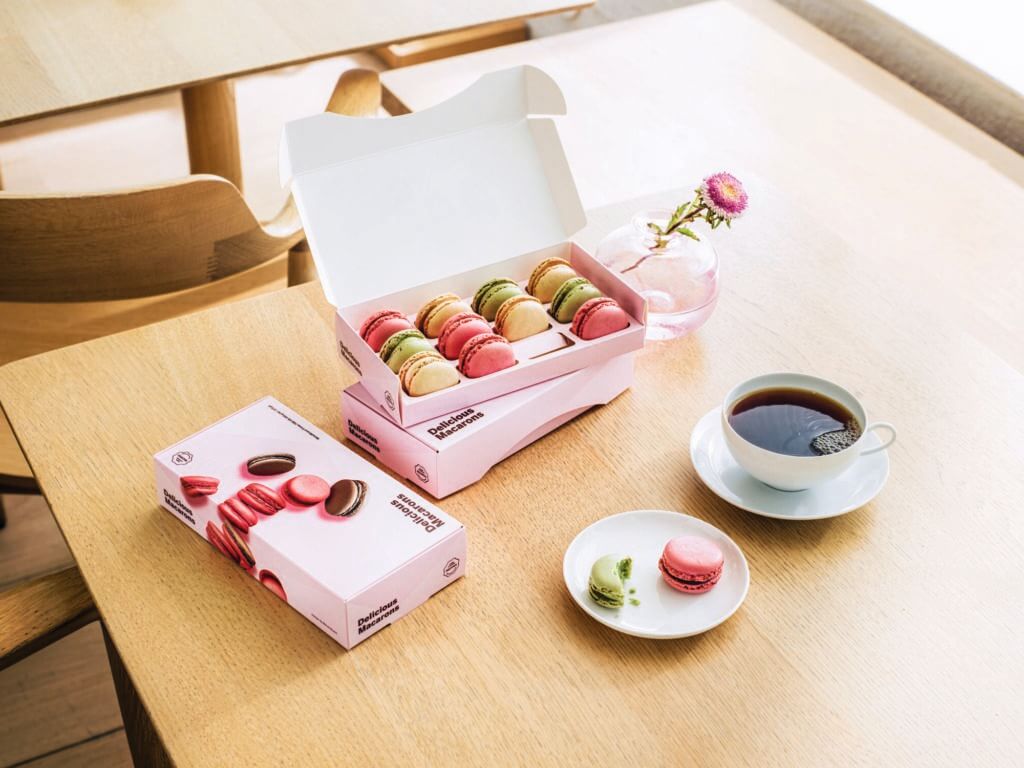
Consumers are demanding recyclable, biodegradable packaging made from renewable materials.
Consumers demand recyclable, biodegradable packaging made from renewable materials. (Image: Metsä Board)

Unmistakable packaging design

Produced for more than 30 years the Finnish family business Kultasuklaa in Lasimäki produces handmade chocolate products and uses only first-class quality and premium ingredients for its chocolate bars, confectionery and truffles. With a new eye-catching hexagonal packaging solution made from virgin fibre cartonboard the company not only generates a lot of attention for its truffles at the PoS, but also reduces the use of plastics and thus lowers the environmental impact of its products without compromising the shelf life of the valuable ingredients.

In addition, the chocolate manufacturer attaches great importance to ensuring that the raw materials used for the packaging are sourced locally and that ethically produced be produced. The company chose Metsä Board Prime FBB EB as the material for the packaging. The packaging material is produced in Finland at Metsä Board's Kyro plant.

Reaching the goal together

In addition to Metsä Board, numerous other companies were also involved in the production process: The structure of the packaging was created by CadPack, the layout was designed by DesignCompany and the printing was carried out by Markprint. The striking and functional packaging solution is therefore not only a good example of how cartonboard can be used for food packaging, but also demonstrates the potential of cartonboard for food packaging. Results from a successful collaboration can arise. For this reason, Metsä Board offers so-called Co-creation workshops in which the company's packaging team works together with customers and experts from various industries to improve current packaging or develop new solutions.

In addition to the wide range of analysis tools offered by the Excellence Centre, these workshops primarily provide the opportunity for a joint exchange. Challenges of the product and requirements for its packaging become visible right at the start of the planning process, and the partners can address them early on in the process. The end result is an efficient, sustainable and Packaging customised to the needs of the product, especially when the product in question is a sophisticated confectionery.

from the magazine - More news

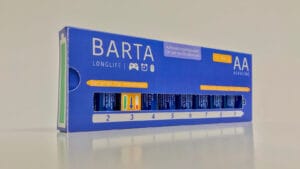
In the Battpack folding box with the mobile partition, full and empty batteries no longer get mixed up.

Battpack: No more battery chaos

Leonie Theurer has developed a simple and innovative solution that allows empty and full AA batteries to be stored separately in a single pack. This won her a German Packaging Award in the Young Talent category and one of the coveted Gold Awards.
Read more "
aimpower artificial intelligence

Potential of AI in packaging design

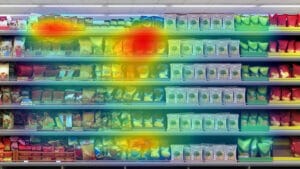
From packaging to purchase - what happens in the brain? Neuroscientific findings make the relevant success factors for customised package design comprehensible. Artificial intelligence (AI) becomes an assistant in the design process and saves time and resources.
Read more "