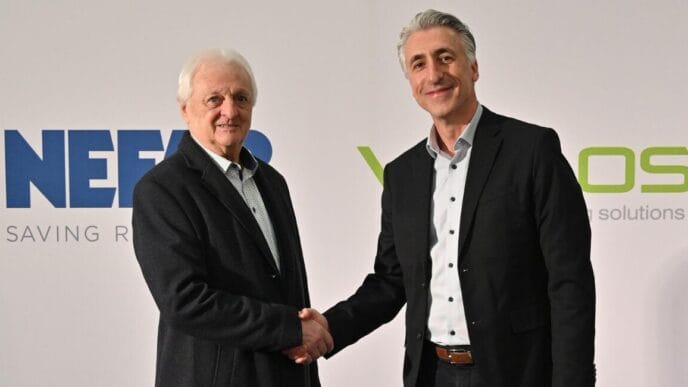
Reinhard Schneider, owner of Werner & Mertz, fears the „undermining“ of the circular economy in an open letter to the leaders of almost all parties represented in the Bundestag. Above all, he calls for the Packaging Act to be made more specific in order to create stronger incentives for the use of „post-consumer recyclates“.
His company, known for its „Frosch“ brand detergents, care and cleaning products, among other things, is „holistically sustainable in the best sense of the word“ and even an „eco-pioneer“, writes Reinhard Schneider. As an environmentally conscious entrepreneur, he welcomes the Packaging Act and supports its goals. It creates the basis for investments in the Sorting and the Preparation of the plastic packaging collected. This would be an important step towards preventing more than half of plastic waste from being incinerated. The law also incentivises the Recycling rates and utilise more recyclates in packaging production.
Consumers expect household waste to be recycled
Schneider, who founded the „Recyclate initiative“ to improve the use of plastics from the Yellow Bags, criticises efforts to recognise residual materials from production or even commercial waste as recyclates within the meaning of the Packaging Act. This would deceive consumers. Consumers expect a certain proportion of recyclate in products to be recognised as such by the Recycling household waste had been achieved. The recycling rates to be achieved also relate to collected sales packaging.

„The background to the efforts to circumvent the law is obviously the price difference that still exists between ‘genuine“ recyclates and raw materials,„ surmises Reinhard Schneider in his letter. He calls on politicians to concretise the Packaging Act in such a way that the planned incentives only apply to the use of "Post-consumer recyclate“ be granted. This would also lower the prices for this type of recyclate and motivate more companies to use it.
Set up a cross-provider financing fund for incentive models
The head of Werner & Mertz also criticises the fact that the various dual systems are free to decide to what extent they want to incentivise good recycling capabilities and high recycling rates. Recyclate content set. This harbours the risk that some dual systems will keep these incentives low without sufficient means of counter-financing. „The first ‘dumping models' are already circulating on the market and are attracting in particular those licence customers who have little chance of benefiting from the Incentivisation to come. One possible solution could be the creation of a joint cross-provider financing fund,“ explains Schneider.
Finally, Reinhard Schneider calls on the parties to respond to the emerging criticism of overly rigid Obligation to provide evidence on the collected and recycled plastics. However, these guidelines are very important „in order to achieve a Value-adding cycle management of used plastic packaging, at the end of which it should be reused in new sales packaging.“