Gunda Rachut, Central Agency Packaging Register Foundation
There are many important topics, but also many interesting people in the packaging industry. We introduce them to you in our new video talk format. Exciting conversations at best, always guaranteed to be "packaging" conversations.
Today: Gunda Rachut, Director of the Central Agency Packaging Register Foundation. After two years of the Packaging Act in Germany, it's time to take stock. What went well? Where is there a need for improvement and what role does the coronavirus pandemic play?
As a lawyer, you know your way around the law. Now your work is primarily concerned with the Packaging Act. Which paragraph is your favourite? The 24th, the 26th or rather the 28th?
The Packaging Act has just turned two years old. You recently listed the successes in an initial assessment: More packaging is being recycled, there are many more manufacturers who are fulfilling their product responsibility. Is this because they have to or because they now want to?
You're talking about a 13 per cent increase in the amount of packaging recycled, while plastics were recycled 50 per cent more. Is this transformation being slowed down by the coronavirus pandemic?
There is an overall shift from plastic packaging to fibre-based packaging. But if I suddenly have such a shift, i.e. from a material where I have at least controlled a certain amount of recycling capacity to another material where I have not controlled the recycling capacity, then it's not so easy. I'm curious to see what the balance sheet will look like when we get the volume flow statements in June.
The whole interview in the packaging journal TV Talk
In your opinion, what are the biggest challenges for this still young year 2021?
But we also have the anti-plastics directive, which triggers the whole thing to a certain extent. It's still too early to say whether this will always go in the direction of recycling-friendly design. There are a lot of drivers in the packaging market that are not all going in the same direction.
Ultimately, all trends are dictated by the waste hierarchy: avoid, recycle and - only if there is no other option - dispose of. This means looking at how we can bring the tasks we have forward in the discussion. Namely, minimum standards, design for recycling, but also financial support for the use of recyclates in the systems. It has already become more difficult for this due to the oil price. There are many good initiatives and we simply hope that things are moving in the right direction. We will take action and ensure transparency.
Because that's what the packaging register does. But you also say that there are weaknesses in the Packaging Act. What are they?
The legislator has also introduced new regulations for mail order and online trading. There is to be platform liability for the offering of goods that are now packaged but not registered. So a lot is already happening. The legislator is aware of this and we are now trying to talk to the players about it again. Where are the points that still need to be considered? Do we perhaps need to take action in Chinese? What can we do with the large platform operators? Is there a possibility of cooperation with courier, express and parcel services? These are the levers we can use to move the situation forward a little.
Where does Germany stand in a European comparison?
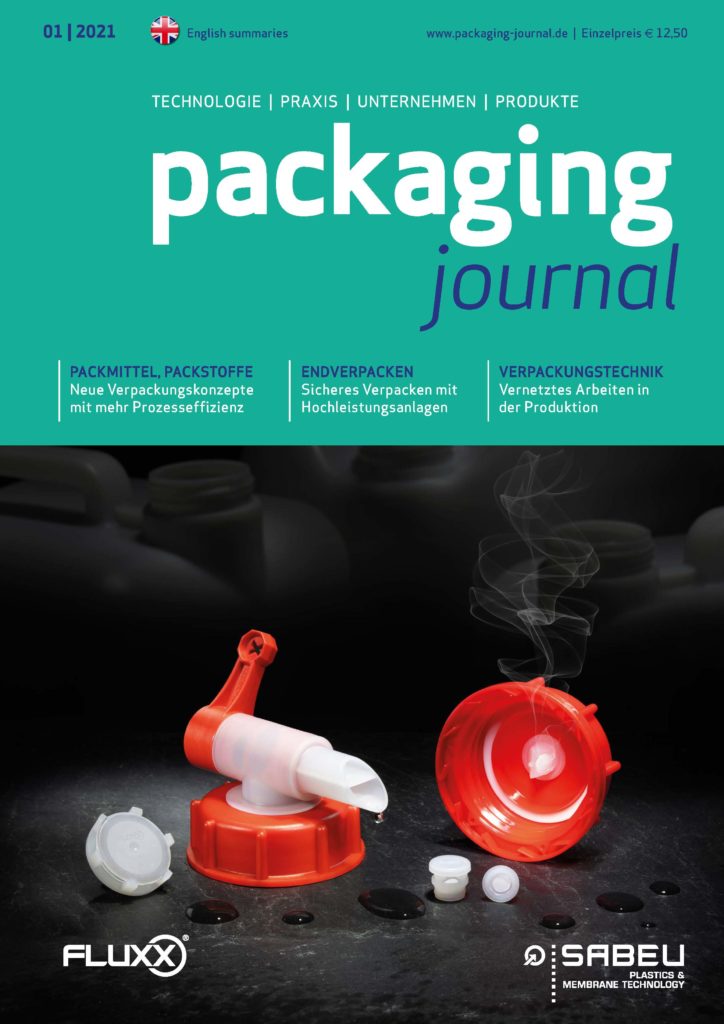
Published in packaging journal 1/2021
Also in this issue:
The ongoing trend of sustainability, Special packaging and packaging materials, Packaging with that certain X-tra at Sabeu, Packaging recycling with Holygrail 2.0, Packaging technology: customised drive technology, Networked working in production, Company portrait of Wetropa, Pharmaglas protects coronavirus vaccine, Digital colour systems for packaging printing and much more

More from the packaging register


Cycle for strapping bands