High-speed end-of-line packaging of medical technology products at PKM Packaging
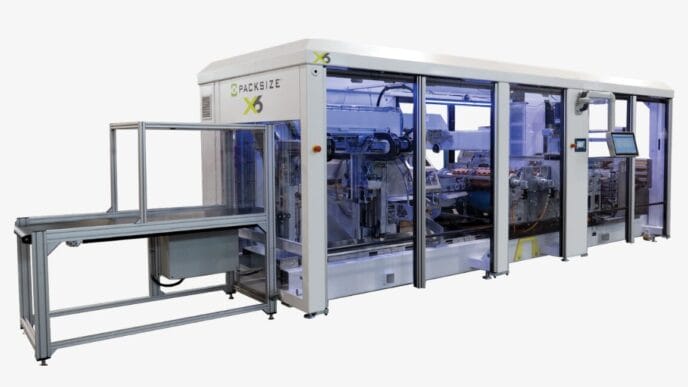
A final packaging line from PKM Packaging GmbH sets standards with an output of over 400,000 units a day. Dynamics count here, and five ultra-fast Yaskawa robots ensure this.
8 November 2019
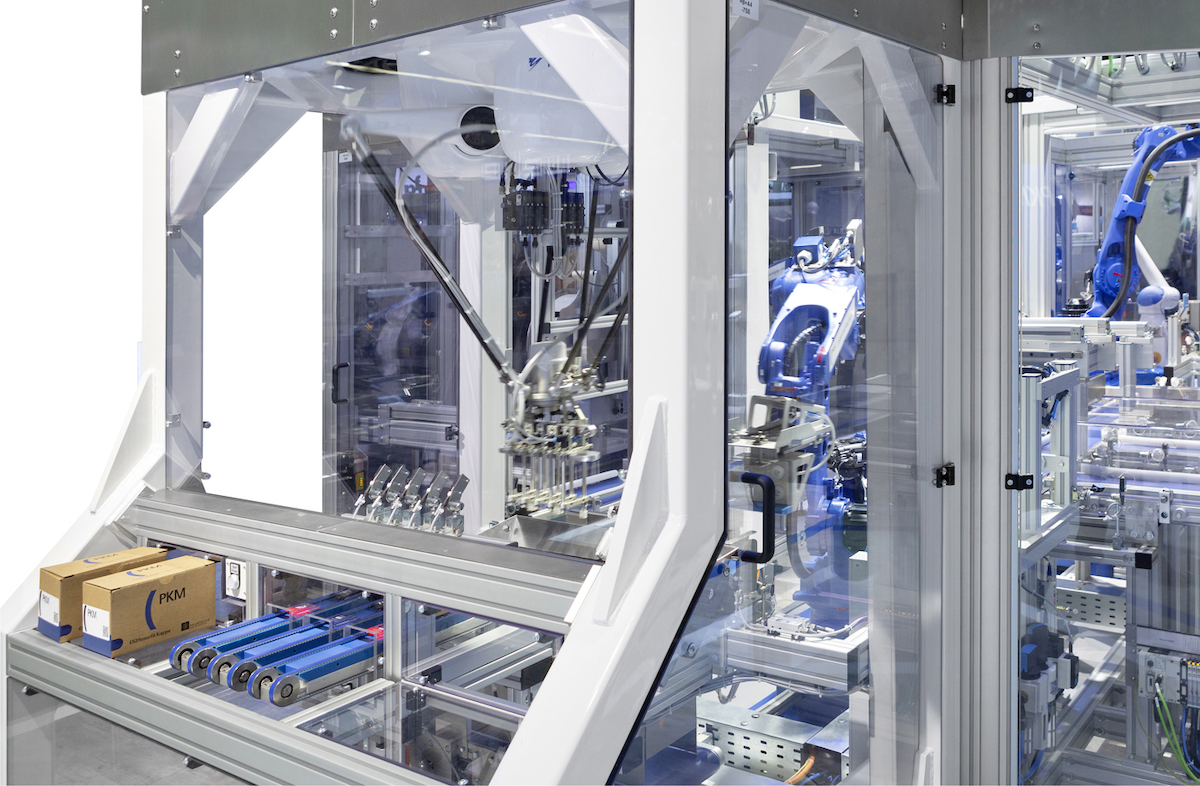
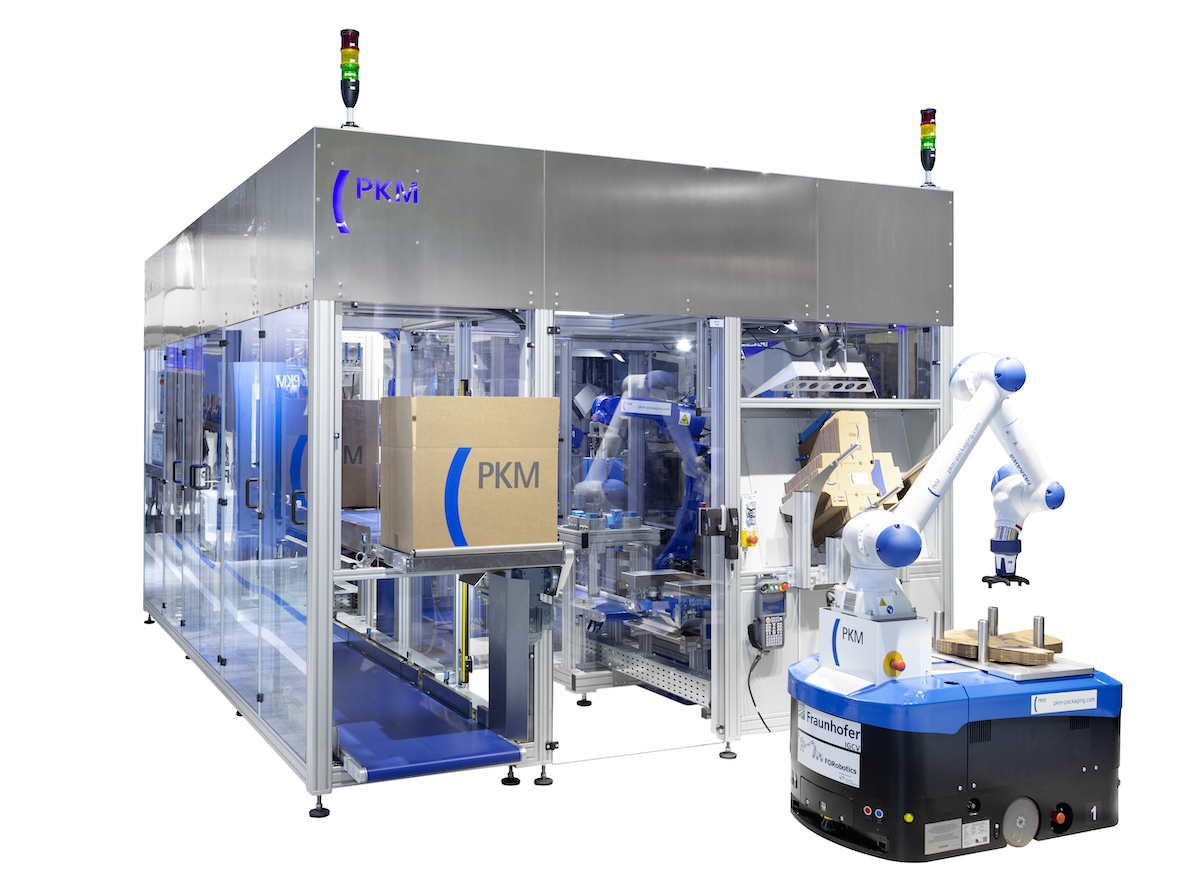
A total of five highly dynamic Yaskawa robots work in the compact packaging cell. (Image: PKM Packaging)
A final packaging line from PKM Packaging GmbH, Pirmasens, sets new standards with an output of over 400,000 units per day. The pioneering line, which packs disinfectant caps for use in dialysis, does not focus on flexibility. What counts is dynamism. And this is ensured by five ultra-fast Yaskawa robots.
Demand for dialysis products will continue to rise, which is why the Fresenius Medical Care intensively in this market. A final packaging system commissioned at the St. Wendel site in 2019 with an impressive output of almost 300 disinfection caps per minute illustrates just how high demand already is.
Fresenius commissioned the packaging technology specialist PKM Packaging to realise the complex line. The company is one of the top addresses for intelligent automation solutions, focussing in particular on the areas of Medical, Pharma, Consumer and Food. For applications that cannot be automated economically with standard systems, PKM develops and designs customised solutions with maximum productivity.
Challenging tasks
In the case described, the first task was to pack dialysis caps, which reach the packaging system in blisters via five feed belts, into so-called dispenser cartons. Finally, ten dispenser cartons are placed in a dispatch carton. What sounds simple quickly becomes a real challenge given the specified cycle times at an output of around 300 items per minute.
Display
Peter Dreher (Image: PKM Packaging GmbH)
„The problem lay with Complexity and time. The system must pack the blisters in dispenser cartons, which are only available as blanks and must be glued, erected, printed and labelled. At the same time, the dispatch cartons have to be collected, filled with the dispenser cartons and sealed. And a whole host of queries and camera-based inspection steps had to be integrated into the line,“ recalls Peter Dreher, Sales Manager at PKM.
Despite the high demands, PKM has succeeded in creating a reliable and economical solution This is demonstrated by a look at the final packaging line, which requires surprisingly little space in view of the complex work content.
In total five Yaskawa robots work in a very confined space, including four identical Motoman GP12 six-axis robots and a Motoman MPP3 delta robot in the system. While the six-axis robots are responsible for the complete handling of the cartons within the system, the ultra-fast picker picks up the blisters and places them in the dispenser cartons.
Functionality in detail
On one side of the system, the process begins with the Collecting the blanks for the dispenser cartons. The master of this cell is a Motoman GP12, equipped with a vacuum gripper, with which it picks up one blank at a time from the magazine and checks it at an image processing station.
The robot then moves to a station where the blank is glued. The six-axis robot then presses the blank into a mould and places the finished dispenser carton on the conveyor belt below.
A Motoman GP12 with vacuum gripper from Yaskawa picking up a blank from the carton dispenser magazine. (Image: PKM Packaging GmbH)
From there, a second robot picks it up and drives it to a cloud printer, which prints a barcode. A label is also applied. The Motoman GP12 then moves the empty dispenser carton to a stationary image processing system, which checks the barcode and label. The carton is then ready for filling and is cycled to the key station of the entire system.
High-speed blister packaging
Two Motoman robots, a six-axis robot and a picker, work hand in hand to pack the blisters. „The station is equipped with two holders for dispenser cartons so that they can be filled alternately and the picker can work continuously. This was the only way we could keep to the specified cycle times,“ explains Peter Dreher.
The Motoman MPP3 is equipped with a Complex five-fold suction pad with which five blisters are simultaneously picked up from the five-lane feeder and inserted into the dispenser cartons according to a sophisticated movement sequence. The delta robot repeats the process a total of eight times until the dispenser box is completely filled with 40 dialysis caps. The high speed of the Motoman MPP3 is crucial for the output of the system.
The impressive performance of the ceiling-mounted Motoman MPP3 delta robot (left) is crucial for the output of the packaging system. (Image: PKM Packaging GmbH)
Flexible handling robot
At the same time, the six-axis Motoman GP12 at this station is busy supplying empty cartons to the picker and picking up filled dispenser cartons, which it then picks up with a form-fit special gripper to a carton closer. This is followed by a In-process control. The sealed cartons are pushed out of the closer and grouped in five rows of two. The total of ten dispenser cartons correspond to one layer in the dispatch carton.
The final work step, packing the dispenser cartons into shipping cartons, is carried out by the fourth Motoman GP12. To do this, the six-axis robot picks up an empty shipping carton and takes it to an image processing system, where the completeness of the labels is checked.
This is followed by the filling process, in which the robot picks up ten dispenser cartons with its vacuum gripper and places them in the Top loading into the shipping carton. This cycle is repeated three times before the shipping carton containing 30 donor cartons with 40 dialysis caps each is discharged from the system.
The system runs around the clock in three-shift operation without any downtime. (Image: PKM Packaging GmbH)
Availability and output at the highest level
Despite its complexity, the end-of-line packaging line must fulfil the highest requirements in terms of availability. „In order to maximise uptime, we only used the best available components in the system. In the robot sector, the decision was made in favour of Yaskawa,“ emphasises Peter Dreher.
A good decision, as can be seen today: end-of-line packaging machine. The end-of-line packaging line fulfils the operator's high expectations in all other respects, including in particular the high output. This is not surprising, as Yaskawa was able to support PKM with reliable real-time simulations and cycle time studies during the design phase.
[infotext icon]The number of patients who are dependent on dialysis treatment is rising inexorably. While there were around 3.2 million people worldwide at the end of 2017, it is estimated that this figure will rise to almost five million by 2025. Reasons for this include an ageing population, accompanied by a larger number of people suffering from diabetes and high blood pressure, the precursors to terminal kidney failure[/infotext].